Tag

Paleoclimatology

All articles tagged with #paleoclimatology

Ancient Ocean Hidden Under West Antarctica Revealed by Deep Ice Drill
science1 month ago

Ancient Ocean Hidden Under West Antarctica Revealed by Deep Ice Drill

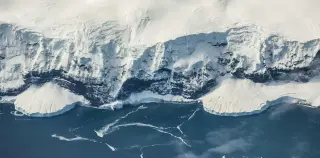
A multinational team drilled beneath the West Antarctic Ice Sheet, reaching 523 meters of ice and 228 meters of ancient rock and sediment, and found marine organisms and shell fragments that indicate parts of the region were once open ocean. These findings shed light on past warmer climates over the last roughly 23 million years and could help improve predictions of future sea-level rise as the ice sheet retreat cycles are better understood.

Deep Antarctic Drill Uncovers Ancient Open-Ocean Clues
science1 month ago

Deep Antarctic Drill Uncovers Ancient Open-Ocean Clues

Scientists drilled 523 meters through the Crary Ice Rise on the Ross Ice Shelf and recovered 228 meters of sediment, finding evidence that parts of West Antarctica were once open ocean as recently as about 23 million years ago. The findings help decode past ocean temperatures and environmental conditions to improve predictions of future ice loss and sea‑level rise; samples are being analyzed in New Zealand after transport from Antarctica.

Ancient Collisions Carved the Wallace Line, Explaining a Biodiversity Boundary
science2 months ago

Ancient Collisions Carved the Wallace Line, Explaining a Biodiversity Boundary

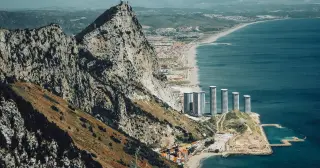
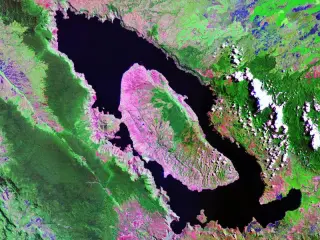
A computer-model study links the Wallace Line to a 35-million-year-old continental collision and subsequent climate swings, explaining why Bali’s Asian fauna abruptly shifts to Australian forms on Lombok and nearby islands—and how tectonics and climate history have shaped biodiversity across the region, with nearby lines like Weber’s and Lydekker’s also noted as regional boundaries.

Climate Extremes Define the Age of Animals
science6 months ago

Climate Extremes Define the Age of Animals

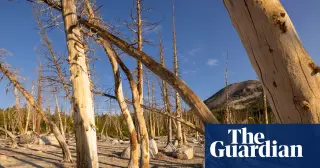
Earth's climate has experienced a vast range of temperatures and conditions over the past half-billion years, driven primarily by atmospheric CO2 levels, with periods of extreme heat and cold that have shaped the evolution and survival of animal life. Modern climate change, caused by rapid CO2 emissions, risks pushing the planet beyond its historical bounds, threatening the biosphere.

The Frozen Fate of Europe's First Humans: A Sudden Freeze 1.1 Million Years Ago
science2 years ago

The Frozen Fate of Europe's First Humans: A Sudden Freeze 1.1 Million Years Ago

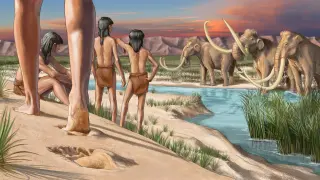
Europe's first humans, Homo erectus, likely went extinct about 1.1 million years ago due to an extreme cooling event. Fossils and stone tools indicate that Homo erectus arrived in Europe from Asia between 1.8 million and 1.4 million years ago but disappeared around 1.1 million years ago. The cooling event, supported by evidence from marine sediment cores, caused a significant drop in temperature and may have led to the extinction of archaic humans in Europe. The cold climate made it difficult for them to find food, and their lack of adaptations for the cold likely contributed to their demise. This study highlights the impact of climate variability on early human populations and its relevance to understanding modern climate change.

Unprecedented Heat: Earth's Hottest Temperatures in Millennia
climate-change2 years ago

Unprecedented Heat: Earth's Hottest Temperatures in Millennia

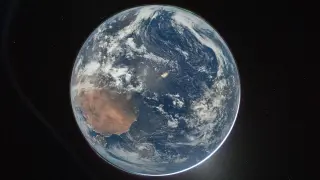
Observations from satellites and weather stations confirm that the Earth has been rapidly warming over the past 44 years, and data from as far back as 1850 shows a clear rise in average temperatures. While it is challenging to precisely determine temperatures from thousands of years ago, paleoclimatologists are confident that the current warming trend is exceptional compared to any period since before the last ice age, about 125,000 years ago. Although it is difficult to pinpoint the hottest day in the past 100,000 years, scientists estimate that temperatures during a warm period 6,000 years ago were likely similar to current conditions. However, the current heat is unprecedented due to its rapidity and the fact that it is caused by human activities, particularly the burning of fossil fuels and greenhouse gas emissions.