
Citizen’s Google Maps Hunch Leads to Confirmation of 390-Million-Year-Old Quebec Crater
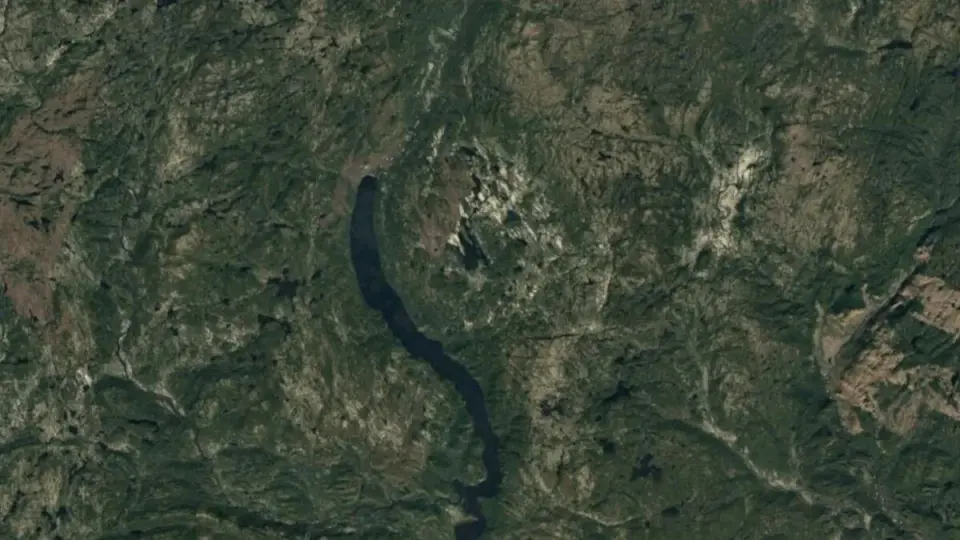
Amateur astronomer Joël Lapointe identified a potential impact crater near Lake Marsal, Quebec, while planning a camping trip on Google Maps in 2024. After consulting experts, a geological expedition in October 2025 confirmed the site as a 15.5-mile-wide crater dating to 390 million years ago. The discovery, named Uhackatik, is the first confirmed impact crater identified by a public report in recent decades.
Key points
- Lapointe noticed a circular indentation on satellite imagery in 2024 and contacted scientists after finding no match in existing crater databases.
- A five-day expedition in October 2025 found shatter cones and impact-melt rock, confirming the site as a meteorite impact rather than a volcanic formation.
- The crater, named Uhackatik in consultation with the Ekuanitshit Innu Council, is approximately 15.5 miles (25 km) wide and dates to the Devonian period.
- The findings will be presented at the Meteoritical Society’s 88th Annual Meeting in Frankfurt, Germany, in August 2026, though full peer review is pending.
- This is the first time a public report has led to the confirmation of a new impact crater, according to planetary geologist Gordon Osinski.
Background
Canada has the highest number of confirmed impact craters globally, largely due to its stable, ancient bedrock preserving geological history. Prior to this discovery, the last new crater confirmed in Canada was in 2010. The global database lists approximately 200 confirmed impact sites, with new discoveries occurring only one or two times per year.
How outlets are covering it
While all sources agree on the core facts, they differ in emphasis. Gizmodo and ABC News highlight the 'serendipitous' nature of the discovery and the rarity of public reports leading to confirmation. Smithsonian Magazine provides additional context on the difficulty of the expedition and the crater’s size relative to global records. Quasa.io offers a critical perspective, noting that the discovery is not yet fully peer-reviewed and that satellite imagery alone cannot confirm impact origins, emphasizing the necessity of fieldwork and rock sampling for scientific validation.
Why it matters
The discovery underscores the value of citizen science in identifying geological anomalies that experts may overlook. It also provides new data for understanding Earth’s impact history and the frequency of meteorite strikes, which can inform future planetary defense strategies.
What to watch
The research team will present their findings at the Meteoritical Society conference in August 2026. Following the conference, a peer-reviewed paper is expected to provide detailed analysis of the samples, dating techniques, and the crater’s classification.
- Amateur Astronomer Discovers Ancient Meteorite Impact Using Google Maps Gizmodo
- An Amateur Astronomer Using Google Maps Spotted a Strange Indentation. It Turned Out to Be a Meteorite Crater From 390 Million Years Ago Smithsonian Magazine
- Amateur astronomer discovers 390-million-year-old meteorite impact crater in Quebec ABC News - Breaking News, Latest News and Videos
- While Mapping a Camping Trip, Man Spots Previously Unknown 390-Million-Year-Old Meteorite Impact Crater in Quebec Discover Magazine
- Google Maps Canada Meteorite Discovery: How Quebec’s Uhackatik Crater Was Confirmed quasa.io
Want the full story? Read the original reporting
Read on Gizmodo