
Draconid meteor shower peaks Oct 8, offering rare evening viewing
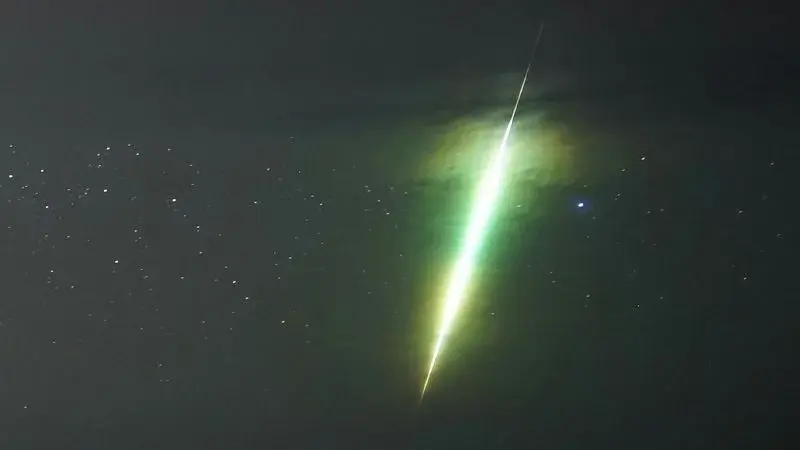
The Draconid meteor shower peaks on Oct 8, 2026, offering a rare evening viewing opportunity. Unlike most showers, it is best seen shortly after sunset, with activity lasting until early morning. The event is caused by debris from Comet 21P/Giacobini-Zinner and is visible primarily in the Northern Hemisphere.
Key points
- The Draconid meteor shower peaks on Oct 8, 2026, at 9 p.m. ET, with activity lasting until early morning.
- The shower is caused by debris from Comet 21P/Giacobini-Zinner, which orbits the sun every seven years.
- The Draconids are best seen in the Northern Hemisphere, with the radiant point located near the constellation Draco.
- A waning crescent moon is expected to provide minimal interference, allowing for clear viewing.
- The shower is typically low in activity, with about 10 meteors per hour, but a meteor storm is possible if the comet's debris is concentrated.
Background
The Draconid meteor shower has been a recurring event in October, with previous peaks in 2025 and 2026. The 2026 peak is notable for its evening viewing opportunity, which is rare for meteor showers. The shower is caused by debris from Comet 21P/Giacobini-Zinner, which was discovered in 1900 by Michel Giacobini. The 2026 peak is expected to be under moonless skies, providing optimal viewing conditions.
How outlets are covering it
CNN and EarthSky emphasize the evening viewing opportunity and the potential for a meteor storm. The Asheville Citizen Times and Detroit Free Press focus on the practical aspects of viewing, such as dark sky locations and the best times to observe. NASA provides technical details on the shower's activity and the role of the comet's debris. The sources agree on the peak date and the importance of dark locations for optimal viewing.
Why it matters
The Draconid meteor shower offers a rare opportunity to observe meteors in the evening, making it accessible to casual skywatchers. The potential for a meteor storm adds to the excitement, as it could result in hundreds or thousands of meteors per hour. The event also highlights the importance of dark sky locations for optimal viewing.
What to watch
The next meteor shower to watch is the Orionids, which peak on Oct 21-22, 2026. The Southern Taurids and Northern Taurids follow in November, with the Leonids peaking on Nov 16-17. The Geminids and Ursids are expected in December, providing additional opportunities for stargazers.
- How to see the meteor shower that won’t keep you up all night CNN
- Orionid meteor shower is here. See 2026 peak dates, more in Western NC The Asheville Citizen Times
- Draconids peak in Michigan skies. When's the best time to see them? Detroit Free Press
- The Draconid meteor shower peaks tonight before bedtime. Here's how to see it Space
- Will the Draconid meteor shower be visible in Washington DC tonight? USA Today
Want the full story? Read the original reporting
Read on CNN