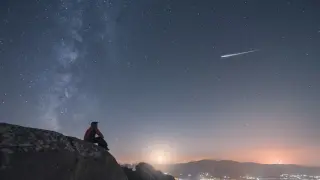
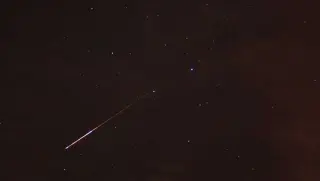
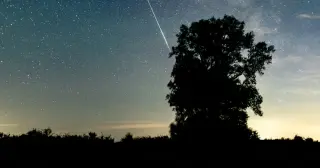
The Draconids meteor shower peaks on October 8-9, 2026, offering a rare opportunity to observe meteors in the evening rather than pre-dawn. While typically low in activity, this shower is caused by Comet 21P/Giacobini-Zinner and is best viewed from dark locations in the Northern Hemisphere.
October 2026 offers prime viewing for Saturn at opposition on Oct. 4, the Orionid meteor shower peaking Oct. 21-22, and the Hunter's Moon on Oct. 26. The Milky Way core is visible until mid-month, and the Draconid shower occurs Oct. 8-9.
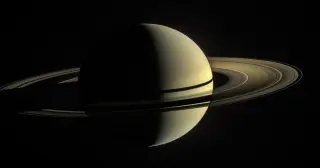
Saturn reaches opposition on October 4, 2026, making it the brightest and largest it will appear this year. Local observatories in Kansas City and Louisburg are hosting viewing events, while the planet's rings are once again visible after disappearing in 2025.
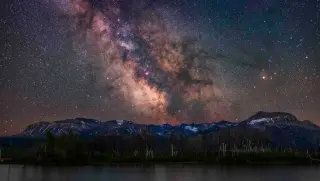
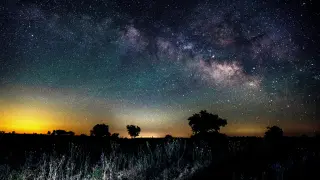
The Milky Way’s galactic center is nearing its best viewing window for the Northern Hemisphere in 2026, with the season typically running February through October and peak visibility from June to September. For optimal viewing, pick nights with a new moon and clear, dark skies; the center is visible from around midnight to about 5 a.m., and you don’t need a telescope—just good dark skies. Use the teapot asterism near Sagittarius/Scorpius as a guide, and consult DarkSky International for nearby dark-sky locations.
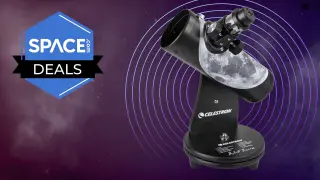
Space.com promotes the Celestron FirstScope tabletop telescope, on sale for about $60 at Amazon—cheaper than Prime Day—lauding its ultra-portable, beginner-friendly design (no assembly, 76mm aperture, 300mm focal length) with 20mm and 4mm eyepieces. Ideal for quick, entry-level skywatching and kids, it delivers solid views of the Moon and planets, though it isn’t a deep-sky instrument; accessories like a separate finderscope are available, and the piece notes Prime Day pricing history to reinforce its value as a budget pick for new observers.
Space.com reports a deep partial lunar eclipse on Aug. 27–28, 2026, with up to 96.2% of the Moon’s disk entering Earth’s umbra—the deepest such event until 2028—visible across the Americas, Europe, and Africa. The maximum occurs late on eclipse night (beginning around 9:23 p.m. EDT on Aug. 27), and readers are guided to viewing tips, key timings, and multiple livestreams to watch online if skies are cloudy. The piece also covers why August’s full moon is called the Sturgeon Moon and offers photography tips for capturing the event.
Space.com is live with updates for the Aug. 27–28 deep partial lunar eclipse, where up to 96.2% of the Moon will be in Earth's umbra at maximum, likely taking on a rusty reddish hue. This is the deepest partial lunar eclipse visible until the end of 2028, with the best views expected from the Americas and viewing tips provided for skywatchers.
Space.com’s live coverage explains the Aug. 27–28, 2026 deep partial lunar eclipse, when up to 96.2% of the Moon will be in Earth's umbra and take on a reddish hue. The piece notes the event is visible from most of the night sky, with the Americas offering the best views, and provides viewing tips that require no special gear beyond binoculars or a telescope for a closer look, plus reminders that this is the deepest partial eclipse until 2028 and will be followed with live updates.
Space.com’s live coverage of the August 27–28, 2026 deep partial lunar eclipse notes that at maximum 96.2% of the Moon will be in Earth's umbra, producing a rusty-red hue with a slender illuminated edge. Visible worldwide with best views in the Americas; Europe and Africa see peak before dawn. No eclipse glasses are needed; binoculars or a small telescope enhance the view. If you miss it, the next event with similar spectacle isn’t until Dec 31, 2028. Stay tuned for updates and viewing tips throughout eclipse night.
Space.com previews the Aug. 27-28, 2026 deep partial lunar eclipse, when up to 96.2% of the Moon will be immersed in Earth's umbra and take on a rusty-red hue; visible worldwide with best views in the Americas, the article shares viewing tips and will provide live updates.
Space.com’s live coverage explains that the Aug. 27–28, 2026 partial lunar eclipse will see up to 96.2% of the Moon enter Earth's umbra, producing a deep reddish hue and marking the deepest such event until 2028. Visible across the Americas, Europe, Africa and parts of western Asia, it’s a skywatching can’t-miss that will require clear, dark skies and a good view of the western horizon; Space.com will provide latest news and practical viewing tips for peak viewing.
The Perseid meteor shower peaks overnight in New Hampshire during a new moon, providing a moon-free sky and the potential for dozens of meteors per hour. For best viewing, find a dark open area away from city lights; clouds could briefly interrupt viewing around 11 p.m. and 2 a.m., but conditions should clear toward dawn, and the shower can be visible in the days surrounding the peak.
The Perseid meteor shower will peak overnight into Thursday morning in Northern California, with patchy clouds possibly obscuring view; viewing is best Thursday night before dawn. Local stargazing spots include the Community Observatory in Placerville (10 p.m.–1 a.m., free admission, $2 parking), the El Dorado Trail parking lot near Placerville, Ice House Observation off Ice House Road near Highway 50, and vista points along Highway 20 between Nevada City and I-80/20 interchange. Using a light-pollution map can help you find other good spots.
Space.com is providing live coverage of the Aug. 12, 2026 total solar eclipse from two sites along the path of totality: Scoresby Sund in Greenland and Valoria la Buena in northern Spain. Observers will experience totality as the Moon fully covers the Sun and reveals the corona, while millions elsewhere will see a partial eclipse. Reporters Daisy Dobrijevic (aboard the MS Spitsbergen) and Anthony Wood (Spain) will deliver updates, weather notes, safety tips (eclipse glasses), and details about citizen-science efforts like DEB and NASA livestreams. The event marks Europe’s first total solar eclipse since 1999; totality lasts only a few minutes.
The Perseid meteor shower, one of summer’s brightest, reaches its peak overnight Wednesday into Thursday with a new moon keeping skies dark and moonlight minimal. The peak coincides with a total solar eclipse visible from parts of Spain, Portugal, Greenland, Iceland and northern Russia, offering the rare chance to see meteors around totality. Under ideal conditions, up to about 100 meteors per hour can be seen. Best viewing for the Northern Hemisphere is in the pre‑dawn hours from a dark, unobstructed site, with eyes allowed 20–30 minutes to adapt. Observers in the Southern Hemisphere are less likely to see the radiant. NASA will host a YouTube watch party starting at 12 a.m. ET Thursday from the Marshall Space Flight Center.