
New Study Confirms Miocene Crocodile as South America's Apex Predator
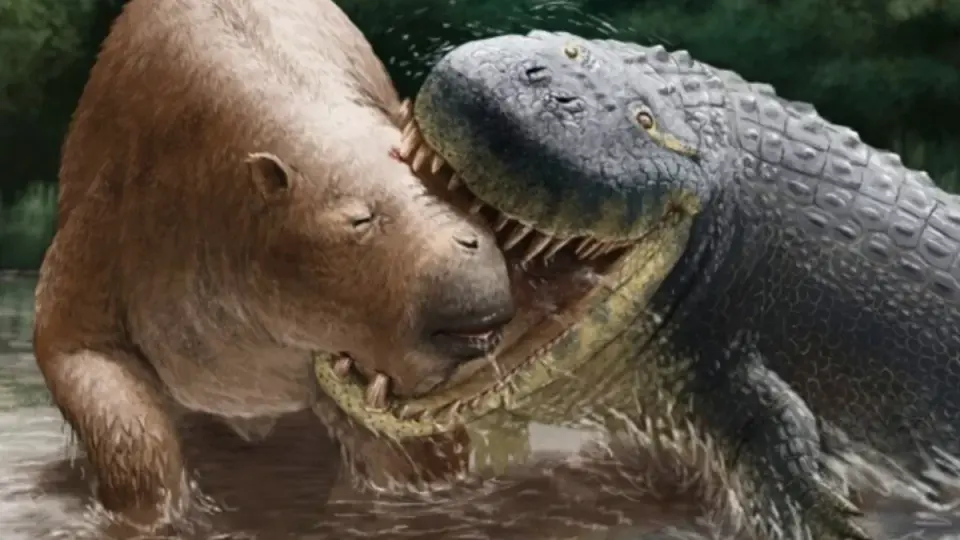
A new study in the Journal of Vertebrate Paleontology confirms that Purussaurus neivensis, a 7-meter-long crocodyliform weighing up to 1,800 kilograms, was the apex predator in Miocene South America. Researchers analyzed fossilized bones from La Tatacoa Desert in Colombia, revealing bite marks on rhino-sized mammals that demonstrate the animal's immense bite force and predatory role in tropical ecosystems.
Key points
- Purussaurus neivensis reached 7 meters in length and 1,800 kilograms in weight, comparable to a modern car.
- Fossil evidence from La Tatacoa Desert, Colombia, includes skulls and jawbones with puncture marks consistent with P. neivensis attacks.
- The study identifies the animal as the primary predator of large ungulates, such as Pericotoxodon platignathus, during the Miocene epoch.
- Researchers note that P. neivensis coexisted with other large predators, including madtsoiid snakes and phorusrhacid birds, but dominated the hunting of large prey.
- The findings highlight how crocodylians transferred nutrients from land to aquatic ecosystems through predation and scavenging.
Background
This finding builds on earlier reports from August 2026, which detailed how bus-sized crocodiles like Purussaurus neivensis dominated Miocene wetlands in northwestern South America. Previous coverage also explored broader crocodyliform evolution, including armored Triassic relatives and blade-jawed ancestors that ruled terrestrial ecosystems before the rise of dinosaurs.
Why it matters
Understanding the predatory role of ancient crocodyliforms reshapes our view of Miocene ecosystems, showing that non-mammalian predators were central to food web dynamics before the Great American Biotic Interchange. This research provides concrete fossil evidence of hunting tactics, such as skull-crushing bites and death rolls, that rival the power of modern apex predators like saltwater crocodiles.
What to watch
Further analysis of fossil bite marks may reveal more about the specific hunting strategies and ecological interactions of Miocene crocodyliforms. Researchers may also explore how the arrival of mammalian predators from North America impacted the dominance of these ancient reptiles in South American ecosystems.
Want the full story? Read the original reporting
Read on ScienceAlert