
New Moroccan Fossil Reveals Unique Needle Teeth in 165-Million-Year-Old Crocodile Relative
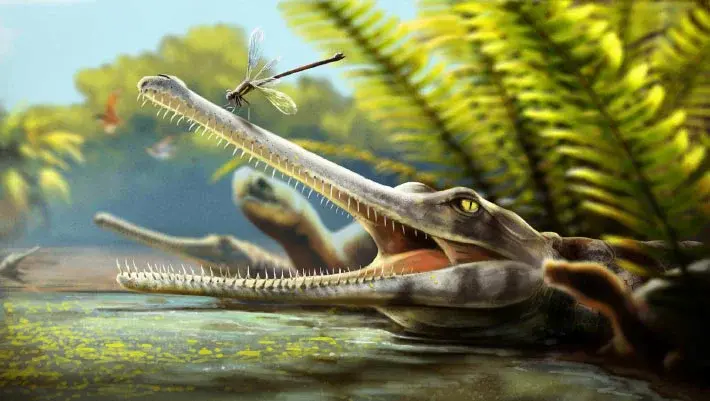
Researchers have identified a new genus and species of thalattosuchian crocodylomorph, Ctenosuchus tenuidens, from the Middle Jurassic of eastern Morocco. Dated to approximately 165 million years ago, this animal possessed a unique dentition consisting of thin, needle-like teeth spaced roughly 2.3 mm apart, a configuration unlike any other known crocodile-line animal. The fossils, recovered from red mudstone deposits in the Talsint-Anoual area, suggest the predator specialized in consuming small aquatic prey such as fish and invertebrates. This discovery marks the only freshwater teleosauroid found in Gondwana and the second teleosaur species identified in the Jurassic of Morocco.
Key points
- Ctenosuchus tenuidens is a newly described teleosaurid thalattosuchian from the Middle Jurassic of Morocco, dating to about 165 million years ago.
- The animal featured a unique dentition with teeth approximately 10 times taller than wide, spaced 2.3 mm apart, and estimated at over 35 per upper jaw side.
- Fossils were recovered from red mudstone deposits in the Talsint-Anoual area of Figuig province, Morocco, by commercial collectors.
- The species is classified as a sister to Seldsienean megistorhynchus and the group Aeolodontini within Teleosauridae.
- It represents the only freshwater teleosauroid from Gondwana and the second teleosaur species known from the Jurassic of Morocco.
Background
Thalattosuchia is a group of mostly marine crocodylomorphs that existed from the Early Jurassic to the Early Cretaceous, known for adaptations to semi-marine lifestyles. While best documented in northwest Europe, their geographic range extended globally. Previous findings in Morocco included Machimosaurus sp., but Ctenosuchus tenuidens is distinct as a freshwater form from Gondwana.
Why it matters
This discovery expands the known diversity of crocodylomorphs in the Middle Jurassic, particularly in Gondwana, and provides insight into specialized feeding strategies involving small aquatic prey. It also highlights the importance of fossil collections from commercial sources in understanding prehistoric ecosystems in North Africa.
What to watch
Further research may explore the feeding mechanisms of Ctenosuchus tenuidens, including whether it filtered food from water, and could lead to additional discoveries of teleosaurids in Moroccan Jurassic deposits.
Want the full story? Read the original reporting
Read on Sci.News