
Origins of Life Research Shifts from Single-Molecule Debates to Complex Pre-LUCA Systems
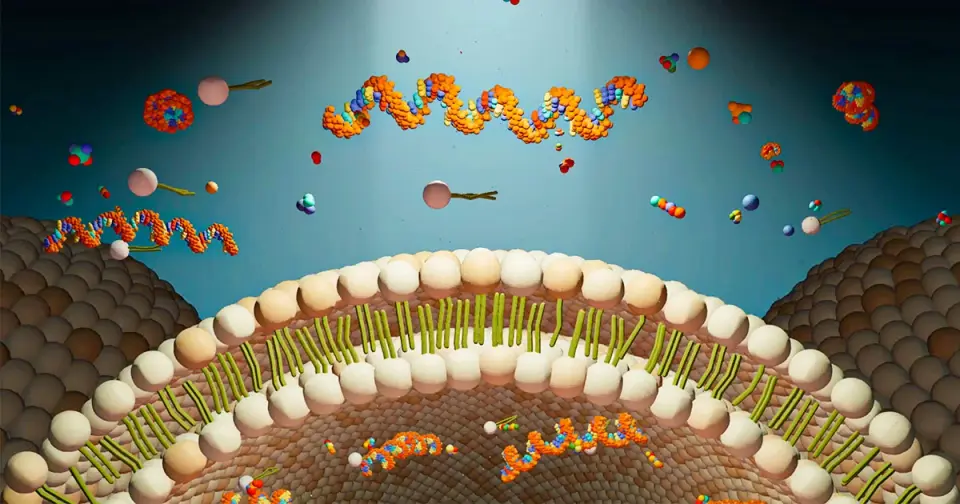
A new generation of scientists is abandoning the decades-long debate over which single molecule started life, instead focusing on the 200 million years between Earth’s habitability and the last universal common ancestor (LUCA). Recent genomic analysis suggests LUCA was a complex, multi-cellular ecosystem rather than a simple organism, implying that life’s origins involved diverse, interacting chemical networks. Researchers are now using synthetic biology and AI to test alternative molecular alphabets and functions, moving beyond the constraints of modern biology to understand how life could emerge from prebiotic chemistry.
Key points
- The field of origins-of-life research is moving away from 'single-molecule' hypotheses (like RNA-first or metabolism-first) toward a model of complex, multi-molecular systems.
- A 2024 study by Phil Donoghue’s team at the University of Bristol estimated that LUCA, the last universal common ancestor, possessed approximately 2,600 proteins and a genome similar in size to modern bacteria, suggesting it was a fully functional, complex cell.
- Genomic evidence indicates LUCA likely existed within a community of different cell types, as its metabolic pathways relied on processes that could not function in isolation.
- Researchers estimate LUCA’s lineage is 4.2 billion years old, meaning life emerged rapidly after Earth became habitable around 4.4 billion years ago.
- Scientists are using synthetic biology and AI to test whether life could have evolved using different amino acids or molecular structures, such as benzene rings, that perform similar functions to DNA and proteins.
- The focus has shifted from identifying the 'first molecule' to understanding how diverse prebiotic chemistries accumulated and stabilized into self-replicating, evolving systems.
Background
This development follows years of intense debate in the origins-of-life field, where researchers often clashed over competing hypotheses such as the RNA world, lipid world, or metabolism-first theories. Previous coverage, including a November 2026 article on lipid membranes, highlighted ongoing discussions about whether simple containers preceded genetic molecules. The current shift reflects a broader consensus that these 'worlds' may not be mutually exclusive but rather components of a complex, iterative process that occurred over hundreds of thousands of years before LUCA.
Why it matters
Understanding the transition from chemistry to biology is crucial for defining the boundaries of life and assessing the potential for life elsewhere in the universe. By demonstrating that life’s origins likely involved complex, multi-species ecosystems rather than a single 'first cell,' this research challenges traditional evolutionary models. It also expands the search for extraterrestrial life by suggesting that life could emerge from diverse chemical substrates, not just the specific molecules found on Earth, thereby broadening the criteria for habitability and biological detection.
What to watch
Researchers will continue to use synthetic biology and AI to test alternative molecular alphabets and structures, such as reduced amino acid sets or benzene-based information storage systems. Collaborations between chemists and biologists will focus on simulating prebiotic environments to determine how diverse molecular pools could have stabilized and evolved. Future studies will also aim to identify the specific environmental conditions that allowed these complex systems to emerge, potentially revealing why life arose so quickly after Earth became habitable.
Want the full story? Read the original reporting
Read on Quanta Magazine