A new study suggests that ribose, a fragile sugar delivered to Earth by meteorites, may have helped keep boron dissolved in ancient waters. This dissolved boron, in turn, protected ribose from breaking down, creating a mutual survival mechanism that could have facilitated the formation of RNA and the origin of life.
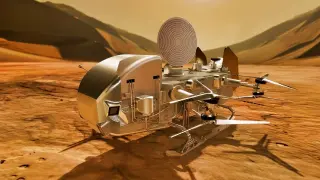
NASA’s Dragonfly mission will send a nuclear-powered rotorcraft to Titan to autonomously fly across its methane-rich atmosphere, land at multiple sites, and analyze organic chemistry with the DraMS instrument, aiming to shed light on prebiotic chemical pathways and set a new standard for aerial planetary exploration in collaboration with ESA.
Scientists analyzing the Hillsborough meteorite that pierced a New Jersey home found salt-rich, near-surface brines in a CM1/2 primitive asteroid fragment, along with diverse organic molecules and amino acids—evidence that brine chemistry in primitive asteroids could have delivered prebiotic material to early Earth and that this CM1/2 fall is exceptionally rare.
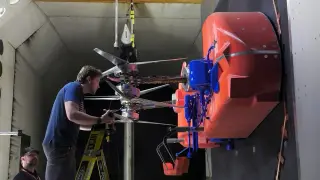
NASA has greenlit Dragonfly, a car-sized, eight-rotor, nuclear-powered rotorcraft that will hop across Titan’s surface to sample its methane/ethane environment and investigate the chemistry that could precede life. Slated to launch in 2028 and arrive around 2034, the mission will study the ground between hops for complex organic molecules over roughly three Titan days, offering the first powered flight on another world and exploring whether Titan’s alien chemistry could host the steps toward biology, with ocean questions beneath its icy crust still under discussion.
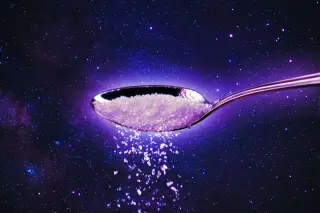
Astronomers detected erythrulose, a four-carbon sugar, in a Milky Way molecular cloud—the first sugar found in interstellar space—hinting that sugars and RNA-building blocks may be widespread in the cosmos, with estimates that up to 50 million tons could have rained down on early Earth to support prebiotic chemistry.
Astronomers have detected erythrulose, a four-carbon sugar, in a giant interstellar gas cloud near the Milky Way’s center, suggesting sugars are more common in space than previously thought and could seed prebiotic chemistry by enabling ribonucleotide formation, challenging the idea that sugars form only through gradual, carbon-by-carbon buildup.
Astronomers detected erythrulose, a four-carbon sugar, in the interstellar molecular cloud G+0.693−0.027 near the Milky Way’s center, based on data from Spain’s Yebes and IRAM telescopes and published in Nature Astronomy. This marks the first interstellar monosaccharide discovery and supports the idea that space-based chemistry can form prebiotic molecules that may have contributed to Earth’s origins, though it does not imply life elsewhere.
Researchers cooled glycine to cryogenic temperatures and irradiated it with proton-like cosmic rays, producing glycylglycine and other organics in ice without liquid water. The result shows a plausible non-aqueous, radiation-driven path to peptide bonds in interstellar ice, suggesting prebiotic chemistry could begin before stars form. It is a laboratory analogue, not proof of life or interstellar peptides seeding Earth, and raises questions about how common and efficient this chemistry is in space.
Astronomers detected erythrulose, a four‑carbon sugar, in a massive interstellar dust cloud (G+0.693-0.027) near the Milky Way’s center. The sugar forms on microscopic dust grains from glycolaldehyde and ethylene glycol at around -250°C and could be delivered to planets via comets or meteorites. This marks the first direct detection of a sugar in interstellar space and suggests simple sugars important for life may be more common in the cosmos, potentially seeding early Earth during periods of heavy bombardment.
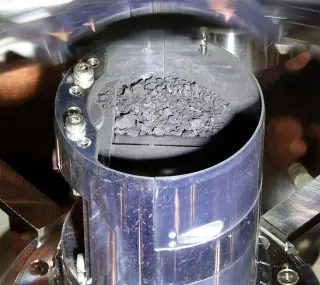
Scientists analyzing asteroid Bennu samples found ribose and glucose, plus phosphate and all known RNA nucleobases, suggesting the raw ingredients for RNA were present in the early solar system long before life on Earth; however, this does not prove RNA formation or life on Bennu, only that the components were available and preserved in a small body.
A University of Arizona-led analysis rethinking the origin of life suggests the 20 canonical amino acids may have entered the genetic code from multiple abiotic routes rather than a single sequential order. Building on a 2024 PNAS study of protein domains in LUCA, newer work shows amino acids could originate from diverse early-Earth chemistry and that core cellular machinery can function with a reduced amino‑acid alphabet in engineered cells. This challenges the view that tryptophan was the last amino acid added and has implications for our understanding of early protolife on Earth and the search for life elsewhere, including oceans on Enceladus.
A Nature Astronomy study confirms Ryugu samples contain all five canonical nucleobases (adenine, guanine, cytosine, thymine, uracil), suggesting life's genetic ingredients formed in space and were delivered to early Earth; findings align with results from Bennu and meteorites, though purine/pyrimidine balance varies by asteroid.
A 2009 detection of ethyl formate in Sagittarius B2 helped fuel the popular claim that space tastes like raspberries; however, ethyl formate is only one of many molecules in a vast, tenuous cloud, and the larger, more significant finding was the identification of n-propyl cyanide, showing complex organics can form in interstellar space. The raspberry framing is an oversimplification: the cloud’s chemistry does not equate to a space flavor, and space does not smell like raspberries—astronauts describe spaceflight smells as metallic. The broader takeaway is that complex organic chemistry, potentially related to prebiotic processes, can begin in interstellar environments long before planets form, though unambiguous amino acids have yet to be detected in space.
Rosetta’s ROSINA instrument measured the gas around Comet 67P/Churyumov-Gerasimenko and found glycine—the simplest amino acid—along with phosphorus and precursors like methylamine and ethylamine, in what researchers called an unambiguous detection. The description of a “smell” (rotten eggs, ammonia, bitter almonds) reflects a mass-spectrometry readout rather than an actual odor. Most of the coma is odorless water, CO2 and CO, but the presence of glycine and its precursors supports the idea that comets could deliver prebiotic chemistry to early Earth, without proving life or Earth’s origin from space; it strengthens a long-standing hypothesis while noting the large gap between molecules and living systems.
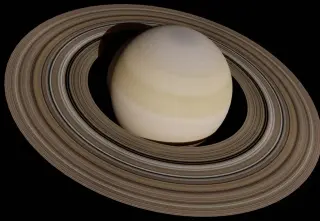
NASA's Dragonfly mission, an eight-rotor aerial explorer, is set for launch around 2028 to Saturn's moon Titan. It will fly through Titan's thick, hazy atmosphere to survey equatorial dune fields using a built-in chemistry lab (DraMS) and a 40‑cup sample carousel, analyzing organic material for prebiotic chemistry and life's building blocks such as amino acids, nucleobases, and fatty acids over a three‑year primary mission. Dragonfly's mobility—flying across miles instead of roving—will let it cover a large area, though Titan's lakes are off‑limits. The journey to Titan will take about seven years and the mission costs about $3.35 billion.