
Silverpit Crater Confirmed as Ancient Asteroid Impact Site After 20-Year Debate
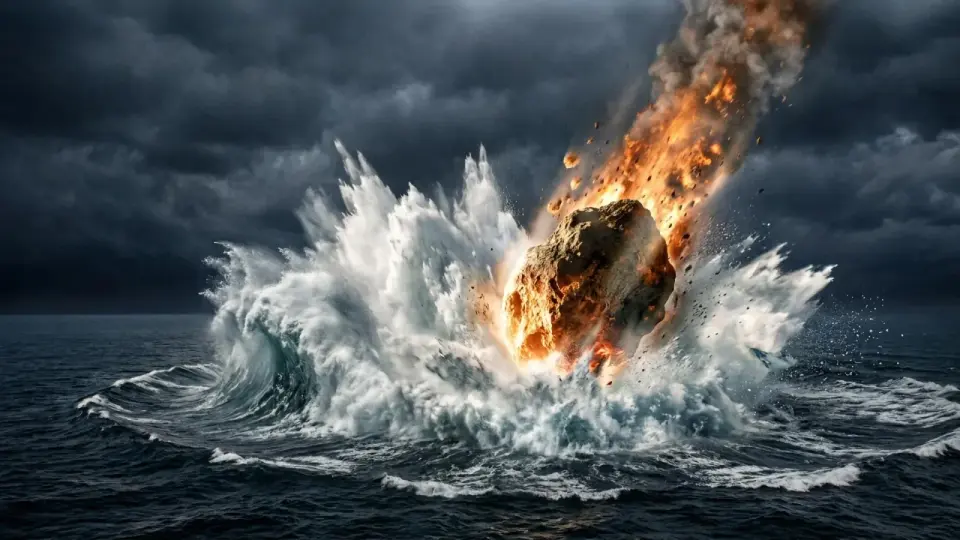
Researchers have confirmed that the Silverpit Crater in the North Sea was formed by an asteroid impact 43 to 46 million years ago, ending a two-decade scientific debate. The collision, caused by a 160-meter-wide object, generated a tsunami over 100 meters high. Evidence includes 'shocked' minerals found in rock samples and advanced seismic imaging.
Key points
- The Silverpit Crater, located 80 miles off Yorkshire, England, is now confirmed as an impact site, resolving a long-standing dispute with geological and volcanic theories.
- The impact occurred 43 to 46 million years ago, involving an asteroid approximately 160 meters wide that struck the seabed at a shallow angle from the west.
- The collision produced a tsunami exceeding 100 meters (330 feet) in height, displacing rock and water into a 1.5-kilometer-high curtain before collapsing back into the sea.
- Decisive evidence includes 'shocked' quartz and feldspar crystals found in oil well samples, which can only form under extreme shock pressures, along with detailed seismic imaging.
- The findings, published in Nature Communications, establish Silverpit as one of only about 33 confirmed impact craters beneath the ocean, aiding future planetary impact studies.
Background
This discovery adds to the limited number of confirmed underwater impact structures, such as the Chicxulub Crater in Mexico and the Nadir Crater off West Africa. While Earth's dynamic geological processes, including plate tectonics and erosion, destroy most evidence of ancient collisions, Silverpit remains exceptionally preserved. The research provides a rare opportunity to study subsurface impact effects, which are difficult to observe on other planets, and helps predict potential consequences of future asteroid collisions.
Why it matters
Confirming the Silverpit Crater as an impact site resolves a significant scientific controversy and provides a valuable model for understanding how asteroid impacts shape planetary surfaces. The preserved subsurface structures offer insights into the geological damage caused by high-speed collisions, which is crucial for interpreting impact features on other worlds and assessing the risks posed by future asteroid threats to Earth.
What to watch
Scientists will utilize the new seismic data and mineral evidence to further analyze how the impact fractured and displaced surrounding geological layers. This research aims to improve models of impact mechanics and enhance our understanding of the role cosmic collisions have played in Earth's geological and biological history.
Want the full story? Read the original reporting
Read on Science Daily