Tag

Asteroid Impact

All articles tagged with #asteroid impact

Inside-Out Nukes: A New Plan to Stop Large Asteroids
space-and-spaceflight2 days ago

Inside-Out Nukes: A New Plan to Stop Large Asteroids

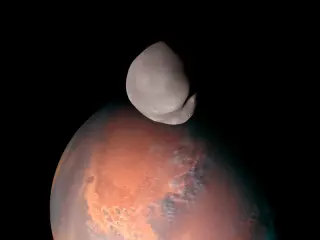
Chinese researchers propose using a nuclear blast to destroy or rapidly deflect a large asteroid by carving a crater and detonating a warhead inside; their models favor a pre-excavation detonation for deep energy transfer, potentially making this approach more effective than surface-only hits for rocks around 100 meters in size and offering two defense modes: direct-impact detonation and pre-excavation detonation.

North Sea's Hidden Crater Revealed: 160-Meter Asteroid Triggered 330-Foot Tsunami
science10 days ago

North Sea's Hidden Crater Revealed: 160-Meter Asteroid Triggered 330-Foot Tsunami

Researchers confirm the Silverpit Crater beneath the southern North Sea was formed by a hypervelocity asteroid or comet about 43–46 million years ago. Using advanced seismic imaging and rock samples with shocked minerals, scientists show a ~160-meter-wide impactor struck at a shallow angle, producing a 1.5-kilometer-high curtain of rock and water that collapsed into a tsunami over 330 feet tall. The finding resolves a two-decade-long debate and places Silverpit among Earth's rare, well-preserved underwater impact craters.

Earth’s oldest asteroid impact found in Australia, dated at 3.02 billion years ago
space16 days ago

Earth’s oldest asteroid impact found in Australia, dated at 3.02 billion years ago

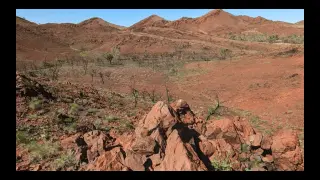
Dating of zircon crystals in rocks at the Miralga Impact Structure (North Pole Dome) in Western Australia places the asteroid impact at about 3.02 billion years ago, making it the oldest known Earth impact site and linking the event to the Late Heavy Bombardment era while shedding light on early crust formation and nearby signs of ancient life.

When the sky became a weapon: the long aftershocks of the Chicxulub impact
science1 month ago

When the sky became a weapon: the long aftershocks of the Chicxulub impact

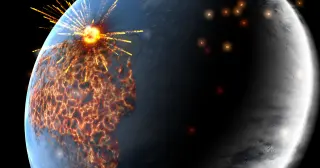
The Chicxulub impact 66 million years ago released molten debris that heated the upper atmosphere and sulfur- and soot-rich aerosols that blocked sunlight for years, triggering a drastic cooling that collapsed photosynthesis and reshaped life on Earth; while fires may have started in some regions, debates continue about how much the global die-off was due to heat, dust, or smoke, with survivors mainly among small, burrowing or detritus-eating species.

Pre-Impact Fungal Bloom Signals Earlier Ecological Stress Before Dinosaur Extinction
science1 month ago

Pre-Impact Fungal Bloom Signals Earlier Ecological Stress Before Dinosaur Extinction

A Johns Hopkins study published in PNAS reports a pre-impact spike in fungal microfossils dating to roughly 30,000–10,000 years before the Chicxulub impact, coinciding with the Deccan Traps volcanic phase in India and suggesting the biosphere was already undergoing ecological stress before the asteroid strike, while a later, global fungal bloom after the impact supports widespread collapse and reinforces that the asteroid was the proximate extinction driver.

End-Cretaceous Extinction Hinged on Ground Beneath Chicxulub
science1 month ago

End-Cretaceous Extinction Hinged on Ground Beneath Chicxulub

New modeling suggests the Chicxulub impact's global killing power hinged on striking hydrocarbon-rich, sulfur-bearing coastal rocks. The study estimates such geology could generate enough stratospheric soot to trigger 8–11°C global cooling, a major driver of the mass extinction, whereas rocks with lower hydrocarbon content would have caused milder effects. The claim is model-based and contingent on late-Cretaceous geology and the impact angle, and while it fits with related research, it remains not a settled consensus.

Ancient Stromatolites Found in Crater Hint at Hydrothermal Cradle for Life
science1 month ago

Ancient Stromatolites Found in Crater Hint at Hydrothermal Cradle for Life

South Korean researchers report finding 10–20 cm stromatolites beneath the Jeokjung-Chogye Basin crater, formed by a ~42,000-year-old asteroid impact, in a hydrothermal lake environment that could have supported microbial life. Mineral signatures including europium indicate hot-water conditions, with radiocarbon dating placing formation between ~23,400 and ~14,600 years ago. The discovery suggests impact craters may have provided transient habitats that contributed to early Earth oxygenation, though more research is needed and similar craters should be studied.

A front-row account of the dinosaur-ending asteroid impact
science2 months ago

A front-row account of the dinosaur-ending asteroid impact

The article guides readers through a vivid timeline of the 66-million-year-old asteroid impact that ended the dinosaurs. It describes the instantaneous fireball, shock waves, and vaporized rocks, followed by megatsunamis, global fires, thick dust, and a prolonged ‘nuclear-winter’ like atmosphere that plunged Earth into darkness and freezing temperatures. Over the next year to decade, ecosystems collapse and mass extinctions unfold, with evidence from iridium-rich layers and the Chicxulub crater confirming the catastrophe. Eventually life recovers in new configurations, enabling mammals to rise in the long aftermath.

Ancient North Sea asteroid sparked a colossal 100-meter tsunami
science4 months ago

Ancient North Sea asteroid sparked a colossal 100-meter tsunami

Researchers confirm that the Silverpit Crater beneath the North Sea was formed by a 160-meter-wide asteroid about 43–46 million years ago, triggering a tsunami over 100 meters tall and blasting a 1.5-km-high plume of rock and water. Using advanced seismic imaging and analyses of shocked minerals, the study resolves the crater’s origin as an asteroid impact and highlights the rare preservation of an oceanic impact site.

Ancient North Sea asteroid crash unleashed a 100m tsunami, study says
science4 months ago

Ancient North Sea asteroid crash unleashed a 100m tsunami, study says

New seismic data and rock fragments confirm the Silverpit feature beneath the southern North Sea is an impact crater formed by a ~160-meter asteroid striking at a shallow angle about 43–46 million years ago, which generated a tsunami over 100 meters high. The findings resolve a long-running debate and place Silverpit among Earth's rare preserved submerged craters, alongside Chicxulub and Nadir.

New Study Reframes the End of Dinosaurs: Thriving, Not Fading
science5 months ago

New Study Reframes the End of Dinosaurs: Thriving, Not Fading

A Science study finds dinosaurs were flourishing in diverse ecosystems up to the 66-million-year asteroid impact, overturning the idea of a slow pre-extinction decline; fossil evidence from New Mexico and elsewhere shows regional bioprovinces and thriving dinosaur communities, with mammals later rebounding while geographic patterns persisted into the Paleocene.

Mysterious Spider-Like Formations on Europa and Jupiter Spark Alien Life Theories
science6 months ago

Mysterious Spider-Like Formations on Europa and Jupiter Spark Alien Life Theories

Scientists have proposed that the mysterious spider-like feature observed on Europa's surface, initially thought to be a structure within a crater, may have formed through processes similar to Earth's lake stars, but likely resulted from an asteroid impact that created cracks allowing salty water to seep through, providing insights into Europa's subsurface and potential signs of extraterrestrial life.

Students devise plan to prevent Armageddon
science8 months ago

Students devise plan to prevent Armageddon

In the 1960s, MIT students and a professor devised a plan called 'Project Icarus' to prevent a catastrophic asteroid impact, which involved detecting and deflecting the asteroid using existing technology. Their efforts contributed to the development of modern planetary defense strategies, significantly reducing the risk of asteroid-induced extinction today.

New Research Challenges Dinosaur Extinction Theories and Reveals Hidden Oceanic Asteroid Crater
science8 months ago

New Research Challenges Dinosaur Extinction Theories and Reveals Hidden Oceanic Asteroid Crater

Scientists have confirmed the existence of the Nadir Crater, a 9 km wide impact crater beneath the Atlantic Ocean floor, formed 66 million years ago by an asteroid likely responsible for the extinction of the dinosaurs. Using advanced seismic imaging, they reconstructed the impact's aftermath, including tsunamis and liquefied sediments, and plan to drill cores to further study this well-preserved site, offering new insights into asteroid impacts and mass extinctions.