
First Direct Measurement: T. rex Ran at 97°F, Matching Human Body Temperature
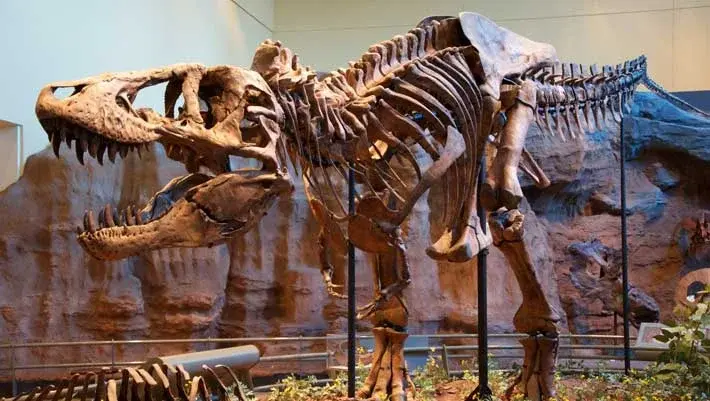
A new study in Science Advances provides the first direct measurement of Tyrannosaurus rex body temperature, finding it ran at approximately 36.3°C (97.3°F). This temperature, similar to modern humans and elephants, confirms T. rex was warm-blooded and capable of inhabiting colder regions like Alaska, distinct from the cooler temperatures of contemporary reptiles.
Key points
- Researchers used clumped isotope paleothermometry on three T. rex teeth from the Hell Creek Formation in Montana to determine body temperature.
- The analysis revealed an average body temperature of 36.3°C, comparable to Indian and African elephants, and significantly higher than the 30.9°C found in contemporary crocodilians.
- The warm-blooded physiology allowed T. rex to thrive in a wider range of latitudes, including colder northern regions where cold-blooded reptiles could not survive.
- The findings support the theory that large theropods were active predators with high metabolic rates, distinct from modern reptiles and slightly cooler than modern birds.
Background
Previous studies, including a 2022 analysis, suggested dinosaurs had varied metabolisms, but lacked direct temperature measurements. This study builds on that by providing precise thermal data, confirming long-standing hypotheses about dinosaur endothermy.
How outlets are covering it
All three sources agree on the 36.3°C finding and its implication for T. rex being warm-blooded. Sci.News and Scientific American emphasize the novelty of the measurement technique, while Smithsonian Magazine highlights the broader implications for T. rex's geographic range, noting it could extend from Alaska to Mexico. Scientific American also notes that T. rex was cooler than modern birds, aligning with previous 2022 studies that placed T. rex on the lower end of endothermy.
Why it matters
This study provides direct evidence for the warm-blooded nature of T. rex, reshaping our understanding of dinosaur physiology, behavior, and habitat. It confirms that large theropods were active, high-metabolism animals capable of surviving in diverse climates, bridging the gap between reptilian ancestors and modern birds.
What to watch
Researchers plan to apply the same isotope analysis technique to avian dinosaurs and ancient mammalian ancestors to further map the evolution of endothermy. The method may also be used to determine the body temperatures of other extinct species, providing insights into their lifestyles and environments.
- Tyrannosaurus rex Had Mammal-Like Body Temperature, Study Finds Sci.News
- What’s the temperature of a T. rex? Hotter than you might think Good Morning America
- Tyrannosaurus Rex Was a Warm-Blooded Dinosaur, With a Body Temperature Similar to That of Humans, Study Suggests Smithsonian Magazine
- T. Rex, King of the Dinosaurs, Had a Body Temperature of 97 Degrees The New York Times
- T. rex was as warm-blooded as humans, new study finds scientificamerican.com
Want the full story? Read the original reporting
Read on Sci.News