
Venus Reaches Peak Brightness in November Morning Sky
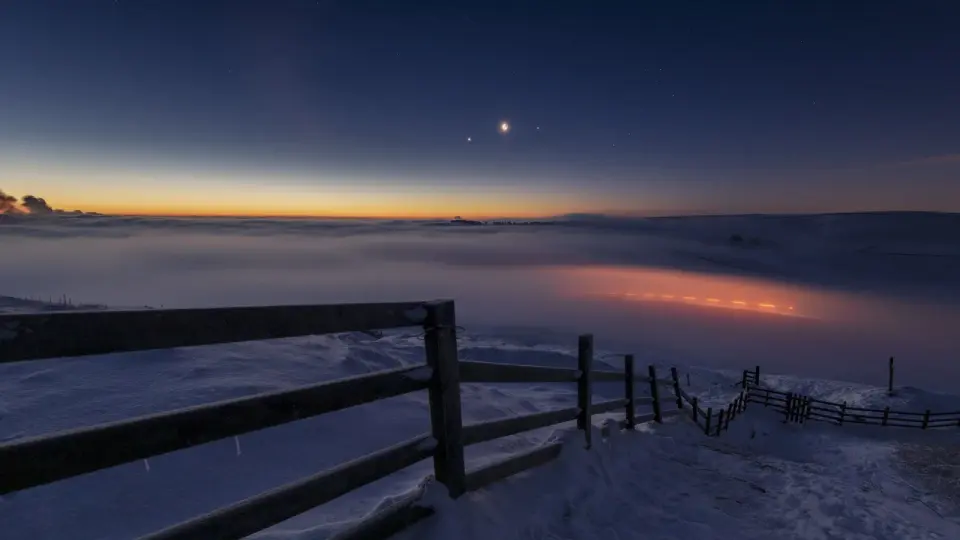
Venus has shifted to the morning sky following its October 24 inferior conjunction, now rising 90 minutes before sunrise. It will reach peak brightness of magnitude -4.9 on November 29, appearing 12 times brighter than Jupiter. Observers can view it alongside the waning crescent Moon and star Spica this week, with visibility improving until mid-December.
Key points
- Venus passed between Earth and the Sun on October 24, moving from evening to morning visibility.
- The planet currently rises 90 minutes before sunrise and will rise three minutes earlier each day.
- Peak brilliance occurs on November 29 at magnitude -4.9, making it 25 times brighter than Sirius.
- Venus will remain visible in the morning sky until July, when it vanishes into dawn twilight.
- This week, Venus appears near Spica and the waning crescent Moon in the east-southeast sky.
Background
Previous archive items covered unrelated early morning events, including a raccoon encounter in Los Angeles, a shooting in Columbia, an abduction in Oregon, and a robbery in Philadelphia. These do not provide astronomical background but confirm the site's coverage of various early morning occurrences.
How outlets are covering it
Space.com emphasizes the dramatic visual impact of Venus, noting its potential to cast shadows and remain visible in daylight. Sky & Telescope provides detailed observational data, including the November 16 conjunction of Jupiter and Mars, and notes Venus's proximity to Spica. The Guardian highlights the aesthetic grouping of Venus, the Moon, and Spica, mentioning the phenomenon of earthshine on the Moon's dark side. All sources agree on the timing and visibility of Venus but differ in focus: Space.com on brightness metrics, Sky & Telescope on technical observation tips, and The Guardian on the visual composition of the sky.
Why it matters
Venus's current visibility offers a rare opportunity for casual observers to witness a planetary object brighter than any star. The event serves as an educational moment for distinguishing planets from stars and understanding orbital mechanics, particularly the transition from evening to morning apparition. It also highlights the seasonal changes in planetary visibility, which are predictable and observable without specialized equipment.
What to watch
Venus will continue to rise earlier each day, reaching peak brightness on November 29. By December 17, it will rise nearly four hours before sunrise. After mid-December, it will gradually descend, rising later each morning until it disappears into dawn twilight by July. Observers should monitor the sky for the conjunction of Jupiter and Mars on November 16, as noted by Sky & Telescope.
- What's that bright 'star' in the early morning sky? It's not a star at all! Space
- This Week's Sky at a Glance, November 6 – 15 Sky & Telescope
- The Moon And Venus Are About To Have Their Closest Meeting Of 2026 Forbes
- Starwatch: Catch the striking trifecta of Venus, the moon and Spica at break of dawn The Guardian
- Venus Blazes in the Dawn Sky, 25 Times Brighter Than Sirius at Peak Around Prague
Want the full story? Read the original reporting
Read on Space