
Webb's Deep Spectrum Bolsters Black Hole Star Model for Early-Universe Dots
TL;DR
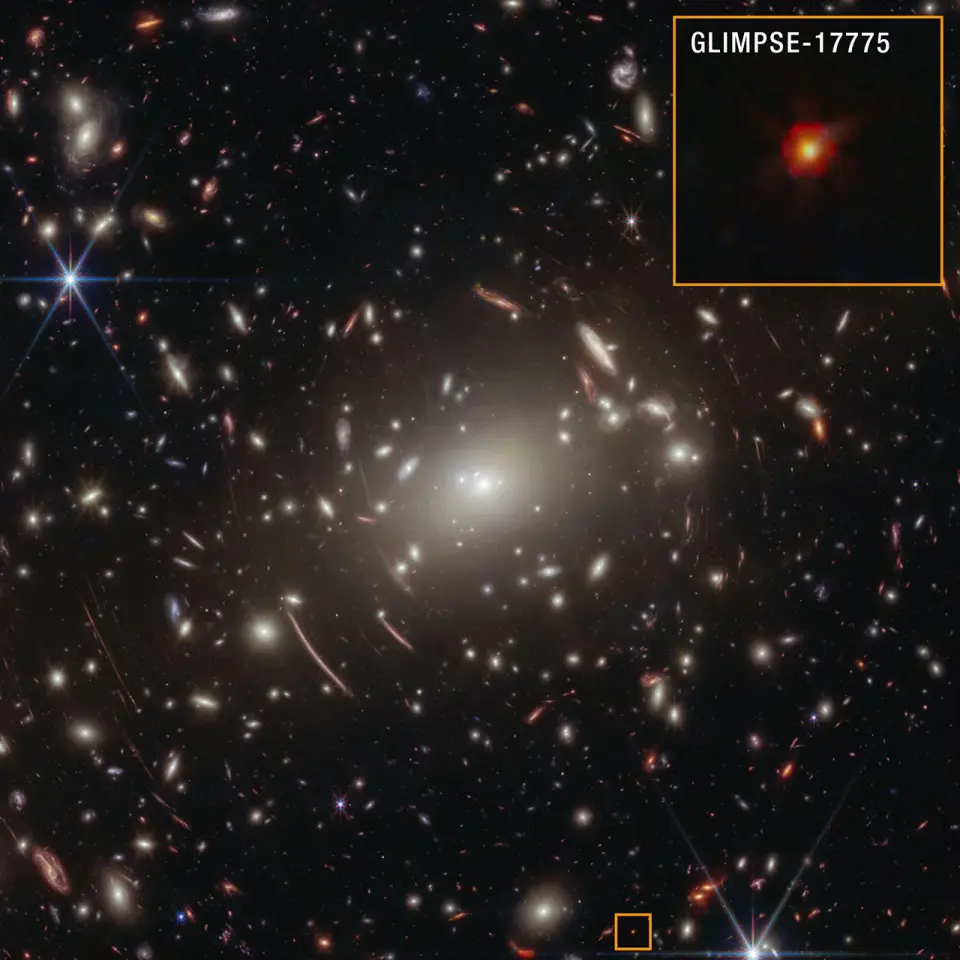
Astronomers using the James Webb Space Telescope have obtained the deepest spectrum yet of the distant 'little red dot' GLIMPSE-17775, uncovering more than 40 spectral lines that collectively support the black hole star (BH*) scenario — a rapidly accreting black hole wrapped in a dense gas cocoon. The data, including an iron forest, helium signatures, and electron scattering, together with Hubble observations, explain features like the Balmer break and why many little red dots are X-ray faint, reinforcing a coherent picture of these objects in the early universe.
Topics:science#black-hole-star#glimpse-17775#james-webb-space-telescope#little-red-dots#science#spectroscopy
- NASA Webb Finds Strongest Evidence Yet for ‘Black Hole Stars’ NASA Science (.gov)
- Black hole feeding bursts may explain JWST's Little Red Dots in early universe Phys.org
- JWST’s Little Red Dots could be black hole feeding bursts Innovation News Network
- Creepy red dots in space look like an ‘evil eye’ — and scientists had no idea what they were until now New York Post
- The discovery of two little red dots in transition into quasars Nature
Want the full story? Read the original reporting
Read on NASA Science (.gov)