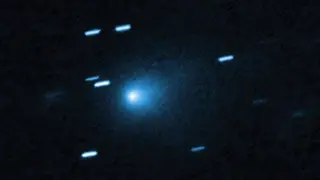
Astronomers using the WEAVE spectrograph on the interstellar comet 3I/ATLAS found a nitrogen-rich tail, suggesting it formed in extremely cold conditions (< -240°C) far from its star, likely in the outer reaches of another planetary system before entering our solar system.
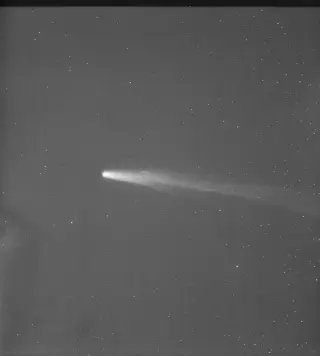
Earth crossed Halley’s 1910 tail after cyanogen was spectroscopically detected, but the tail was so diffuse that no harmful effect occurred. Sensational reporting turned the finding into a poison scare, fueling sales of comet pills, leather inhalers, gas masks and even ‘comet insurance,’ despite the science distinguishing detection from a dangerous dose. Later analyses and missions clarified the physics of an extremely thin tail, underscoring how media framing can mislead when scale and exposure aren’t understood.
New study using WEAVE on the William Herschel Telescope finds interstellar comet 3I/ATLAS formed in ultra-cold conditions below -240°C, far from its star in the distant icy outskirts (like the Kuiper Belt/Oort Cloud). By analyzing five ions in the coma—N2+, CO+, CO2+, H2O+, CH+— researchers estimated the cold formation from the N2/CO ratio, and mapped ion distributions along the tail, a first for an ISO; rapid-response observations (DDT) enabled this insight, advancing understanding of planet formation around other stars.
A 2025 Nature Communications study argues Martian dust’s red color is largely ferrihydrite, an iron mineral that forms in cool, liquid water, linking Mars’s hue to a wetter past. By matching spectra from orbiters and rovers with lab mixtures of ferrihydrite and basalt, the authors show ferrihydrite could dominate the dust, implying extensive aqueous alteration and a planetary history of water even as Mars dried. The finding strengthens the habitability case but requires returned samples for confirmation and does not prove life.
On Aug. 18, 1868, during a total solar eclipse in India, French astronomer Pierre Janssen used a spectroscope to observe a bright yellow line not matching any known element, signaling the discovery of helium; English astronomer Norman Lockyer independently identified the same line as a new element, later named helium after Helios. This was the first time spectroscopy revealed an element in an astronomical object before it was found on Earth, and helium would later prove essential for spaceflight and stellar physics.
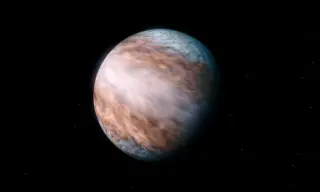
Astronomers using ESO's VLT CRIRES+ measured an exceptionally fast equatorial jet on the bloated hot Jupiter WASP-127b (about 520 light-years away). Doppler shifts in water vapor and carbon monoxide during transit reveal two opposing velocity peaks, indicating a strong eastward jet. After subtracting the planet’s rotation, the jet speed is 7.7 ± 0.2 km/s (roughly 27,700 km/h); including rotation, the maximum equatorial motion reaches about 9 km/s (≈33,000 km/h)—the fastest wind observed on any planet. The result demonstrates a method to map atmospheric circulation on unresolved exoplanets and confirms molecules in the atmosphere, while suggesting cooler poles or high-altitude clouds and paving the way for finer measurements with the Extremely Large Telescope.
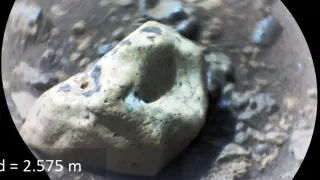
NASA's Perseverance rover identified chromium-bearing corundum grains (the mineral behind rubies and sapphires) in three plagioclase-rich float rocks at Jezero Crater using time-resolved luminescence spectroscopy, marking the first detection of corundum on Mars. The grains imply aluminum-rich, silicon-poor chemistry likely formed during ancient impacts or hydrothermal activity; spectral matches to Earth corundum suggest a surprising Martian geology, and returning a sample could confirm exactly how this mineral formed.
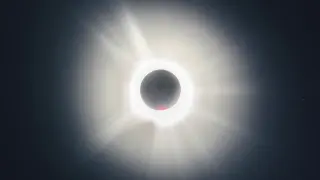
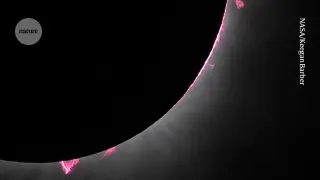
During the 12 August total solar eclipse over Greenland, researchers will have about two minutes at observing sites in Spain and Iceland to study the corona with spectrometers and high‑resolution cameras, aiming to answer why the corona is millions of degrees hotter than the Sun's surface and how magnetic energy heats it, with the goal of improving space‑weather forecasts ahead of the 2027 eclipse.
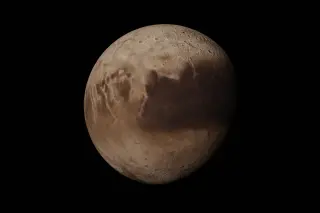
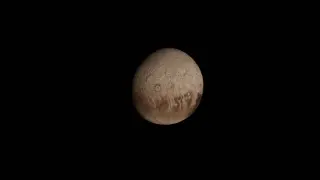
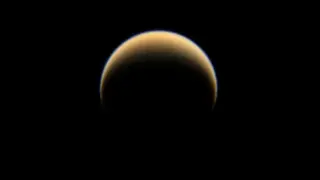
NASA’s James Webb Space Telescope detected an unidentified absorption feature at about 5.113 micrometers on both Titan and Pluto, seen in data from NIRSpec and MIRI, and not matched by published lab spectra of known ices or organics. The feature behaves like a surface absorption and varies across Titan’s disk, suggesting a material near the surface rather than in the atmosphere; the two bands differ in width, implying environmental differences rather than an identical fingerprint. While several candidate substances come close in theory (e.g., certain ices or allenes), none provide a perfect match, revealing a gap in laboratory libraries. The absorber could be a single compound, a related set, or a mixture whose spectrum shifts with conditions. Further work—targeted low-temperature lab measurements under Titan- and Pluto-like conditions and potential in-situ confirmation from Dragonfly on Titan—will be needed to identify it.
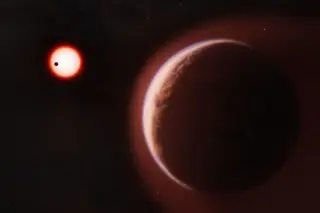
Astronomers detected a helium signal escaping from LHS 1140 b duringtransits, providing the first atmospheric confirmation for a rocky planet in a star’s habitable zone and placing it 48 light-years away in Cetus. The finding shows an atmosphere exists, but leaves questions about its composition, pressure and surface conditions. The observation used the Magellan telescope in 2024, with a recheck in 2025 that yielded a non-detection, suggesting the escape can vary with the star’s high-energy output; further repeated helium detections and Webb observations are planned to probe the planet’s gases and potential habitability.
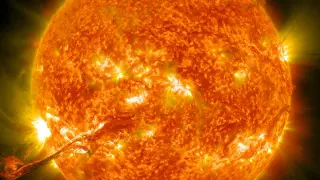
A new, detailed 3D model of the Sun’s atmosphere reinterprets its spectral lines, boosting the solar silver abundance by about 55% and bringing it in line with meteorite samples; this refines our understanding of Milky Way chemical evolution and early cosmic history, though results remain sensitive to hydrogen-collision data and require further calibration with SUSI data and application to other stars.
Astronomers have found the strongest evidence yet that the rocky exoplanet LHS 1140 b, orbiting a red dwarf in its habitable zone, retains an atmosphere, inferred from helium escaping from the planet and detected with ground-based spectroscopy; the result suggests Earth-like worlds can maintain atmospheres for billions of years and opens new avenues to study their habitability.
James Webb Space Telescope observations reveal an identical, unexplained infrared absorption feature on Titan and Pluto, suggesting a shared surface chemistry. The signal doesn’t match known spectra and may belong to a hydrocarbon family (potentially allenes) formed in atmospheric photochemistry and deposited on the surfaces. Pluto’s thin atmosphere argues against an atmospheric origin, while Titan’s surface and atmospheric processing are implicated. Ongoing JWST analyses, Titan surface mapping, and the Dragonfly mission could help pinpoint the mystery molecule.
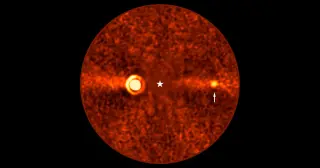
Using JWST’s NIRSpec and follow-up imaging from ESO’s VLT, astronomers detected Beta Pictoris d by its atmospheric spectrum, a third planet in the bright Beta Pictoris system—discovered via spectroscopy rather than direct imaging and independently confirmed, highlighting a new way to find worlds hidden in dusty disks.
A refined model of the Sun's atmosphere shows the Sun contains about 55% more silver than earlier estimates, meaning silver isn't missing but was misread due to simplified models; the solar abundance now aligns better with ancient meteorites and resolves a decades-long discrepancy. The improvement comes from more realistic treatment of the Sun's outer layers and how silver atoms interact with light, rather than discovering new silver. Researchers say the Sun remains a key reference for understanding heavier elements in stars and plan to apply the method to other stars while checking for biases from other elements.