Tag

Black Hole Star

All articles tagged with #black hole star

Webb’s Tiny Red Dots Spark Debate Over Black Hole Birth
astronomy25 days ago

Webb’s Tiny Red Dots Spark Debate Over Black Hole Birth

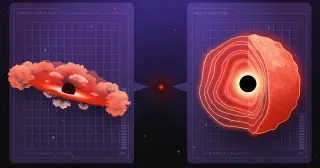
NASA’s Webb has detected widespread “little red dots” whose nature is disputed: they may be distant galaxies, feeding black holes, or a new class called black hole stars powered by hidden cores. New spectra introducing Balmer breaks and revised line shapes have fueled a black hole-star/quasi-star interpretation, while others argue for traditional black holes plus dust or orientation effects. The debate is fueling tests and models about how supermassive black holes might form in the early universe, with researchers seeking distinguishing patterns and mass inferences to settle the dispute.
Black hole stars, cookie-making microbes, and sound-powered drones: seven science stories you almost missed
science1 month ago

Black hole stars, cookie-making microbes, and sound-powered drones: seven science stories you almost missed

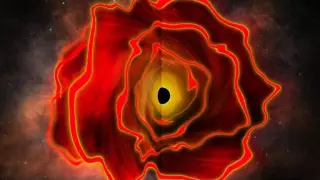
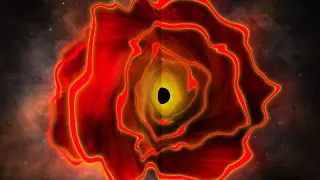
A monthly science roundup highlights seven notable stories: the discovery of a ‘black hole star’ in the early universe, microbes transforming PET plastic into edible cookies, whale-call interference that mirrors relativistic physics, mosquito species showing distinct scent preferences, avocado trees with daily sex-switching flowers controlled by a single gene, tiny drones powered by sound with Helmholtz resonator cavities, and a heat-driven elastocaloric cooling system that could use waste heat or solar energy.

JWST spots solar-system-sized 'black hole star' in the early universe
space1 month ago

JWST spots solar-system-sized 'black hole star' in the early universe

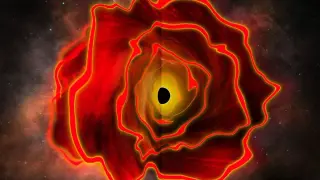
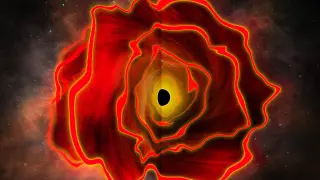
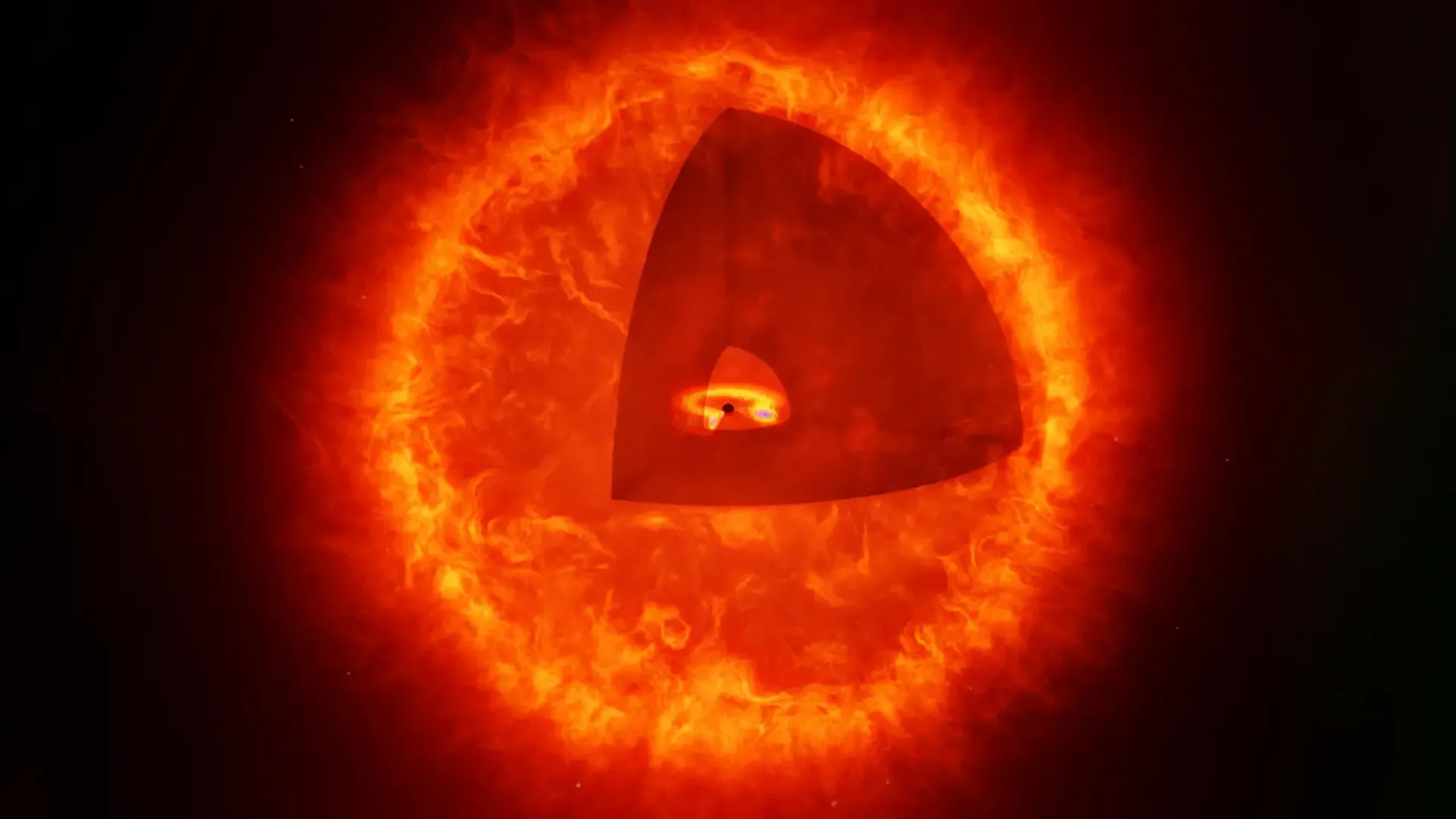
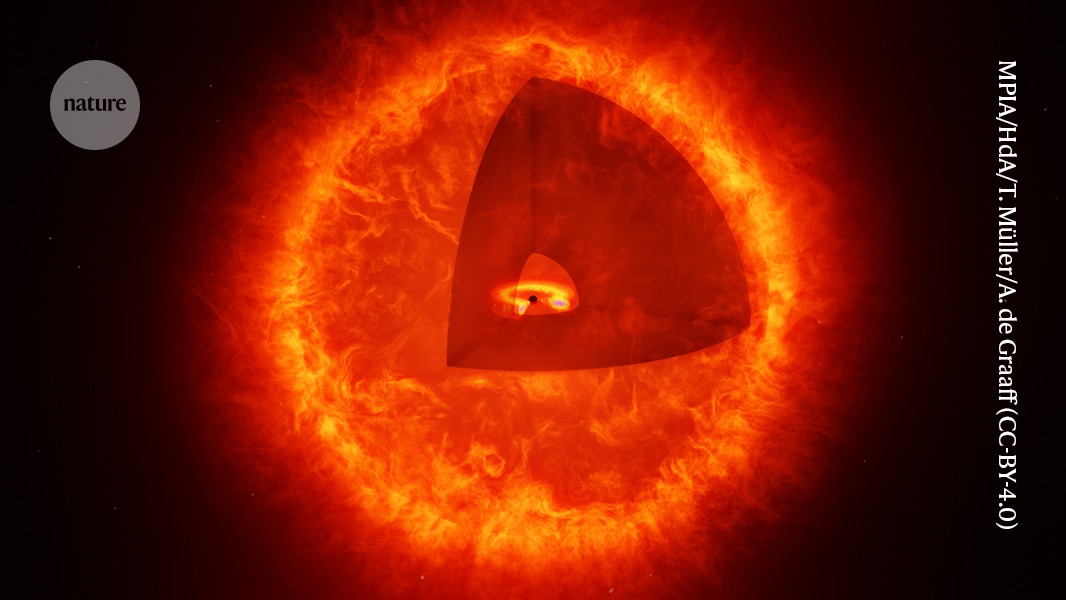
Astronomers using the James Webb Space Telescope have spotted MoM-BH*-1, a solar-system-sized, red, gas-enshrouded object about 660 million years after the Big Bang. Interpreted as a black hole star—a massive black hole wrapped in a cocoon of dense gas—the object could be the best evidence yet for this hypothetical class and may explain the mysterious 'little red dots' seen by JWST. The central black hole could weigh up to about 100,000 solar masses, and while previous candidates existed, MoM-BH*-1 is farther away and thus more informative; further observations are needed to confirm the model and understand how such objects form.

Webb spots solar-system-sized dot likely a black hole star from the dawn of the universe
space-and-astronomy1 month ago

Webb spots solar-system-sized dot likely a black hole star from the dawn of the universe

The James Webb Space Telescope identified MoM-BH*-1, a solar-system-sized, ruby-red dot seen about 660 million years after the Big Bang, proposed as a new object class: a black hole star—a dense shell of gas around a massive black hole. If confirmed, it would be the strongest evidence yet for this type of object and could help explain the enigmatic “little red dots” JWST has found. The object may host up to ~100,000 solar masses, with its Balmer-break spectrum indicating a dust-free, hydrogen/helium gas cocoon rather than ordinary starlight; further observations and modeling are needed to verify this interpretation.

James Webb Spots a New Class of Star Fueled by Black Holes
space1 month ago

James Webb Spots a New Class of Star Fueled by Black Holes

Using the James Webb Space Telescope, scientists identified a new object class—'black hole stars'—dense gas clouds fully enveloping a black hole that are powered by the black hole’s energy rather than fusion, yielding a brightness about 100 billion times that of a normal star. These objects appear as extremely bright red dots in Webb’s deep-field images from the cosmic dawn, implying such systems formed in the early universe and could shed light on how supermassive black holes arise; they are not accretion disks and require further study.

JWST Spots a Black Hole Star Lighting Up the Early Universe
science1 month ago

JWST Spots a Black Hole Star Lighting Up the Early Universe

Using the James Webb Space Telescope, scientists describe MoM-BH*-1—a black hole embedded in a massive, luminous gas envelope that glows bright red about 660 million years after the Big Bang. The object emits energy far exceeding normal stars, while dense surrounding gas absorbs light in a way that makes the source appear star-like. This provides evidence for the existence of black hole stars and may explain mysterious red spots seen in the early universe.

James Webb Spots a New Cosmic Class: a Black Hole Star Wrapped in Gas
science1 month ago

James Webb Spots a New Cosmic Class: a Black Hole Star Wrapped in Gas

Using the James Webb Space Telescope, researchers identified MoM-BH*-1—a black hole at its core surrounded by a dense gas shell that makes it look star-like, with about 100,000 solar masses and emitting energy about 100 billion times that of a typical star; it formed within 700 million years after the Big Bang. This discovery suggests many of the faint red dots seen in the early universe could be black hole stars embedded in young galaxies, potentially reshaping ideas about early black holes and galaxy growth.

Cosmic Oddity: JWST Identifies a One-in-a-Billion Black-Hole Star
science1 month ago

Cosmic Oddity: JWST Identifies a One-in-a-Billion Black-Hole Star

Astronomers using the James Webb Space Telescope have identified MoM-BH*-1, a rare hybrid object that blends a star-like gas cloud with a black hole about 100,000 solar masses. It emits energy far exceeding typical stellar formations and is about 100 billion times brighter than the average star, even outshining its host galaxy. This “black-hole star” could explain the little red dots seen in JWST images from the dawn of the universe and may shed light on how the first cosmic structures formed; researchers will continue studying its size and atmospheric composition with JWST starting in December.

JWST uncovers a distant naked black-hole-star, offering clues to the little red dots
science1 month ago

JWST uncovers a distant naked black-hole-star, offering clues to the little red dots

Astronomers using the James Webb Space Telescope’s Mirage/MoM survey discovered MoM-BH*-1, the farthest known naked black-hole-star. Its accretion-powered glow lights a surrounding gas cloud, and its proximity to a young, high-redshift galaxy suggests such objects could masquerade as faint galaxies in JWST observations. This finding supports the idea that black-hole stars may be key engines in the early universe and could illuminate why the JWST images show the mysterious little red dots; the team estimates MoM-BH*-1 could eventually merge with its host galaxy in about 100 million years, potentially shedding light on the birth of quasars.

Astronomers Uncover a Black Hole Star in the Early Universe
space-and-spaceflight1 month ago

Astronomers Uncover a Black Hole Star in the Early Universe

Nature-published researchers report the discovery of MoM-BH*-1, a newly identified object that resembles a giant star but radiates energy like a black hole, wrapped in dense gas and outshining its host galaxy. Scientists label it a “black hole star,” a find that could illuminate how the first supermassive black holes formed and connect to the JWST-detected little red dots from the cosmic dawn; further JWST observations are planned to constrain its mass and atmospheric properties.

Astronomers Detect a Solar-System-Sized Black Hole That Shines Like a Star
space1 month ago

Astronomers Detect a Solar-System-Sized Black Hole That Shines Like a Star

Using the James Webb Space Telescope, astronomers report a candidate 'black hole star' in Cetus—the reddest object MoM-BH*-1—an entity about the size of the solar system that emits far more energy than any star yet shows stellar signatures. Computer simulations suggest it is a black hole swaddled in dense gas radiating as a star, and if confirmed, such objects could exist in large numbers, potentially shaping early galaxy evolution and serving as seeds for supermassive black holes.

Webb telescope uncovers a black hole star among the early-universe 'little red dots'
space4 months ago

Webb telescope uncovers a black hole star among the early-universe 'little red dots'

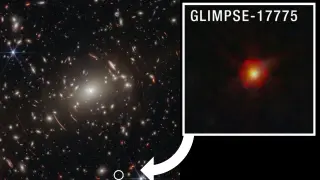
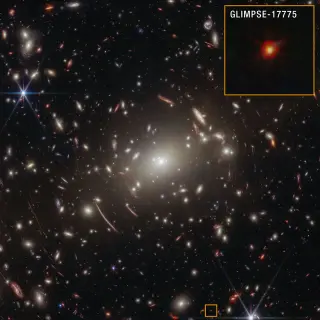
Astronomers using the James Webb Space Telescope have found deep spectral evidence that the little red dot GLIMPSE-17775, seen behind the gravitational lens Abell S1063, is a black hole star—an actively feeding supermassive black hole cocooned in dense gas. The spectrum shows unusual emission lines, an iron forest, and electron scattering consistent with a rapidly growing black hole in a cocoon, supporting the idea that many early-universe little red dots are such black-hole–driven systems and explaining their faint X-ray signals. This is the deepest spectrum to date for a little red dot, and researchers plan further follow-up to pin down the engines powering these sources.

Webb's Deep Spectrum Bolsters Black Hole Star Model for Early-Universe Dots
science4 months ago

Webb's Deep Spectrum Bolsters Black Hole Star Model for Early-Universe Dots

Astronomers using the James Webb Space Telescope have obtained the deepest spectrum yet of the distant 'little red dot' GLIMPSE-17775, uncovering more than 40 spectral lines that collectively support the black hole star (BH*) scenario — a rapidly accreting black hole wrapped in a dense gas cocoon. The data, including an iron forest, helium signatures, and electron scattering, together with Hubble observations, explain features like the Balmer break and why many little red dots are X-ray faint, reinforcing a coherent picture of these objects in the early universe.

JWST Uncovers Mysterious Red Dot and New Class of Extreme Celestial Objects
science10 months ago

JWST Uncovers Mysterious Red Dot and New Class of Extreme Celestial Objects

Astronomers using the James Webb Space Telescope discovered numerous mysterious red dots in distant galaxies, with one particularly extreme object called 'The Cliff' challenging existing models. New theories propose these could be 'black hole stars'—active galactic nuclei enshrouded in dense gas—potentially explaining rapid early galaxy growth and black hole formation. Further observations are needed to confirm these groundbreaking ideas.

Astronomers puzzled by mysterious red dots in the sky
science11 months ago

Astronomers puzzled by mysterious red dots in the sky

Astronomers using the James Webb Space Telescope have discovered hundreds of mysterious small red dots in the early universe, now thought to be a new type of celestial object—hybrids between black holes and stars, called 'black-hole-stars'—which could reshape understanding of cosmic evolution. These objects, exemplified by the 'Cliff,' show unique spectral features indicating they are energetic black holes enshrouded in dense gas, and may be the precursors to galaxy centers.