
Citizen Scientists Revive 1978 Probe but Fail to Redirect Orbit Due to Depleted Pressurizer
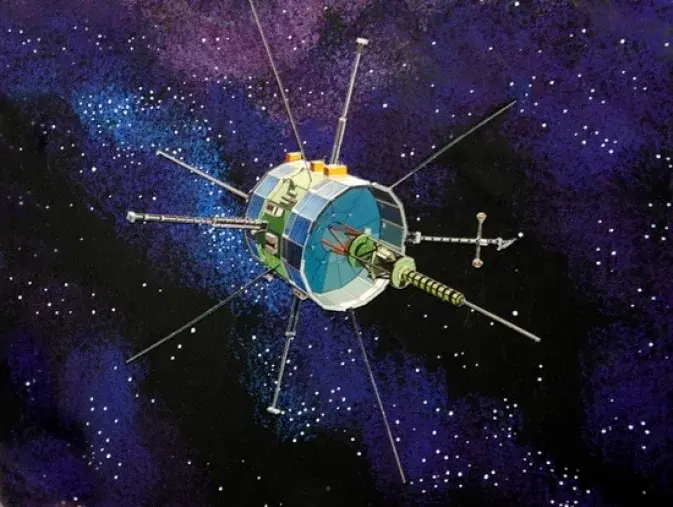
A team of independent engineers successfully re-established command of the dormant ISEE-3 probe in 2014 using software-defined radio, restoring its spin rate after 27 years. However, the mission to redirect the spacecraft to a useful Earth-Sun orbit failed because the nitrogen gas required to pressurize the fuel system had leaked away, leaving the hydrazine propellant unusable.
Key points
- The ISEE-3 Reboot Project, led by Keith Cowing and Dennis Wingo, secured a non-reimbursable agreement with NASA in May 2014 to command the long-retired probe.
- On July 2, 2014, the team successfully fired 11 thruster pulses via the Arecibo radio telescope, restoring the spacecraft's spin rate to 19.75 revolutions per minute.
- A subsequent attempt on July 8 to perform a 7.3 m/s trajectory correction failed after producing only 0.15 m/s of thrust, as the nitrogen pressurant had depleted.
- The failure prevented the planned lunar flyby on August 10, causing the probe to miss its capture window and continue in heliocentric orbit.
- Despite the orbital failure, the team activated scientific instruments and returned data before losing contact in September 2014.
Background
This event follows a pattern of failed or partial spacecraft rescues, such as the recent failure to save the Swift telescope, highlighting the fragility of long-duration missions. While NASA has funded new concepts like ion-powered aerobots for Titan, the ISEE-3 case remains unique as a citizen-led effort to revive a government asset without institutional support. The probe’s original 1978 launch and 1985 comet encounter established it as a pioneer in solar wind observation and cometary science, making its 2014 revival a significant test of obsolete technology recovery.
Why it matters
The ISEE-3 reboot demonstrates that spacecraft can remain electrically alive long after institutional support ends, but also reveals the critical vulnerability of consumable systems like pressurants. It proves that modern software can replace lost hardware for command and control, yet physical degradation in space remains an insurmountable barrier for orbital maneuvers. This case study informs future strategies for servicing dormant assets and highlights the limits of remote recovery without on-orbit maintenance capabilities.
What to watch
The ISEE-3 probe continues in heliocentric orbit, operationally unreachable since September 2014. No further attempts to command the spacecraft have been made, as the propulsion system is confirmed non-functional. The data collected during the 2014 revival remains archived, but the spacecraft is effectively lost to active mission control.
Want the full story? Read the original reporting
Read on Space Daily