
DART finds binary asteroids exchange debris via slow 'cosmic snowballs'
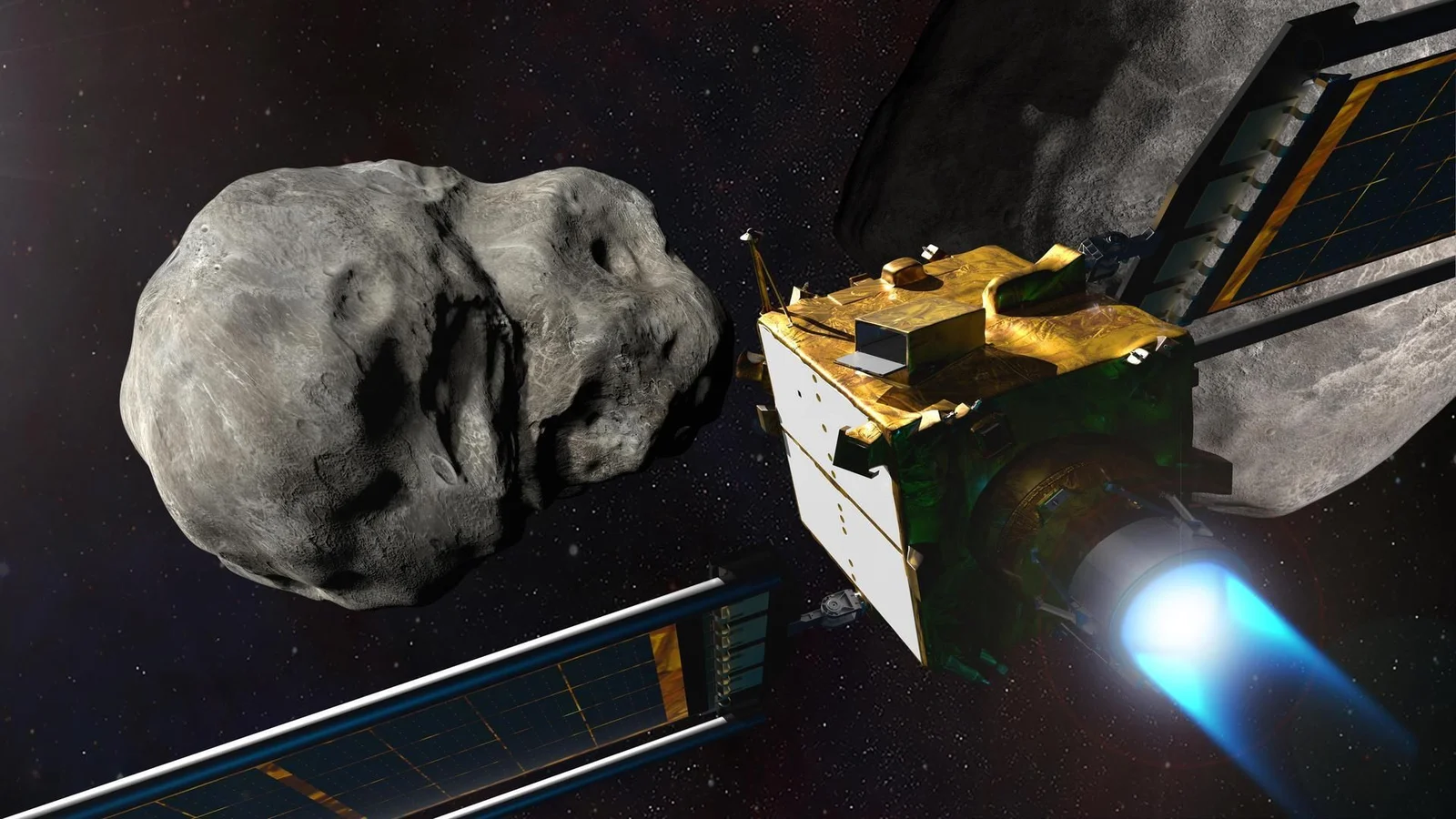
NASA's DART mission captured the first direct evidence that debris can move between the binary asteroid pair Dimorphos and Didymos, with 2022-era imagery showing fan-shaped streaks likely produced by material shed from Didymos and landing on Dimorphos. The ejecta traveled about 30.7 centimeters per second (12.1 inches per second), slow enough to deposit material rather than creating craters, indicating active surface evolution in a binary asteroid system. The findings, published in The Planetary Science Journal, complement other results showing DART altered Dimorphos’ orbit and slightly shifted the binary system’s orbit around the sun; the ESA Hera mission is set to survey the system later this year to further study the aftermath and improve planetary-defense models.
- NASA's DART planetary defense mission reveals asteroids hurling 'cosmic snowballs' at each other Space
- NASA’s DART Mission Changed Orbit of Asteroid Didymos Around Sun NASA (.gov)
- NASA's asteroid-smashing DART spacecraft hit so hard, it changed its target space rocks' orbit around the sun Yahoo
- NASA successfully kicks asteroid off course in Earth defence test France 24
- NASA’s DART Mission Offers Proof of Protection Against Asteroid Impacts Nautilus | Science Connected
Want the full story? Read the original reporting
Read on Space