Tag

Didymos

All articles tagged with #didymos

DART finds binary asteroids exchange debris via slow 'cosmic snowballs'
space-exploration1 month ago

DART finds binary asteroids exchange debris via slow 'cosmic snowballs'

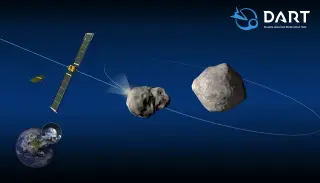
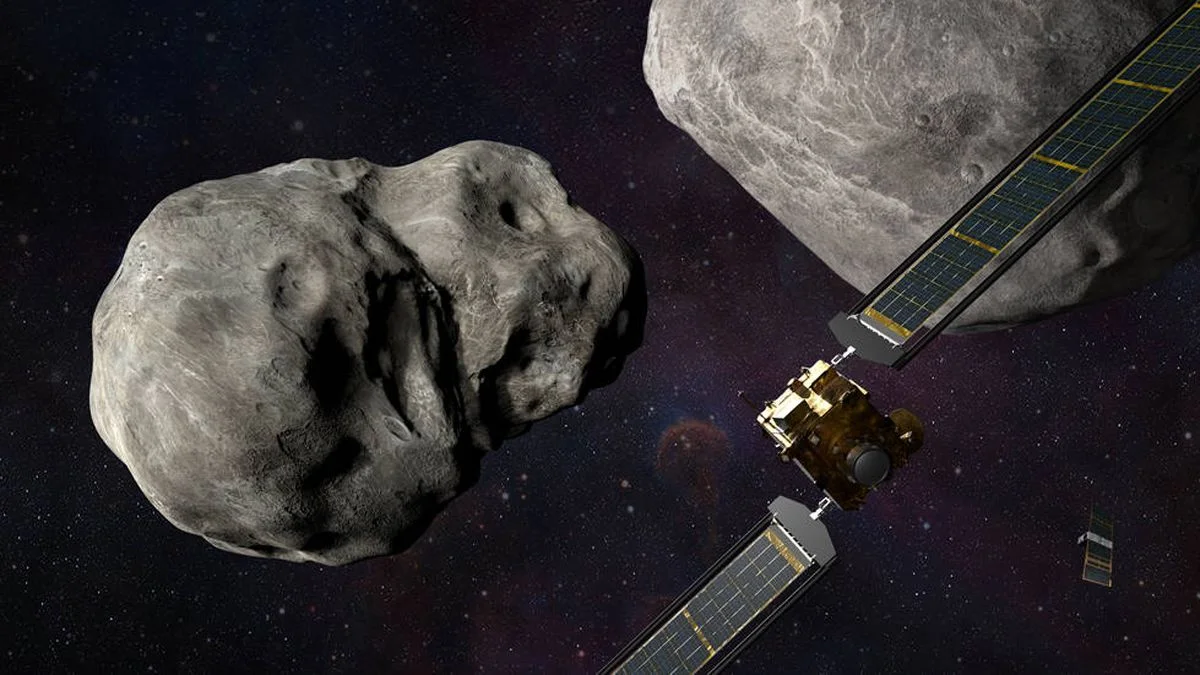
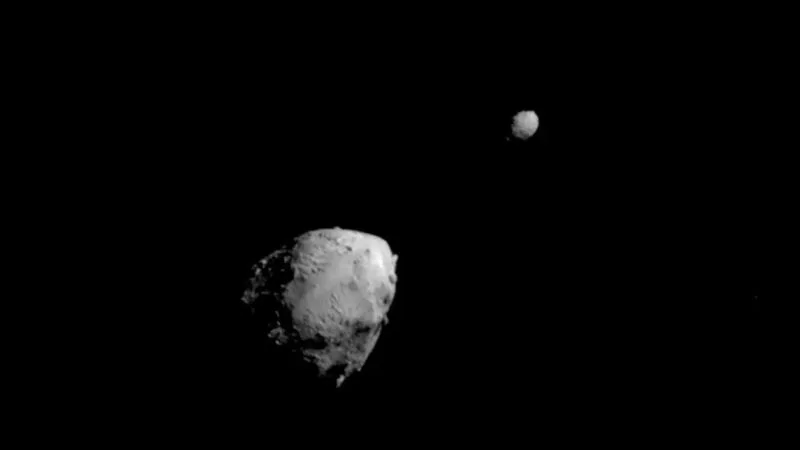
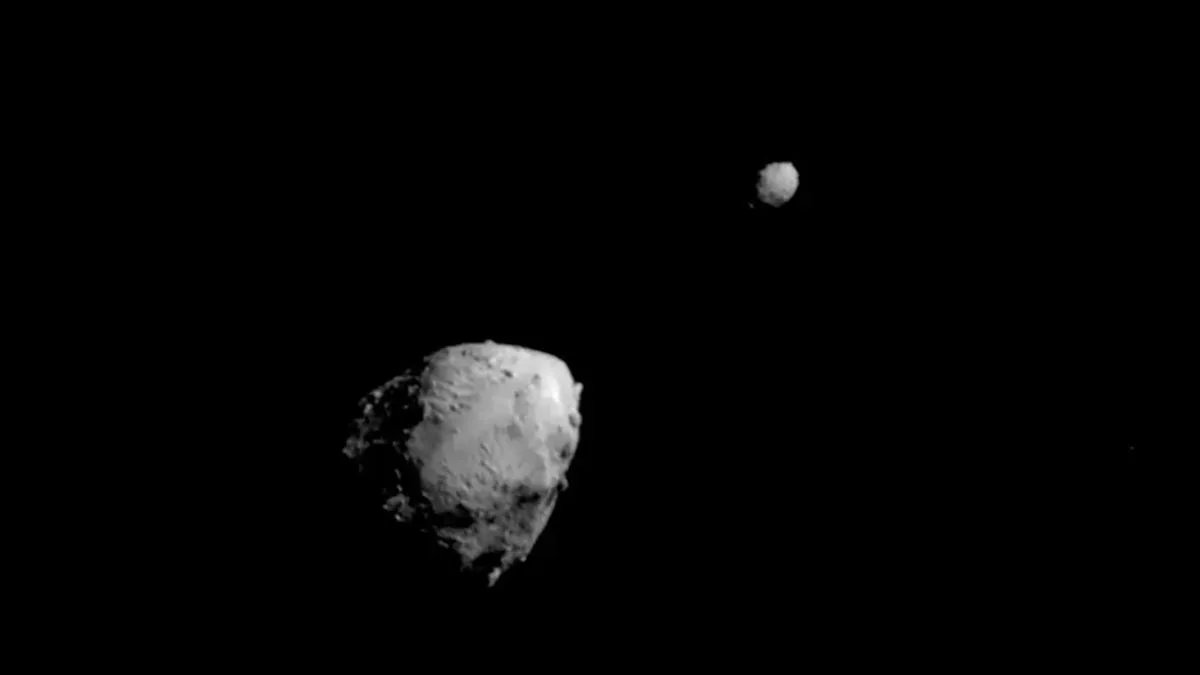
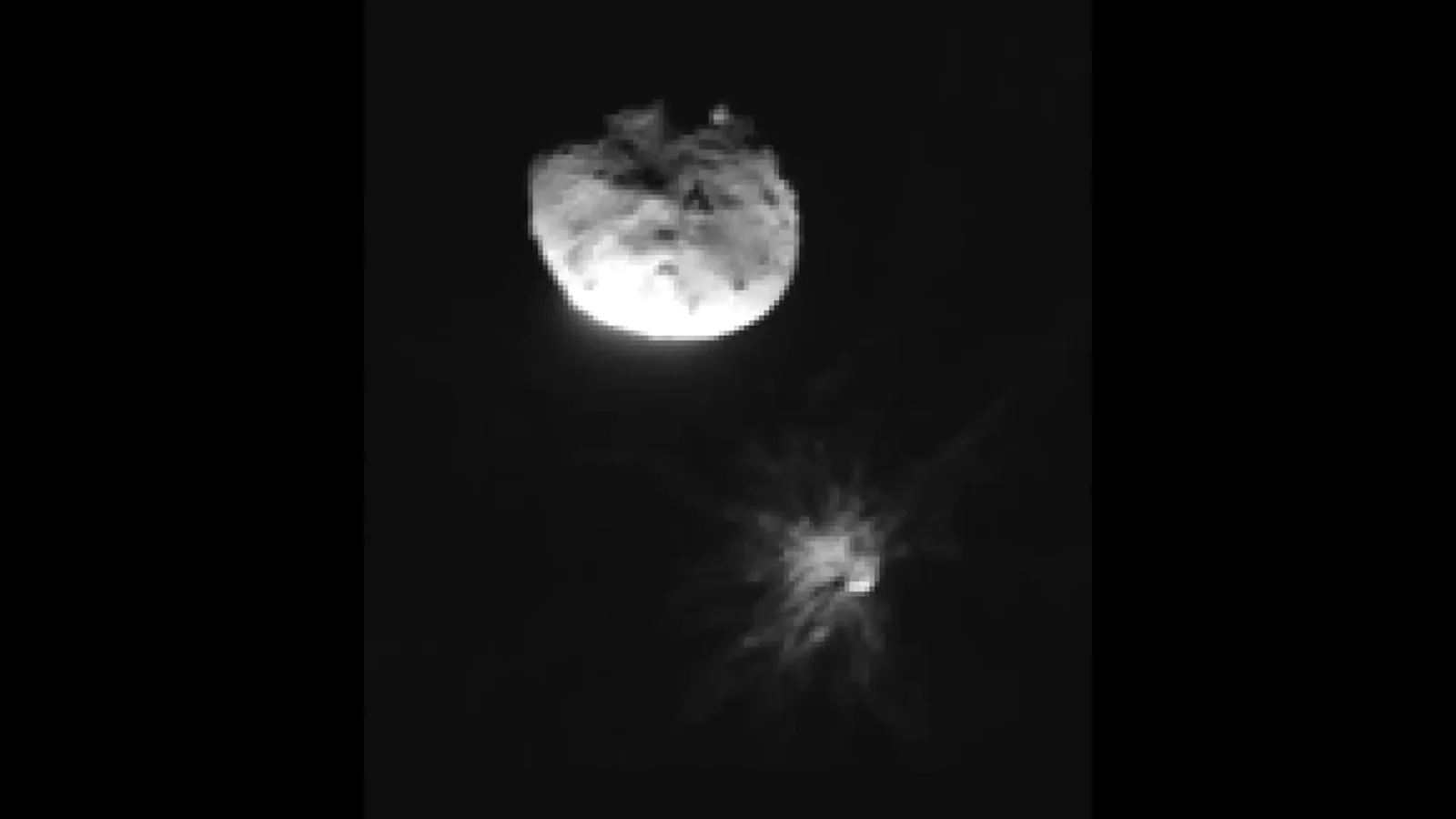
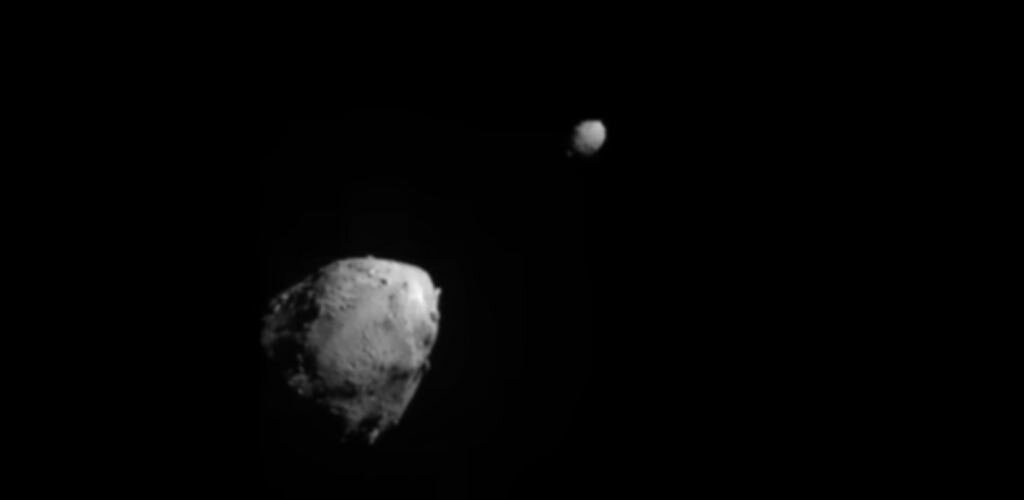
NASA's DART mission captured the first direct evidence that debris can move between the binary asteroid pair Dimorphos and Didymos, with 2022-era imagery showing fan-shaped streaks likely produced by material shed from Didymos and landing on Dimorphos. The ejecta traveled about 30.7 centimeters per second (12.1 inches per second), slow enough to deposit material rather than creating craters, indicating active surface evolution in a binary asteroid system. The findings, published in The Planetary Science Journal, complement other results showing DART altered Dimorphos’ orbit and slightly shifted the binary system’s orbit around the sun; the ESA Hera mission is set to survey the system later this year to further study the aftermath and improve planetary-defense models.

DART impact nudges binary asteroid off its solar path
space1 month ago

DART impact nudges binary asteroid off its solar path

NASA's 2022 DART impact on Dimorphos not only shortened its orbit around Didymos (from 11h55m to 11h23m) but also nudged the entire Didymos–Dimorphos system onto a subtly different solar orbit, thanks to momentum from the ejecta which doubled the thrust. The system's solar-trajectory change is about 11.7 microns per second (roughly 1.7 inches per hour) and the orbit around the Sun shifted by about 0.15 seconds; the findings, published in Science Advances, confirm asteroid deflection is feasible and underscore the value of NEO Surveyor and amateur occultation observers who helped quantify the change. Dimorphos density ~1,540 kg/m3; Didymos ~2,600 kg/m3.

Tiny nudge, big consequence: DART subtly shifts binary asteroid's solar orbit
space-exploration1 month ago

Tiny nudge, big consequence: DART subtly shifts binary asteroid's solar orbit

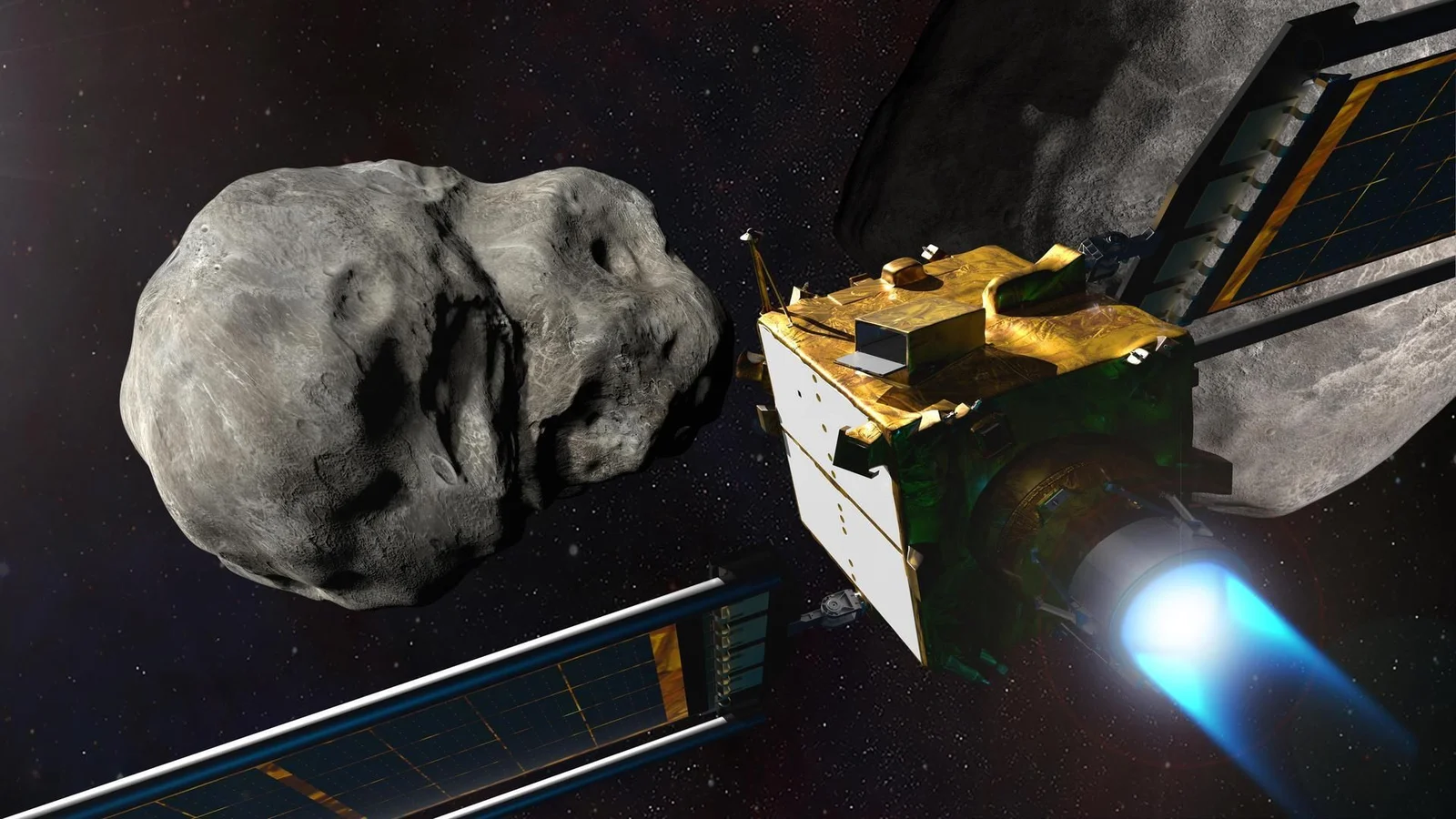
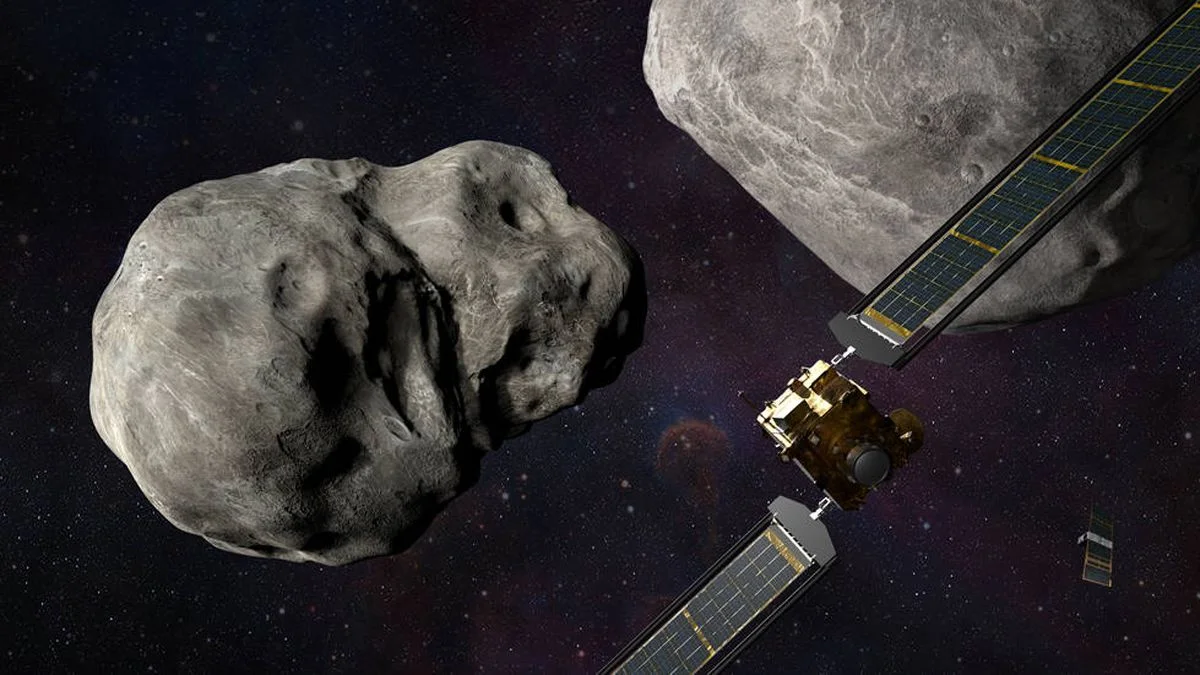
NASA’s Double Asteroid Redirection Test (DART) slammed into the small moon Dimorphos in 2022, shortening its orbit around the larger asteroid Didymos from 11 hours 55 minutes to 11 hours 23 minutes. A new analysis shows ejecta from the cratering boosted the thrust by a momentum-enhancement factor of about two, meaning the ejecta carried away momentum that amplified Dimorphos’ deflection. Because Dimorphos is bound to Didymos, the extra push nudged the whole binary’s orbit around the Sun, changing their heliocentric orbital period by about 0.15 seconds. The result, based on ground-based observations including 22 amateur stellar occultations, supports the feasibility of asteroid deflection and informs future efforts, including NASA’s planned Near-Earth Object Surveyor to find more near-Earth objects after 2027.

DART’s hit nudged the Didymos–Dimorphos pair into a slightly faster solar orbit
space1 month ago

DART’s hit nudged the Didymos–Dimorphos pair into a slightly faster solar orbit

NASA’s DART spacecraft’s impact on Dimorphos altered the binary asteroid system’s motion around the Sun: their orbital period around the Sun shortened by about 0.15 seconds (from ~770 days) due to momentum transfer and debris ejection (~16 million kg). The measured change in orbital speed was ~11.7 microns per second, marking the first time a human-made object subtly altered a celestial body’s solar orbit; follow-up Hera observations will study the aftermath.

DART makes history by nudging an asteroid's path around the Sun
space1 month ago

DART makes history by nudging an asteroid's path around the Sun

NASA's DART spacecraft’s 2022 impact on Dimorphos not only shortened the moonlet's orbit around Didymos but also measurably altered the Didymos–Dimorphos system's orbit around the Sun, changing the pair's solar trajectory by about 11.7 microns per second (roughly 1.7 inches per hour). This first-of-its-kind result supports planetary-defense research by showing how small nudges can accumulate to influence long-term hazard assessments.

DART Collision Nudges Didymos-Dimorphos’ Solar Path
space1 month ago

DART Collision Nudges Didymos-Dimorphos’ Solar Path

A Science Advances study shows NASA’s DART impact on Dimorphos changed not only Dimorphos’ orbit around Didymos, but also the pair’s orbit around the Sun by about 0.15 seconds — the first measurable change to a celestial body’s solar orbit caused by a human-made object. The team used radar, ground-based observations, and 22 stellar occultations to measure Didymos’ motion; debris momentum (momentum enhancement ~2) amplified DART’s effect. This validates kinetic impact as a planetary-defense technique and informs future missions like NASA’s NEO Surveyor.

NASA Discovers Asteroid Shooting Rocks and Reveals Formation of Battered Space Rock.
science3 years ago

NASA Discovers Asteroid Shooting Rocks and Reveals Formation of Battered Space Rock.

NASA has discovered that the asteroid Didymos, parent of the asteroid Dimorphos, may be capable of releasing a stream of rubble into space around it due to its fast rotation. This discovery challenges the notion that asteroids are completely solid objects and could lead to new revelations about the dynamic nature of these celestial objects. The study on this discovery can be found in the journal Science Direct.

NASA's Discoveries: Asteroids Shooting Rocks and Forming Space Rocks
space3 years ago

NASA's Discoveries: Asteroids Shooting Rocks and Forming Space Rocks

NASA has discovered that the asteroid Didymos, parent to the asteroid Dimorphos, may be capable of releasing a stream of rocks into space with every rotation. This discovery challenges the notion that asteroids are completely solid objects and could lead to new revelations about the dynamic nature of these celestial objects. The study on this discovery can be found in the journal Science Direct.

space3 years ago

Didymos asteroid ejecting rocks into space due to rapid spin.

The asteroid Didymos, which is being studied for NASA's DART and the European Space Agency's Hera mission, has been found to be spinning very quickly, completing one full rotation every 2 hours and 16 minutes. This causes rocks and dust to lift off the surface and move into orbit, making Didymos a spinning asteroid that is spewing out constant materials in its vicinity and beyond. The elements ejected by Didymos either reach orbit or are deposited onto its moon Dimorphos, and some may even escape the system.

Rocks Detaching from Didymos' Equator Due to Rapid Spin
astronomy3 years ago

Rocks Detaching from Didymos' Equator Due to Rapid Spin

Asteroid Didymos is spinning so quickly that rocks and dust are lifting off its surface and going into orbit, with some particles even escaping the system. This phenomenon is due to the YORP effect, in which the sun heats different parts of an asteroid to different temperatures, producing thrust that builds over time. The DART mission has gathered new information about the dynamics of Didymos, which is an asteroid "on the edge of stability," completing one full rotation every 2 hours and 16 minutes. The Hera mission will corroborate these findings when it arrives in 2027.