
80 years ago, a crashed V-2 rocket revealed Earth from space for the first time
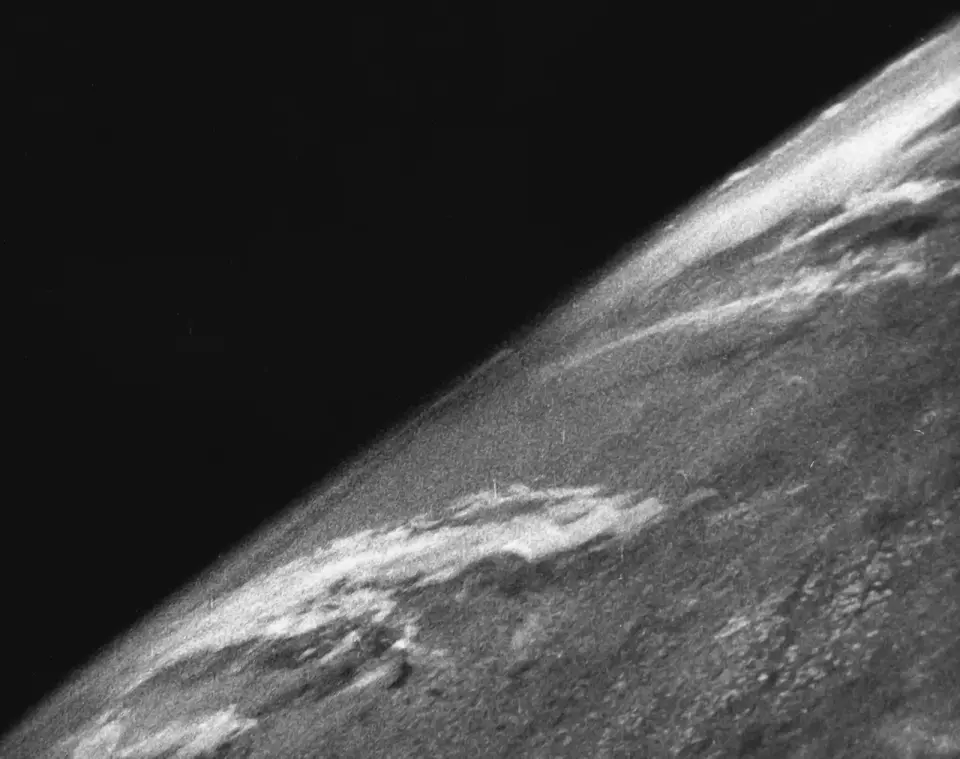
On October 24, 1946, a U.S. Army V-2 rocket launched from New Mexico’s White Sands Missile Range captured the first-ever photographs of Earth from space. The rocket reached an altitude of approximately 65 miles (105 km) before crashing back to Earth at 340 mph. Although the rocket and camera were destroyed in the impact, the 35-millimeter film survived inside a protective steel case. Scientists retrieved the film from the desert and viewed the grainy, black-and-white images, marking a pivotal moment in space exploration and Earth observation.
Key points
- The V-2 rocket launched from White Sands Missile Range in New Mexico on October 24, 1946, carrying a 35-millimeter motion picture camera.
- The camera captured a new frame every 1.5 seconds as the rocket ascended to an altitude of about 65 miles (105 kilometers).
- The rocket and camera were destroyed upon re-entry at a speed of 340 miles per hour, but the film survived inside a steel protective case.
- Scientists drove into the New Mexico desert to retrieve the film and were reportedly elated upon viewing the first images of Earth from space.
- This achievement laid the groundwork for future space reconnaissance, meteorological satellites, and the environmental movement by changing how humanity perceived its planet.
Background
This event occurred in the immediate post-World War II era, following the first successful launch of Germany’s V-2 rocket in 1942. The 1946 launch was part of the U.S. Army’s efforts to repurpose German rocket technology for scientific and military purposes. It preceded the launch of Sputnik 1 in 1957 and the first successful recovery of an object from orbit in 1960, marking an early step in the transition from ballistic missile testing to orbital space exploration.
Why it matters
The 1946 V-2 launch demonstrated the feasibility of high-altitude Earth observation, which directly influenced the development of reconnaissance and meteorological satellites. The images also contributed to the environmental movement by visually highlighting Earth’s fragility as a 'blue marble' in the void of space, shifting public perception of the planet and its resources.
What to watch
This historical milestone serves as a reminder of the origins of space-based Earth observation. Today, Earth observation satellites are routine, but the 1946 launch remains a foundational moment in the history of space exploration and the development of satellite technology for military, scientific, and environmental purposes.
Want the full story? Read the original reporting
Read on Space