Tag

V 2 Rocket

All articles tagged with #v 2 rocket

80 years ago, a crashed V-2 rocket revealed Earth from space for the first time
space-history1 month ago

80 years ago, a crashed V-2 rocket revealed Earth from space for the first time

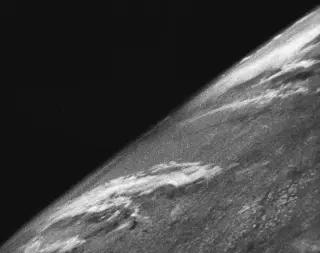
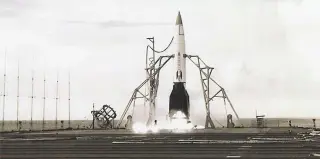
On October 24, 1946, a U.S. Army V-2 rocket launched from New Mexico’s White Sands Missile Range captured the first-ever photographs of Earth from space. The rocket reached an altitude of approximately 65 miles (105 km) before crashing back to Earth at 340 mph. Although the rocket and camera were destroyed in the impact, the 35-millimeter film survived inside a protective steel case. Scientists retrieved the film from the desert and viewed the grainy, black-and-white images, marking a pivotal moment in space exploration and Earth observation.

The 1946 V-2 That Painted Earth From the Edge of Space
space4 months ago

The 1946 V-2 That Painted Earth From the Edge of Space

In 1946, a captured German V-2 rocket launched from White Sands carried a DeVry 35mm camera mounted in a steel nose-cone cassette; the camera survived the launch and impact, returning the first known photographs of Earth from space, showing horizon curvature and space above a sunless sky. Engineered by Clyde Holliday of Johns Hopkins APL, the mission used a camera able to endure ascent and radiation, with images later published in National Geographic. The wartime weapon’s postwar use helped seed the American space program, linking to the broader story of Operation Paperclip and the dawn of the space age.

Captured V-2 Camera’s 1946 Flight Gave Earth Its First View from Space
space5 months ago

Captured V-2 Camera’s 1946 Flight Gave Earth Its First View from Space

In 1946, a captured German V-2 rocket carrying a 35mm DeVry camera reached about 105 kilometers over White Sands, producing the first photographs of Earth from space. The grainy frames showed Earth's curvature and horizon against black sky, predating any formal boundary for space—the Kármán line—by decades. The camera survived the mission, while the rocket and many of its builders did not, and the achievement is often credited to Clyde Holliday and the Johns Hopkins APL team who adapted gear meant for other uses to peer into the upper atmosphere.