
Algerian Meteorite Fills 1.4-Billion-Year Gap in Mars History
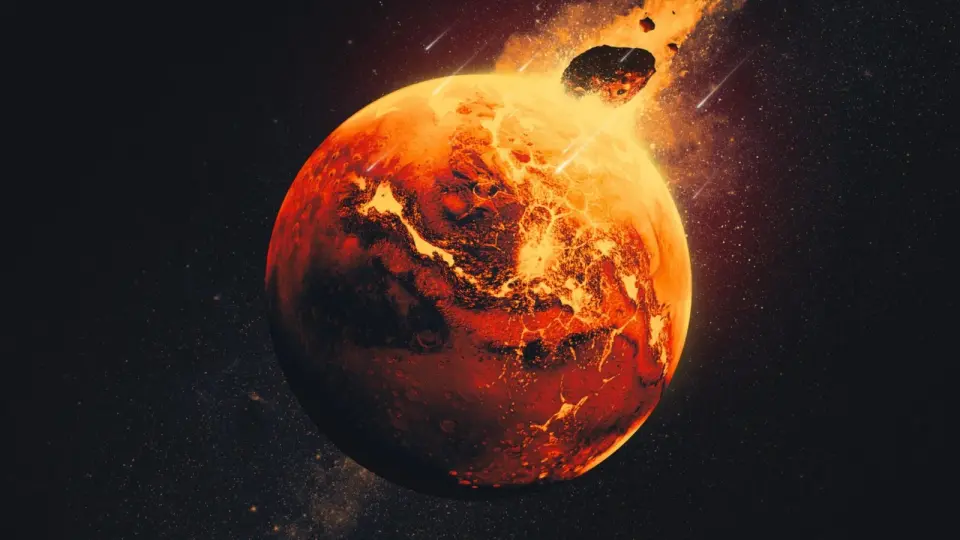
A 1.27-billion-year-old Martian meteorite found in Algeria, designated Northwest Africa (NWA) 13441, has been identified as a unique shergottite that fills a significant gap in the Red Planet's geological record. Discovered in 2019 but recently dated, the rock contains rare neodymium isotopes typically associated with chondrites, not Martian igneous rocks. This finding provides the first known sample from a period between 600 million and 2.4 billion years ago, a span previously lacking shergottite evidence. The meteorite offers new insights into Mars' hidden geological history, challenging previous assumptions about the composition and timing of Martian rock formation.
Key points
- NWA 13441 is a 1.27-billion-year-old Martian meteorite discovered in Algeria in 2019.
- It is a shergottite, the most common type of Martian meteorite, but contains rare neodymium isotopes usually found in chondrites.
- The meteorite fills a gap in the Martian geological record between 600 million and 2.4 billion years ago, a period previously lacking shergottite samples.
- The findings were published in the journal Geochimica et Cosmochimica Acta on August 1, 2026.
- The meteorite's composition is described as 'entirely surprising' by co-author Ethan Baxter of Boston College.
Background
This discovery follows recent efforts to use Martian meteorites as calibration standards for NASA's Perseverance rover, such as the Oman-found SaU 008 meteorite. It also complements ongoing research into Mars' geological history, including Curiosity rover findings of ancient water activity and the use of Antarctic meteorite collections to study extraterrestrial materials.
Why it matters
The NWA 13441 meteorite provides the first known sample from a critical 1.4-billion-year gap in Mars' geological record, offering new insights into the planet's hidden history and the conditions that shaped its surface during a previously unrepresented period.
What to watch
Further analysis of NWA 13441 may reveal more about the geological processes on Mars during the 600 million to 2.4 billion years ago period, potentially leading to the discovery of additional meteorites from this era and a better understanding of Mars' evolution.
Want the full story? Read the original reporting
Read on Space