
August 27 eclipse offers near-total lunar shadow visible across Americas
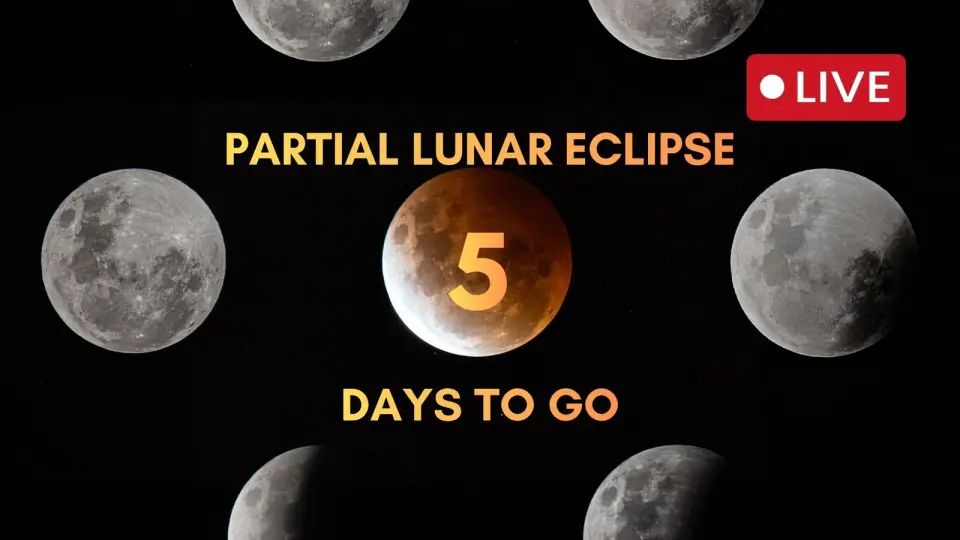
A partial lunar eclipse on August 27-28, 2026, will see 96.2% of the Moon enter Earth's umbra, creating a deep red hue. Visible across the Americas, Europe, and Africa, it is the deepest such event until 2028. No special equipment is needed for safe viewing.
Key points
- Maximum eclipse occurs around 9:12 p.m. local time in parts of North America, with 96.2% of the Moon in Earth's shadow.
- The event is visible from anywhere the Moon is above the horizon, with the best views in the Americas.
- No protective filters are required; binoculars or telescopes can enhance the view.
- This is the deepest partial lunar eclipse until December 31, 2028.
Background
This event follows a partial solar eclipse in August 2026 and precedes a total lunar eclipse on New Year's Eve 2028. It is part of a series of celestial events in 2026, including a partial solar eclipse in August and a total lunar eclipse in December 2028.
How outlets are covering it
Space.com emphasizes the 96.2% coverage and the rarity of the event until 2028, while the Statesman Journal highlights local viewing conditions in Oregon and the safety of naked-eye observation. Both agree on the significance of the event but differ in focus: Space.com on global visibility, the Statesman Journal on local forecasts and practical tips.
Why it matters
This eclipse is a rare opportunity to observe a near-total lunar eclipse, offering a unique visual experience for skywatchers worldwide. It also highlights the importance of clear skies and dark environments for optimal viewing.
What to watch
The next significant lunar eclipse will occur on December 31, 2028, with a total lunar eclipse on June 26, 2029. Skywatchers should monitor local weather forecasts for optimal viewing conditions.
- Partial lunar eclipse live: Latest news, viewing tips and live updates from Aug. 27-28 eclipse Space
- How to view the August blood moon lunar eclipse KING5.com
- When to see the deep partial lunar eclipse in central Ohio NBC4 WCMH-TV
- How to see next week's lunar eclipse in Oregon's Willamette Valley Statesman Journal
- Partial lunar eclipse August 2026 — Where will it be visible from? Space
Want the full story? Read the original reporting
Read on Space