
Diamond-Rain World Around a Pulsar Challenges Planet-Formation Theory
TL;DR
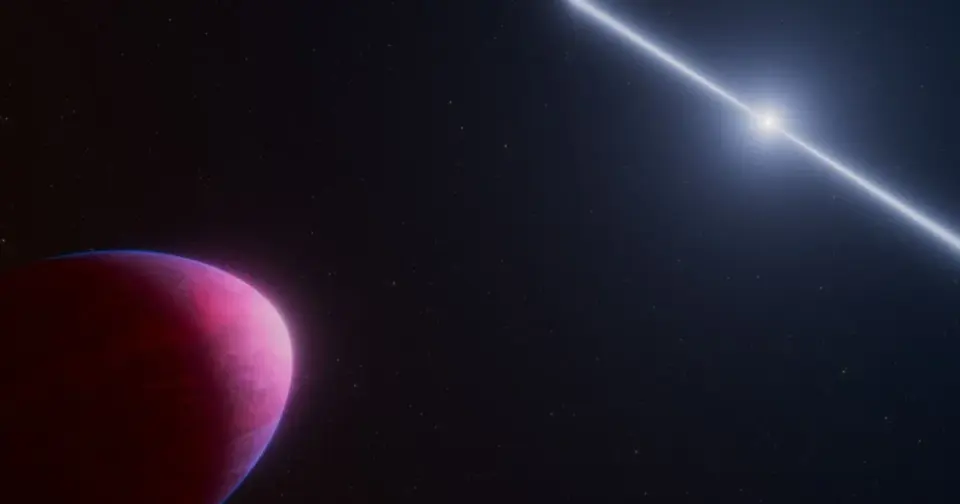
Using the James Webb Space Telescope, astronomers identified PSR J2322-2650b, a Jupiter-mass world orbiting a pulsar. Its atmosphere is unusually rich in helium and carbon, with nitrogen and oxygen largely absent, and its clouds may condense soot into diamond, implying a “diamond rain.” The planet’s nearly pure carbon composition and puzzling formation history defy current models, challenging the line between planet and stellar remnant and prompting new theories about how such worlds form.
- Astronomers have found a planet where it rains diamonds, a Jupiter-mass world orbiting a dead star whose carbon atmosphere grows soot clouds that harden into diamond deep inside, and whose composition rules out every known way a planet can form. Space Daily
- Forget gold rush, diamonds rain on this planet, and it's located in our solar system inkl
- Diamond rain is real: Scientists explain why precious gems fall from the skies on distant planets The Times of India
- Webb found a planet stretched into a lemon shape around a pulsar, with an atmosphere of carbon that seems to rule out every way we know of forming it Space Daily
- Deep inside Neptune and Uranus the pressure is thought to crush carbon into diamonds, which then sink slowly through the planet as a glittering rain Space Daily
Want the full story? Read the original reporting
Read on Space Daily