
ESA Space Rider Prototype Crashes After Parafoil Detachment in Sardinia
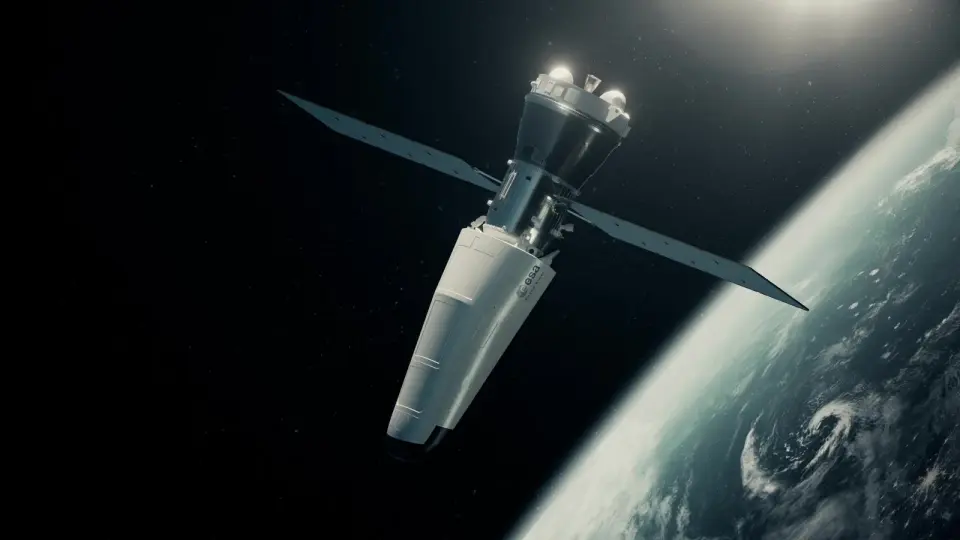
The European Space Agency (ESA) confirmed that its full-scale Space Rider test model crashed during an October 6 drop test in Sardinia, Italy. The incident occurred when the vehicle's steerable parafoil detached during deployment, causing the mockup to impact the ground. While the initial drogue parachute functioned correctly, the failure of the main landing system resulted in the loss of the test article. ESA has launched an independent investigation to determine the root cause. Officials state that this setback is not expected to delay the overall development timeline, as the remaining qualification tests are not on the critical path for the vehicle's first orbital mission, which is still targeted for 2028.
Key points
- The Space Rider test model was released from a helicopter at approximately 3 kilometers altitude on October 6 at a military range in Sardinia, Italy.
- The initial drogue parachute deployed successfully, but the main steerable parafoil detached during its deployment sequence, leading to a crash.
- ESA Director of Space Transportation Géraldine Naja confirmed that an independent investigation board is currently determining the cause of the failure.
- The failed test was the second interruption in the current qualification campaign, following an aborted attempt in May 2026 due to a sensor issue.
- ESA maintains that the incident does not threaten the critical path of the program, with the first orbital launch still targeted for the first half of 2028 on a Vega C rocket.
- The Space Rider is designed as Europe's first reusable uncrewed orbital spacecraft, utilizing a wingless lifting-body design and parafoil for precise runway-style landings.
Background
Space Rider is a key component of Europe's efforts to develop reusable space transportation. The vehicle is intended to carry scientific experiments to low Earth orbit for up to two months before returning them to Earth. Its unique landing system, which relies on a large steerable parafoil rather than conventional parachutes, allows for accurate, runway-style touchdowns. This capability is essential for the vehicle's reusability. Previous qualification campaigns in 2025 successfully demonstrated individual elements of the landing system, including autonomous guidance and thermal protection testing, where heat-shield materials were exposed to temperatures of approximately 1,600 degrees Celsius. The current drop test campaign was designed to validate the full system-level descent and landing sequence using a full-scale mockup.
How outlets are covering it
While all sources agree on the basic facts of the crash, they differ in their emphasis on the program's future. Space.com and European Spaceflight highlight the reassurance provided by ESA officials that the failure will not disrupt the development schedule, noting that the remaining qualification activities are not on the critical path. Aviation Week focuses on the technical specifications of the failed system, noting the parafoil's dimensions of 27 meters by 10 meters. KeepTrack provides a broader context of the testing campaign, noting that this is the second interrupted attempt in the current phase, with the previous May test being aborted due to a sensor issue. The sources generally agree that the investigation is ongoing and that the root cause has not yet been identified, but they vary in how much detail they provide regarding the specific mechanics of the parafoil detachment versus the broader program implications.
Why it matters
The failure of the Space Rider drop test is a significant event for Europe's space program as it represents a setback in the development of its first reusable orbital spacecraft. The parafoil system is critical for the vehicle's ability to land precisely and be reused, which is a core requirement for the program's cost-effectiveness and operational viability. While ESA has stated that the schedule is not at risk, the loss of a full-scale test model and the need for an investigation could have indirect impacts on the program's timeline and budget. The incident also highlights the challenges of testing complex new technologies, such as the parafoil landing system, which is unique in current spaceflight practice. The outcome of the investigation will be crucial for determining the next steps in the qualification campaign and ensuring the safety and reliability of the Space Rider for its first orbital mission in 2028.
What to watch
ESA is currently conducting an independent investigation to determine the root cause of the parafoil detachment. The findings of this investigation will inform the next steps in the Space Rider development program, including any necessary modifications to the vehicle or its testing procedures. The remaining qualification activities are expected to continue as planned, as they are not on the critical path for the vehicle's first orbital mission. ESA is targeting the first half of 2028 for the inaugural flight of Space Rider aboard a Vega C rocket. The agency will likely provide further updates on the investigation and the program's status as the review of the schedule is completed.
- Europe's Space Rider vehicle comes crashing down during drop test Space
- ESA Provides New Details on Failed Space Rider Drop Test European Spaceflight
- ESA’s Space Rider Suffers Mishap In Drop Test Aviation Week
- ESA Space Rider Test Model Lost in Drop Test KeepTrack
- Test failed at Quirra: the parachute failed to open and the European spacecraft crashed. L'Unione Sarda.it
Want the full story? Read the original reporting
Read on Space