
Faintest Galaxy Found Near Andromeda Defies Standard Formation Models
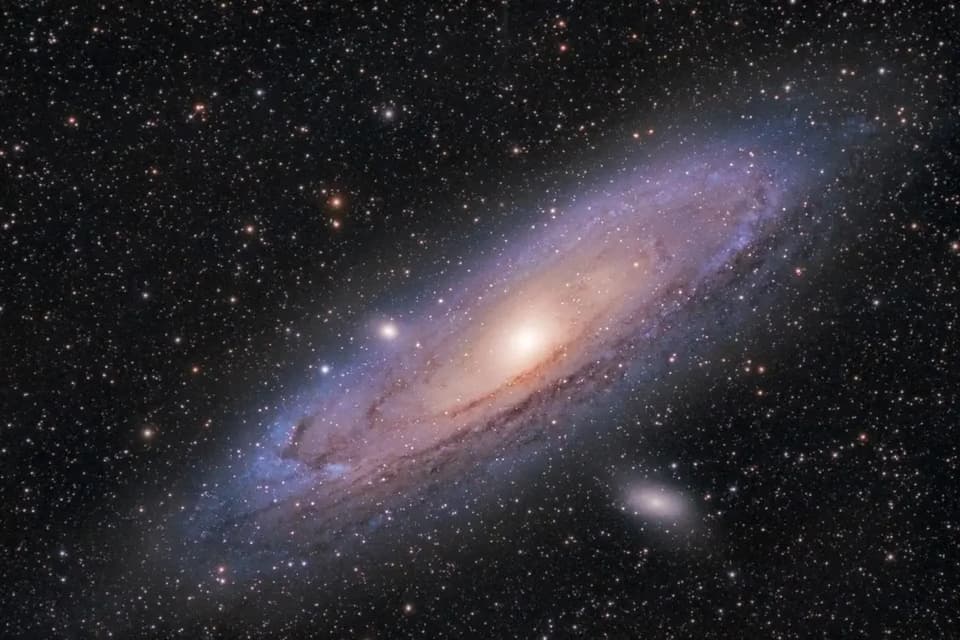
Astronomers at the University of Michigan have identified Andromeda XXXV, the faintest and smallest satellite galaxy ever detected outside the Milky Way. Located near the Andromeda Galaxy (M31), this object contains only about 20,000 solar masses and hosts stars roughly 6 billion years old. Its existence challenges current theories, which suggest such low-mass galaxies should have ceased star formation long ago due to gas depletion or cosmic reheating. The discovery, confirmed via Hubble Space Telescope observations, suggests that larger neighbors may siphon gas from smaller galaxies, abruptly halting their evolution, and highlights gaps in our understanding of how dwarf galaxies survive in the local universe.
Key points
- University of Michigan astronomers discovered Andromeda XXXV, a tiny satellite galaxy orbiting Andromeda (M31), located 2.5 million light-years from Earth.
- Andromeda XXXV is the faintest galaxy found outside the Milky Way’s system, with a mass of only 20,000 solar masses, roughly one-millionth the size of the Milky Way.
- The galaxy contains stars approximately 6 billion years old, indicating ongoing or recent star formation, which contradicts models predicting such small galaxies should have stopped forming stars earlier.
- The discovery was confirmed using Hubble Space Telescope data after initial hints were found in observational datasets, challenging existing theories about galaxy evolution and gas stripping.
- The finding suggests that larger galaxies may siphon gas from smaller satellites, cutting off star formation, but Andromeda XXXV’s continued activity remains unexplained by current models.
Background
This discovery follows recent studies on Andromeda’s star formation decline over the past 500 million years, which linked the slowdown to interactions with satellite galaxies like M32. It also aligns with broader efforts to detect faint dwarf satellites around other galaxies, such as the 50 ghost dwarfs found around NGC 5068, 5084, and 5087 in September 2026, which help address the missing-satellites problem in cosmology.
Why it matters
The discovery of Andromeda XXXV forces a re-evaluation of how galaxies form and evolve, particularly the role of environmental factors like gas stripping in halting star formation. It reveals that some dwarf galaxies may survive longer than predicted, challenging the assumption that low-mass galaxies are quickly extinguished by cosmic reheating or resource depletion. This could lead to revised models of galactic evolution and improve our understanding of the local universe’s structure.
What to watch
Astronomers plan to use future missions, including the Roman Space Telescope, to search for more faint satellite galaxies and confirm the nature of Andromeda XXXV. The discovery may prompt new studies on how gas stripping affects dwarf galaxies and whether other similar objects exist in the local universe, potentially reshaping our understanding of galaxy formation.
Want the full story? Read the original reporting
Read on Futura, le média qui explore le monde