
Gemini Telescope Reveals Uniform Gas Knots and Stationary Zombie Star in 1181 Supernova Remnant
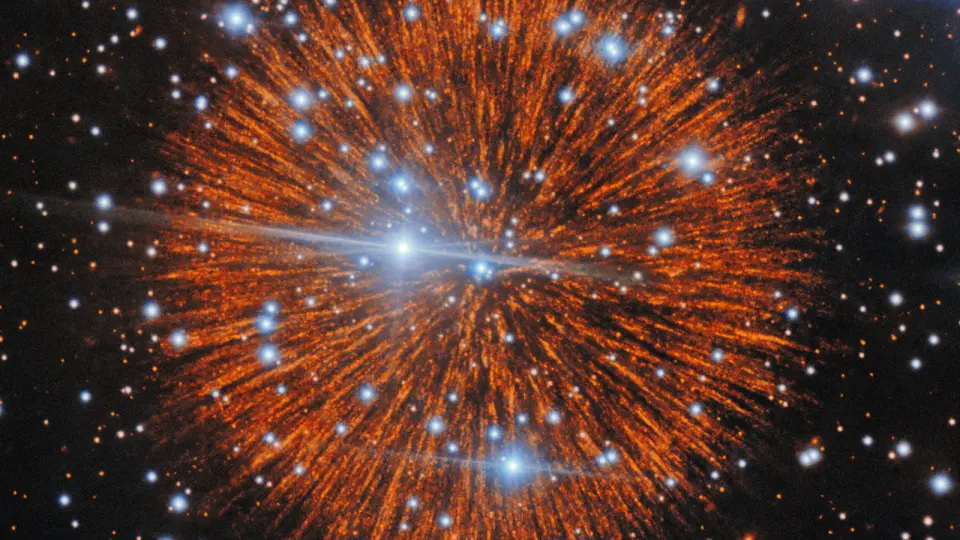
Astronomers used the Gemini North telescope to analyze Pa 30, a unique supernova remnant from 1181, revealing uniform gas knots and a stationary zombie star at its center, offering insights into symmetric Type Iax explosions.
Key points
- Pa 30 is the only known supernova remnant in the Milky Way containing a surviving zombie star, resulting from a Type Iax explosion where a white dwarf was not fully destroyed.
- The remnant, located 7,500 light-years away, was first identified in 2013 and linked to historical records from 1181 in Japan, China, and Arabia, making it one of only five pre-telescopic supernovae observed.
- Observations revealed that the gas filaments consist of uniform, pearl-like knots, each large enough to contain the orbit of Neptune ten times over.
- The central zombie star remains nearly stationary at the remnant's core, suggesting the original explosion was highly symmetric with minimal momentum kick.
- The findings, published in The Astrophysical Journal, provide a template to search for similar Type Iax remnants in the Milky Way and nearby galaxies.
Background
In October 2026, new high-resolution images of the Pa 30 nebula were released, confirming the presence of distinct gas knots and providing further evidence that the central star survived the explosion with minimal displacement. This follows earlier identification of the remnant in 2013 and its correlation with 1181 historical records.
Why it matters
Understanding the mechanics of Type Iax supernovae through Pa 30 helps astronomers model how white dwarfs can survive explosions and how symmetric ejecta form, potentially leading to the discovery of other similar remnants in our galaxy.
What to watch
Researchers plan to use the distinctive properties of Pa 30 to search the Milky Way and nearby galaxies for other Type Iax supernova remnants, which are currently only observable as point sources in distant galaxies.
Want the full story? Read the original reporting
Read on Space