
Euclid Telescope Accidentally Discovers New Comet C/2026 S1
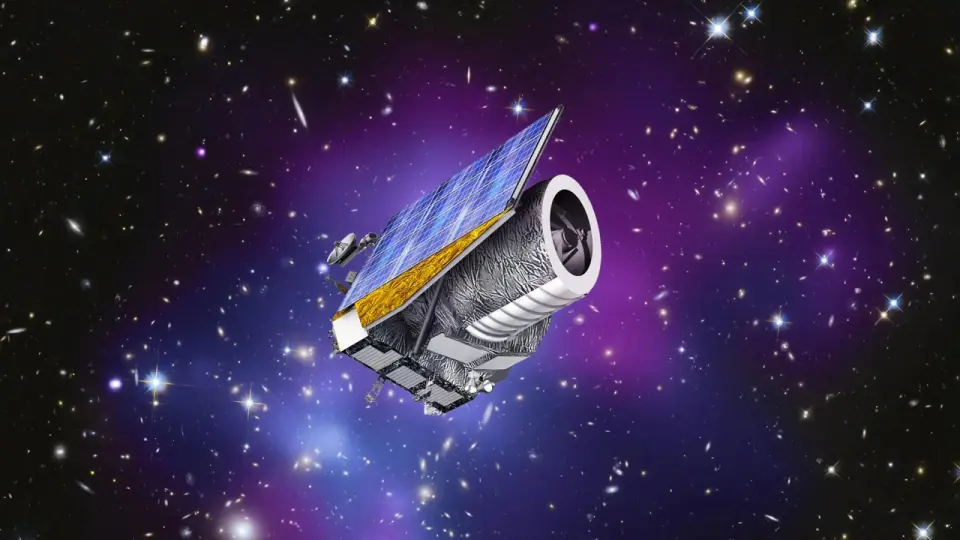
The European Space Agency's Euclid space telescope, designed to study dark matter, unexpectedly discovered a new comet, C/2026 S1 (Euclid), in images taken in September 2026. The discovery, confirmed in October, highlights the telescope's potential to aid future comet-hunting missions despite its primary focus on distant galaxies.
Key points
- Mikko Pöntinen, a PhD student at the University of Helsinki, identified the comet using custom software that detected a 'streak' in images captured between September 16 and 24, 2026.
- The Minor Planet Center officially confirmed the discovery on October 8, 2026, designating the object C/2026 S1 (Euclid).
- The comet is currently approximately 1.3 billion kilometers from Earth and travels on a high-inclination orbit far from the solar system's ecliptic plane.
- Euclid's 'step-and-stare' observing strategy typically prevents re-observation of objects, making the detection of this comet in multiple images a rare coincidence.
- The discovery serves as a test case for coordinating with ESA's future Comet Interceptor mission, though C/2026 S1 is not a suitable target for that spacecraft.
Background
Euclid, launched in July 2023, is designed to map dark matter and dark energy by observing billions of galaxies. In November 2026, it released its first major data set, DR1-Foundation, cataloging 900 million galaxies. This new comet discovery is the first of its kind for the mission, as previous comets spotted by Euclid had already been known.
Why it matters
The discovery demonstrates that Euclid can detect new solar system objects, potentially aiding ESA's Comet Interceptor mission. It also provides a new target for studying the ancient materials from the solar system's formation, which may help explain the origins of Earth's water and life's chemical building blocks.
What to watch
Astronomers will continue to observe C/2026 S1 (Euclid) to calculate its precise orbital period. The discovery process will serve as a template for coordinating Euclid and the future Comet Interceptor mission to identify suitable comet targets.
Want the full story? Read the original reporting
Read on ScienceDaily