
Landspace Sets Aug. 10 for Second Zhuque-3 Reusable Rocket Attempt
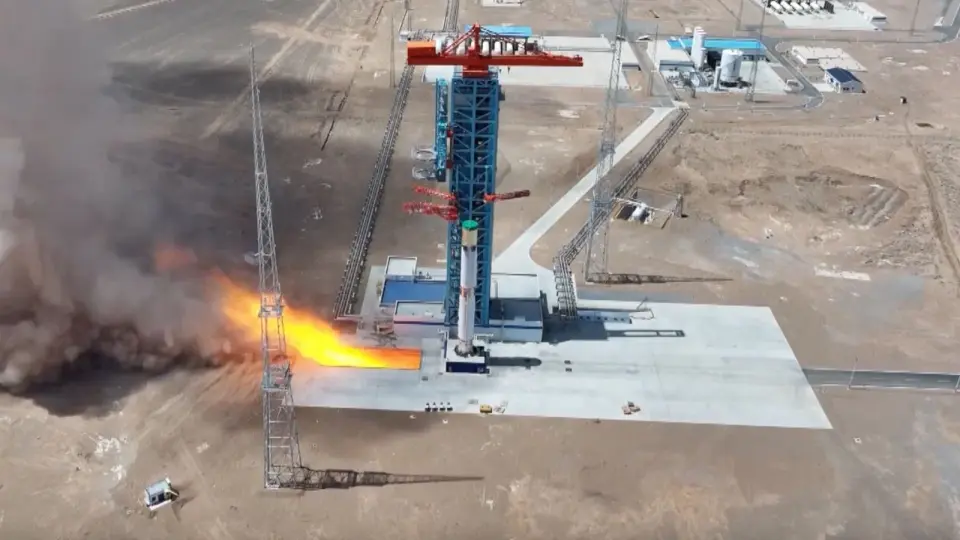
Chinese commercial aerospace firm Landspace is targeting August 10 for the second launch of its Zhuque-3 rocket, aiming to successfully land the first stage after a previous failure. The company recently completed a static fire test, and airspace closures confirm the launch window at the Jiuquan spaceport.
Key points
- Landspace is scheduled to launch the Zhuque-3 rocket on August 10 from the Dongfeng commercial space innovation pilot zone at Jiuquan spaceport in northwest China.
- The previous Zhuque-3 launch in December 2025 saw the second stage reach orbit, but the first stage exploded during its final descent toward the landing pad.
- A successful static fire test was conducted on June 29, 2026, with Landspace stating that all systems operated normally and met expectations.
- The Zhuque-3 is a 66-meter stainless steel rocket powered by methane-liquid oxygen engines, designed to compete with SpaceX's Falcon 9.
- This attempt represents China's second effort to land an orbital rocket booster, following only one successful landing to date in the country's history.
Background
China has achieved only one successful landing of an orbital rocket booster to date. The Zhuque-3 is part of a broader push for reusability in Chinese commercial spaceflight, mirroring the capabilities of SpaceX's Falcon 9. Recent background includes SpaceX's continued dominance in reusable launches, with its 600th flight-proven booster recently completing dual Starlink missions, highlighting the competitive landscape Landspace enters.
Why it matters
A successful landing would mark a significant milestone for Chinese commercial aerospace, demonstrating that domestic companies can achieve reusable orbital launch capabilities. It would reduce reliance on state-run programs and potentially lower costs for satellite deployment, intensifying global competition in the space industry.
What to watch
The launch is expected to occur around 7:45 p.m. EDT on August 10. Success will depend on the first stage's ability to land intact, a feat not achieved in the December 2025 attempt. Future missions will likely focus on refining the landing process and increasing the frequency of reusable launches.
Want the full story? Read the original reporting
Read on space.com