
NASA M2-F3 Lifting Body Completes First Powered Flight in 1970
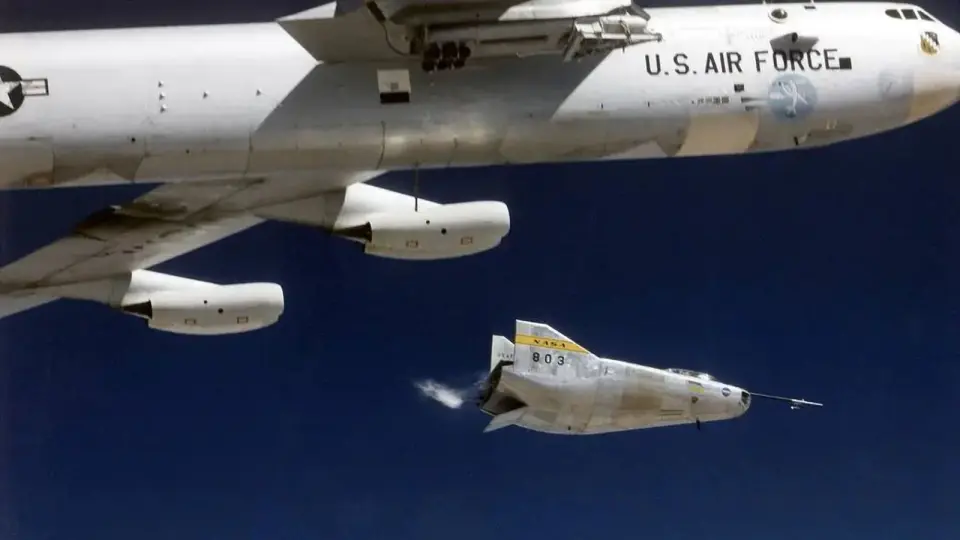
On November 25, 1970, NASA’s M2-F3 'lifting body' aircraft completed its first powered flight. This wingless experimental vehicle was part of a program to develop lightweight crewed spacecraft, paving the way for later supersonic tests.
Key points
- The M2-F3 is a 'lifting body' design, meaning the fuselage itself generates lift without conventional wings.
- The first powered flight occurred on November 25, 1970, ahead of subsequent supersonic testing phases.
- Lifting body research was a major U.S. aerospace focus in the 1960s and 1970s for small, lightweight crewed vehicles.
- The M2-F3 followed earlier unpowered tests like the M2-F1 and M2-F2, which faced stability issues such as airflow separation.
Background
NASA’s lifting body program began in 1962 at the Flight Research Center (now Armstrong) with unpowered models like the M2-F1, nicknamed the 'Flying Bathtub.' Rocket-powered tests started in 1966 using XLR11 engines. The M2-F3 was part of a series including the HL-10 and X-24, flown by pilots like John A. Manke. Interest waned as the Space Shuttle program prioritized different aerodynamic shapes, but concepts like the HL-20 and Dream Chaser later revived lifting body ideas.
Why it matters
The M2-F3’s successful powered flight validated lifting body aerodynamics, contributing to the development of reusable spacecraft and hypersonic research. It demonstrated that wingless designs could achieve stable flight, influencing future concepts like the Dream Chaser and modern spaceplane designs.
What to watch
No immediate next steps are relevant as the event occurred in 1970. Current NASA activities focus on Artemis lunar missions and X-59 quiet supersonic tests, which are unrelated to the historical M2-F3 program.
Want the full story? Read the original reporting
Read on Space