
Solar Orbiter Spacecraft Under Siege: Multiple Solar Storms Threaten Communication
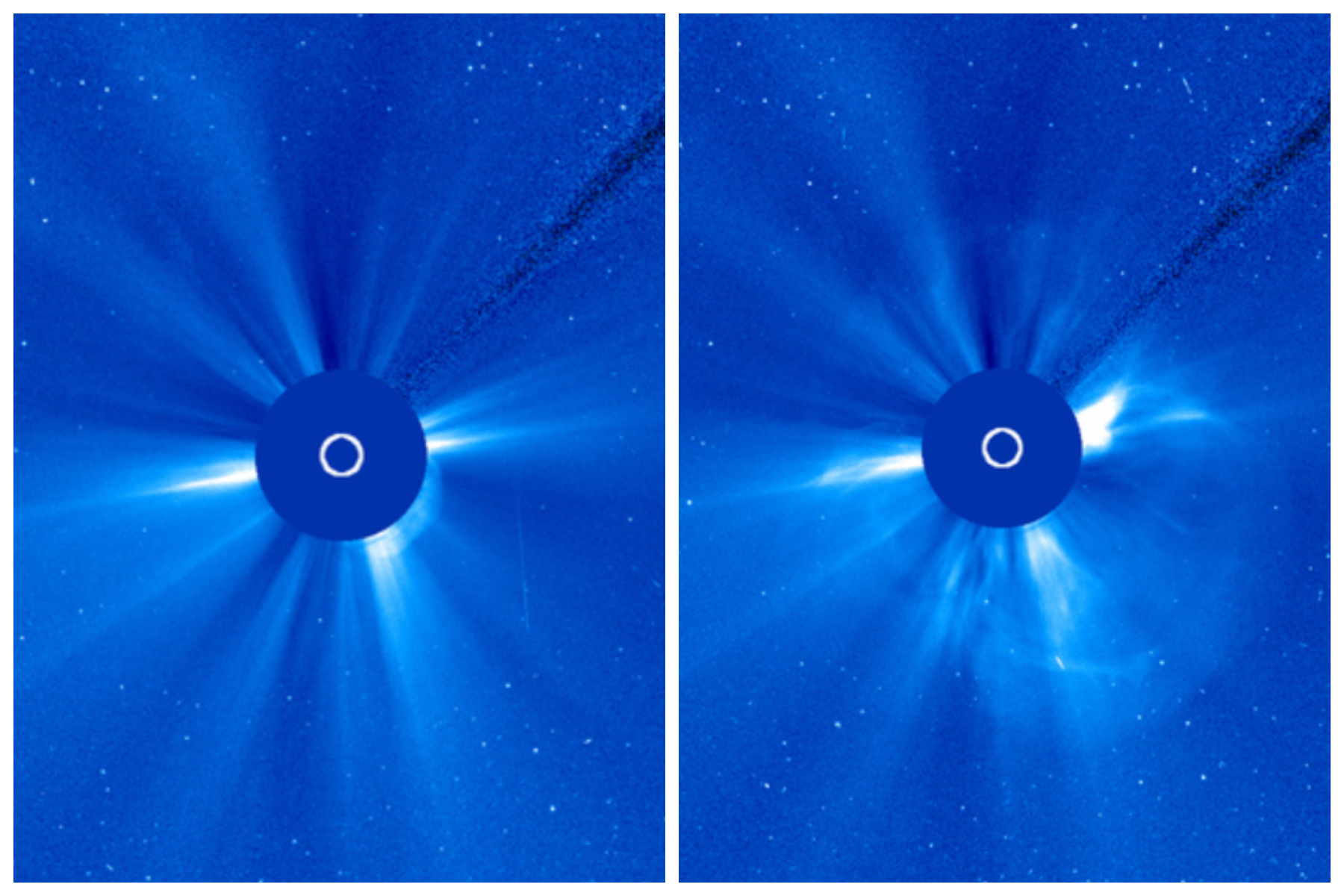
A massive solar plasma explosion, known as a coronal mass ejection (CME), collided with Europe's Solar Orbiter spacecraft after bursting out of the sun's surface. If it had hit the Earth, it could have triggered powerful geomagnetic storms. The CME was detected by the Solar Orbiter 32 hours after it erupted, indicating its speed and strength. CMEs are flung out from the sun's surface when its magnetic fields suddenly realign. The impact of CMEs on Earth's near-space environment varies depending on their speed and magnetic field. Geomagnetic storms can cause disturbances in the Earth's magnetic environment, affecting electrical equipment and power grids. Fortunately, this CME passed harmlessly into space, but as the sun approaches its solar maximum in 2025, more powerful CMEs and solar flares are expected.
- Solar Plasma Explosion Hits the Solar Orbiter Spacecraft Newsweek
- Shocking! CME with SEVERE solar storm potential hits Solar Orbiter satellite at 1500 km per second HT Tech
- Wrath of Sun! Geomagnetic Storm to cause Radio Blackout SOON Times Now
- Powerful CME blasted from Sun hits spacecraft at speed of 55 lakh km per hour Inshorts
- Solar storm BOMBARDMENT! After a CME hit yesterday, another is likely to strike Earth soon HT Tech
- View Full Coverage on Google News
Reading Insights
1
13
3 min
vs 4 min read
83%
738 → 127 words
Want the full story? Read the original article
Read on Newsweek