
Soviet Phobos 2 Probe Lost in 1989 After Mystery Shadow Sparks Alien Theories
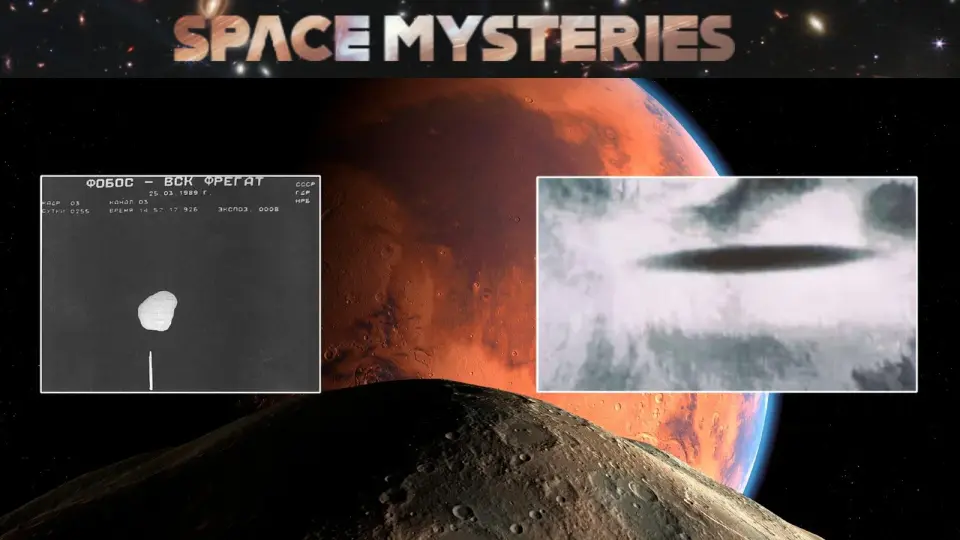
The Soviet Phobos 2 probe, launched in 1988, successfully imaged Mars and its moon before losing contact in March 1989. While technical failures likely caused the loss, an elongated shadow in final images fueled decades of conspiracy theories, including claims of alien involvement by former Soviet pilot Marina Popovich.
Key points
- Phobos 2 launched from Baikonur Cosmodrome on July 12, 1988, aboard a Proton rocket, aiming to study Mars and its moon Phobos.
- The probe arrived in Martian orbit on January 30, 1989, but immediately suffered technical issues, including the failure of one of its three onboard processors.
- Despite initial setbacks, the spacecraft transmitted scientific data and 13 color image sets of Phobos until March 27, 1989, when ground control lost contact during a maneuver.
- Investigators attribute the loss to a failure in the second attitude control computer and power drainage, as the probe’s solar panels were angled away from the sun.
- Final images showed an elongated shadow, which former Soviet pilot Marina Popovich claimed in 1991 was an alien mothership, a theory later debunked by NASA analysis.
- NASA and Soviet engineers concluded the shadow was caused by the probe’s near-co-orbital motion with Phobos, viewing angles, and a slight rocking motion of the spacecraft.
Background
This incident is part of the broader history of Soviet planetary exploration, which faced significant challenges in the late 1980s. The failure of Phobos 2 followed the loss of its predecessor, Phobos 1, in September 1988. Recent debates have resurfaced around the fate of Phobos 1, with some scientists suggesting it may be linked to the mysterious object 1998 KY26, though this remains unproven. The Phobos missions, despite their failures, yielded more data about Mars and Phobos than all previous Soviet missions combined.
Why it matters
The Phobos 2 mission highlights the fragility of early space exploration and the enduring power of mystery to fuel speculation. While the technical causes of its loss are now understood, the initial confusion and conspiracy theories underscore how quickly unknowns in space can capture public imagination. The mission also serves as a reminder of the challenges faced by the Soviet space program during a period of political and economic turmoil.
What to watch
No further action is expected regarding Phobos 2, as the mission ended in 1989. However, the debate around the fate of Phobos 1 and the object 1998 KY26 continues, with remote observations via the James Webb Space Telescope potentially providing new data. The legacy of the Phobos missions remains a subject of interest in the history of space exploration.
Want the full story? Read the original reporting
Read on Space