Tag

Soviet Space Program

All articles tagged with #soviet space program

Debate Intensifies Over Whether Accelerating Space Object Is Lost Soviet Probe or Asteroid
science12 days ago

Debate Intensifies Over Whether Accelerating Space Object Is Lost Soviet Probe or Asteroid

Scientists are divided on the nature of 1998 KY26, a small object exhibiting unusual acceleration. While NASA calls it an asteroid, Harvard astrophysicist Avi Loeb argues it is the lost Soviet probe Phobos 1. New thermal models challenge the 'dark comet' theory, and Japan’s Hayabusa2 mission will visit the object in 2031 to settle the debate.

Laika's Fatal Orbit: How a Soviet Stray Dog Paved the Way for Human Spaceflight
history25 days ago

Laika's Fatal Orbit: How a Soviet Stray Dog Paved the Way for Human Spaceflight

On November 3, 1957, the Soviet Union launched Laika, a stray Moscow mongrel, into Earth orbit, making her the first living creature to achieve this feat. The mission was a one-way trip, as Soviet scientists lacked the technology to return her safely. Laika died within hours due to overheating and stress, a fact the Soviets concealed for decades. Her sacrifice provided critical data on weightlessness, enabling future human spaceflights, though it sparked international outrage and ethical debates that persist today.

Voskhod 1: The 1964 Soviet Mission That Packed Three Cosmonauts Into a Single-Person Craft
space1 month ago

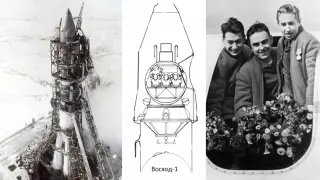
Voskhod 1: The 1964 Soviet Mission That Packed Three Cosmonauts Into a Single-Person Craft

On October 12, 1964, the Soviet Union launched Voskhod 1, the first spacecraft to carry multiple humans into orbit. The mission featured a three-person crew—commander Vladimir Komarov, engineer Konstantin Feoktistov, and doctor Boris Yegorov—who flew without spacesuits due to the cramped cabin. This historic 24-hour flight marked a significant milestone in the Cold War space race, demonstrating Soviet capability to transport multiple crew members ahead of the US Gemini program.

Soviet Venera 13 Lander Exceeds Design Limits to Capture First Color Images of Venus
science-and-technology3 months ago

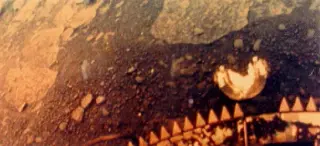
Soviet Venera 13 Lander Exceeds Design Limits to Capture First Color Images of Venus

On March 1, 1982, the Soviet Venera 13 probe landed on Venus and transmitted data for 127 minutes, far exceeding its 32-minute design life. It captured the first color images of another planet's surface and performed the first in-situ soil analysis, measuring elemental composition via X-ray fluorescence. The lander operated in 465°C heat and 89 atmospheres of pressure, sending data back via a receding carrier spacecraft. No subsequent mission has matched this duration, leaving Venera 13 as the benchmark for surface operations on Venus.

Soviet Luna 24 concludes robotic lunar sampling era with water-bearing soil return
space-exploration3 months ago

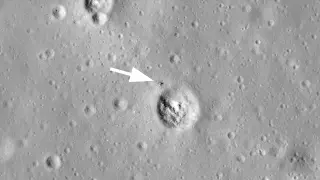
Soviet Luna 24 concludes robotic lunar sampling era with water-bearing soil return

On August 9, 1976, the Soviet Union launched Luna 24, its final robotic lunar sample return mission. The probe landed in Mare Crisium nine days later, collected 170.1 grams of soil, and returned to Earth on August 22. Analysis revealed the samples contained 0.1% water by mass, marking a significant scientific finding for the era.

Old Soviet Venus Capsule May Have Survived Re-entry and Returned to Earth
space4 months ago

Old Soviet Venus Capsule May Have Survived Re-entry and Returned to Earth

A descent capsule from Kosmos 482, the 1972 Soviet Venus mission, re-entered Earth's atmosphere on 10 May 2025 after 53 years in orbit; radar tracked a re-entry window with no confirmed landing, and while analyses suggest the capsule's Venus-designed titanium shell could have survived re-entry and remained largely intact, there is no direct recovery or conclusive landing evidence.

Unexpected Animal Outpaces Humans in Moon Travel Race
science1 year ago

Unexpected Animal Outpaces Humans in Moon Travel Race

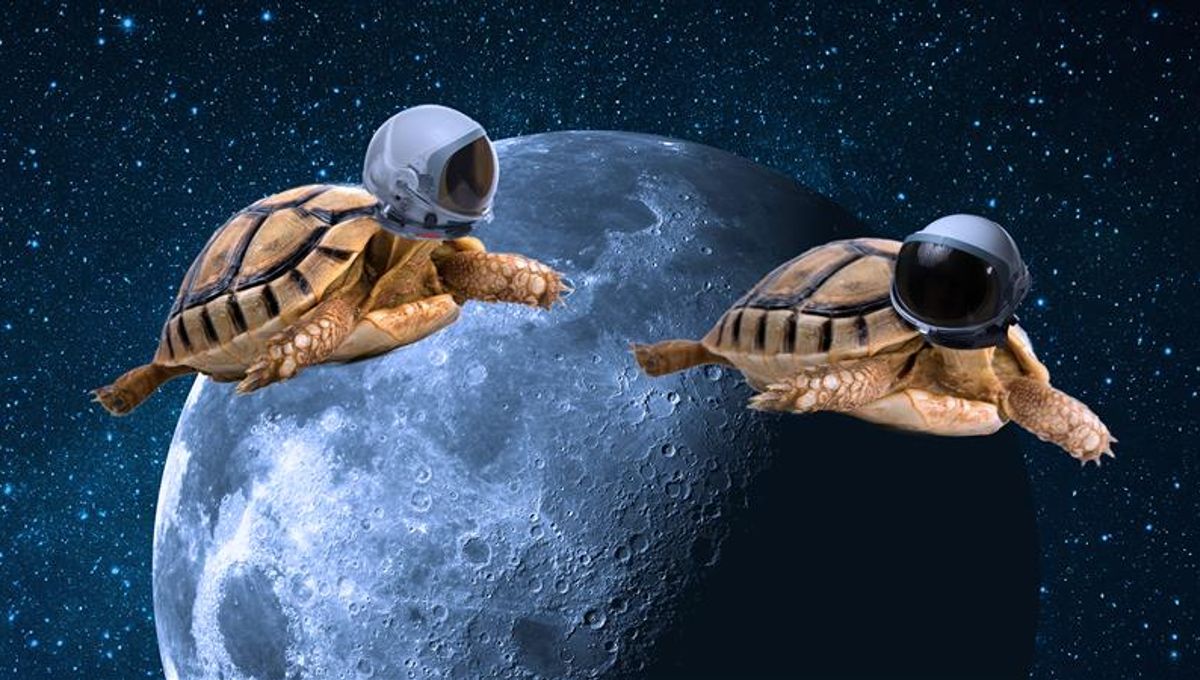
In 1968, the Soviet Union's Zond 5 spacecraft became the first to circle the Moon, carrying two steppe tortoises along with worms, flies, and seeds, beating NASA's Apollo 8 mission, which carried humans. The tortoises' successful journey marked a significant milestone in space exploration, demonstrating that even slow-moving creatures could achieve lunar orbit before humans did.

Russia's Forgotten Space Shuttle: A Rusting Relic of Cosmic Ambitions
science-and-technology1 year ago

Russia's Forgotten Space Shuttle: A Rusting Relic of Cosmic Ambitions

The Buran space plane, the Soviet Union's answer to NASA's Space Shuttle, now sits abandoned and rusting in a hangar in Kazakhstan. Despite its successful unmanned flight in 1988, the Buran program was halted after the fall of the Berlin Wall and officially canceled in 1993. While NASA's shuttles are celebrated in museums, the Buran remains largely forgotten, with only a few remnants and an engineering prototype left to tell the story of this ambitious but ultimately short-lived Soviet space endeavor.

'For All Mankind' Renewed for Season 5 and Soviet Spinoff 'Star City' Expands Franchise
tv-news2 years ago

'For All Mankind' Renewed for Season 5 and Soviet Spinoff 'Star City' Expands Franchise

Apple has renewed "For All Mankind" for a fifth season and ordered a spinoff series titled "Star City," which will explore the Soviet space program. The spinoff, created by the same team behind the flagship series, is described as a "propulsive paranoid thriller" set during the alt-history retelling of the space race. Ron Moore, the co-creator of "For All Mankind," will serve as an executive producer on the spinoff. This move comes as Apple continues to invest in high-profile content and expand its original series lineup.

'For All Mankind' Renewed for Season 5 and Soviet Spinoff Series Announced
entertainment2 years ago

'For All Mankind' Renewed for Season 5 and Soviet Spinoff Series Announced

Apple TV+ has renewed "For All Mankind" for Season 5 and ordered a spinoff series titled "Star City," focusing on the Soviet space program. The spinoff will explore the alternative timeline where the Soviets are the first to reach the moon and delve into the lives of cosmonauts, engineers, and intelligence officers in the Soviet space program. Both shows are executive produced by Ronald D. Moore, Matt Wolpert, and Ben Nedivi, with "Star City" set to be showrun by Wolpert and Nedivi.

space-exploration2 years ago

"Soyuz Completes Two-Month Endurance Mission"

From Nov. 30, 1973, to Jan. 28, 1974, the Soyuz spacecraft completed a two-month autonomous endurance mission, setting a new record for its solo flight. Originally intended for a crewed mission to the DOS-2 space station, the spacecraft was repurposed for the unpiloted test flight after the loss of DOS-3. The mission, designated Kosmos-613, involved testing the spacecraft's onboard systems in a simulated joint flight with a space station, certifying it for future expeditions. The spacecraft successfully landed on Jan. 28, 1974, and its nature was publicly acknowledged in 1985.