
Tiny Kuiper Belt World Grows a Mysterious, Vanishingly Thin Atmosphere
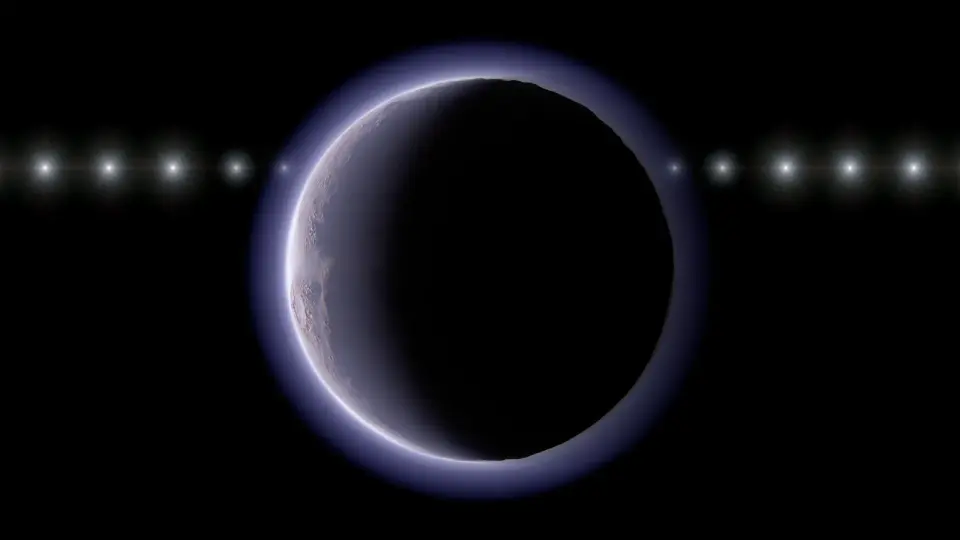
A diminutive trans-Neptunian object known as (612533) 2002 XV93 (a ~500 km Pluto-like body in Neptune’s 2:3 resonance) has unexpectedly developed a thin atmosphere (exosphere). Its presence was inferred from a January 2024 stellar occultation observed by a Japan-led team; the exosphere is extremely tenuous, with surface pressures of 100–200 nanobars—5 to 10 million times thinner than Earth’s. The atmosphere could originate from a recent impact or from cryovolcanic outgassing, but either way it challenges the idea that only large bodies can sustain atmospheres. If it’s impact-driven, the gas would escape within ~1,000 years; if outgassing, the source is ongoing beneath the surface. JWST observations and density monitoring in coming years should help pinpoint the cause. The discovery was published May 4 in Nature Astronomy.
Want the full story? Read the original reporting
Read on Space