Tag

Trans Neptunian Object

All articles tagged with #trans neptunian object

Fragile Atmosphere Detected on Tiny Kuiper World 2002 XV93
space2 days ago

Fragile Atmosphere Detected on Tiny Kuiper World 2002 XV93

Astronomers using stellar occultations detected a very thin atmosphere around the small trans-Neptunian object 2002 XV93, making it only the second TNO known to have an atmosphere after Pluto. The atmosphere is about 5–10 million times thinner than Earth's and is expected to vanish within 100–1,000 years unless replenished, possibly by cryovolcanic activity beneath the icy surface or by a recent impact. Observations via occultation are ongoing, with JWST follow-up planned to determine its composition and whether the atmosphere is fading or replenished.

Tiny Kuiper World Reveals Thin Atmosphere, Second of Its Kind
science24 days ago

Tiny Kuiper World Reveals Thin Atmosphere, Second of Its Kind

Astronomers observed the small Kuiper Belt object 2002 XV93 (about 311 miles across) during a stellar occultation and found a very thin atmosphere, making it only the second TNO known to have one after Pluto. The atmosphere, five to ten million times thinner than Earth's, could result from cryovolcanic activity or a recent icy impact; its persistence or dissipation could help distinguish between these sources. Future James Webb Space Telescope observations may detect additional gases like methane or carbon monoxide.

Tiny Kuiper Belt World May Harbor a Real Atmosphere
spaceastronomy24 days ago

Tiny Kuiper Belt World May Harbor a Real Atmosphere

Astronomers report evidence of a surprisingly thin atmosphere around the Kuiper Belt object (612533) 2002 XV93, a small icy body about 500 km across. If confirmed, the atmosphere would be extremely tenuous—roughly 5–10 million times thinner than Earth's—and may last under 1,000 years unless replenished. Independent verification is urged, with future JWST observations expected to help determine whether the atmosphere persists (suggesting a long‑term gas source) or fades (potentially from a recent impact).

Tiny Kuiper Belt World Grows a Mysterious, Vanishingly Thin Atmosphere
space25 days ago

Tiny Kuiper Belt World Grows a Mysterious, Vanishingly Thin Atmosphere

A diminutive trans-Neptunian object known as (612533) 2002 XV93 (a ~500 km Pluto-like body in Neptune’s 2:3 resonance) has unexpectedly developed a thin atmosphere (exosphere). Its presence was inferred from a January 2024 stellar occultation observed by a Japan-led team; the exosphere is extremely tenuous, with surface pressures of 100–200 nanobars—5 to 10 million times thinner than Earth’s. The atmosphere could originate from a recent impact or from cryovolcanic outgassing, but either way it challenges the idea that only large bodies can sustain atmospheres. If it’s impact-driven, the gas would escape within ~1,000 years; if outgassing, the source is ongoing beneath the surface. JWST observations and density monitoring in coming years should help pinpoint the cause. The discovery was published May 4 in Nature Astronomy.

Tiny Kuiper Object Wears a Breath: Atmosphere Detected on a 500-km Plutino
space26 days ago

Tiny Kuiper Object Wears a Breath: Atmosphere Detected on a 500-km Plutino

Astronomers detected a surprisingly thin atmosphere around 2002 XV93, a ~500-km plutino in the Kuiper belt, via a 2024 stellar occultation observed from Japan. The inferred atmosphere is about 100–200 nanobars—extremely tenuous and likely transient—suggesting replenishment from a recent impact or ongoing cryovolcanism. This challenges the notion that atmospheres only form on large bodies and shows that small distant objects can host detectable atmospheres, with the research published in Nature Astronomy.

Tiny Kuiper Belt World Reveals a Surprising Atmosphere
science26 days ago

Tiny Kuiper Belt World Reveals a Surprising Atmosphere

Astronomers using a rare January 2024 stellar occultation in Japan detected a thin atmosphere around the small trans-Neptunian object (612533) 2002 XV93, a body about 500 km across in the Kuiper Belt. The atmosphere is estimated to be 5–10 million times thinner than Earth's. It could be produced by cryovolcanism or a past impact; if replenished regularly, it might persist longer, otherwise it could dissipate in a few hundred years. Future observations, including with the James Webb Space Telescope, aim to determine its composition and evolution, potentially overturning assumptions that tiny, distant objects can’t have atmospheres and highlighting Kuiper Belt activity.

Atmosphere detected on a distant Kuiper belt object during stellar occultation
space26 days ago

Atmosphere detected on a distant Kuiper belt object during stellar occultation

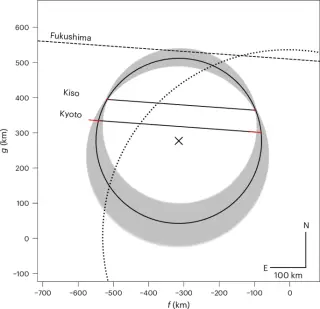
A three-site stellar occultation of the ~250-km-radius trans-Neptunian object 2002 XV93 on 2024-01-10 revealed a refractive signature indicating a thin atmosphere with surface pressure around 100–200 nanobars, marking the first atmospheric detection beyond Pluto for a body of this size. This shows that even relatively small, distant icy worlds can host transient atmospheres, potentially sustained by cryovolcanic activity or a recent impact, and challenges standard ideas about volatile retention in the outer Solar System.

Tiny Kuiper World Could Host a Global Atmosphere, Study Suggests
space26 days ago

Tiny Kuiper World Could Host a Global Atmosphere, Study Suggests

A tiny trans-Neptunian object (612533) 2002 XV93, about 300 miles across in the Kuiper Belt, may have a global atmosphere, detected during an occultation in 2024 and thought to be 5–10 million times thinner than Earth's (50–100 times thinner than Pluto's). The atmosphere, if confirmed, could be methane, nitrogen, or carbon monoxide and might have been produced by ice volcanism or a comet impact; independent verification, likely with JWST, is needed, and some scientists urge caution until more data are in.

Astronomers Uncover New and Mysterious Worlds at the Solar System's Edge
science9 months ago

Astronomers Uncover New and Mysterious Worlds at the Solar System's Edge

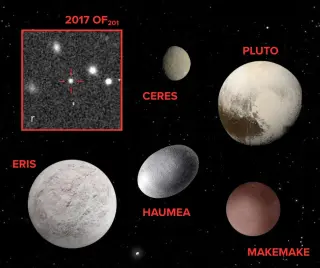
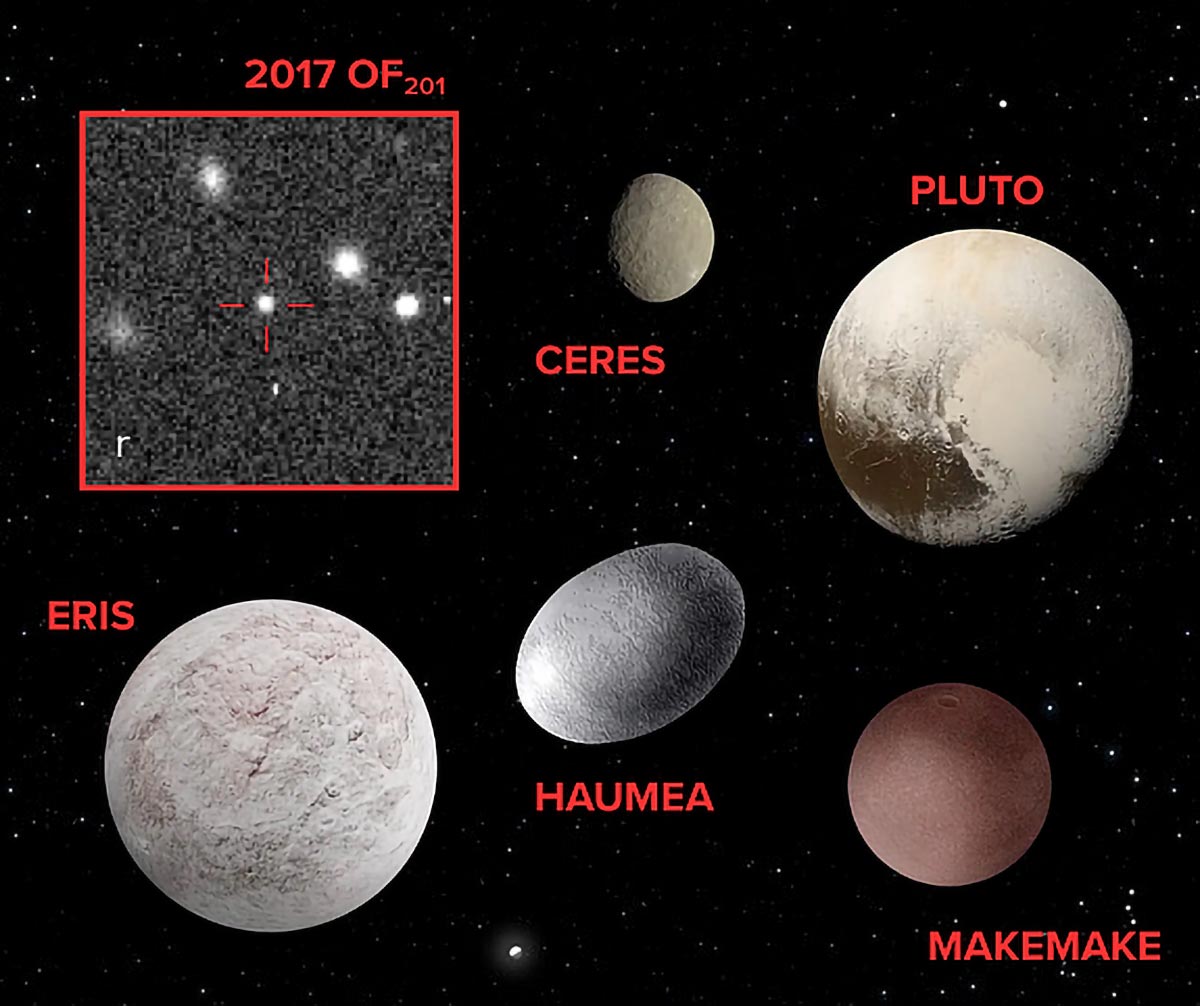
Astronomers have discovered a new trans-Neptunian object, 2017 OF201, which has a vast orbit and potential dwarf planet size, suggesting more hidden bodies exist beyond Neptune in the Kuiper Belt. The discovery challenges previous assumptions about the emptiness of this region and highlights the power of open science in astronomical research.

Potential New Dwarf Planet and Ice Giant Discovered at Solar System's Edge
science11 months ago

Potential New Dwarf Planet and Ice Giant Discovered at Solar System's Edge

Astronomers have discovered a distant celestial body, potentially a dwarf planet named 2017 OF201, orbiting beyond Pluto at over twice its distance, with an orbit taking 25,000 years. This object, located in the Kuiper Belt, is smaller than Pluto but notable for its extreme orbit and size, suggesting there may be many more such objects in the outer solar system.