
Titan’s methane weather mirrors Earth’s cycle on a world of ice and hydrocarbons
TL;DR Summary
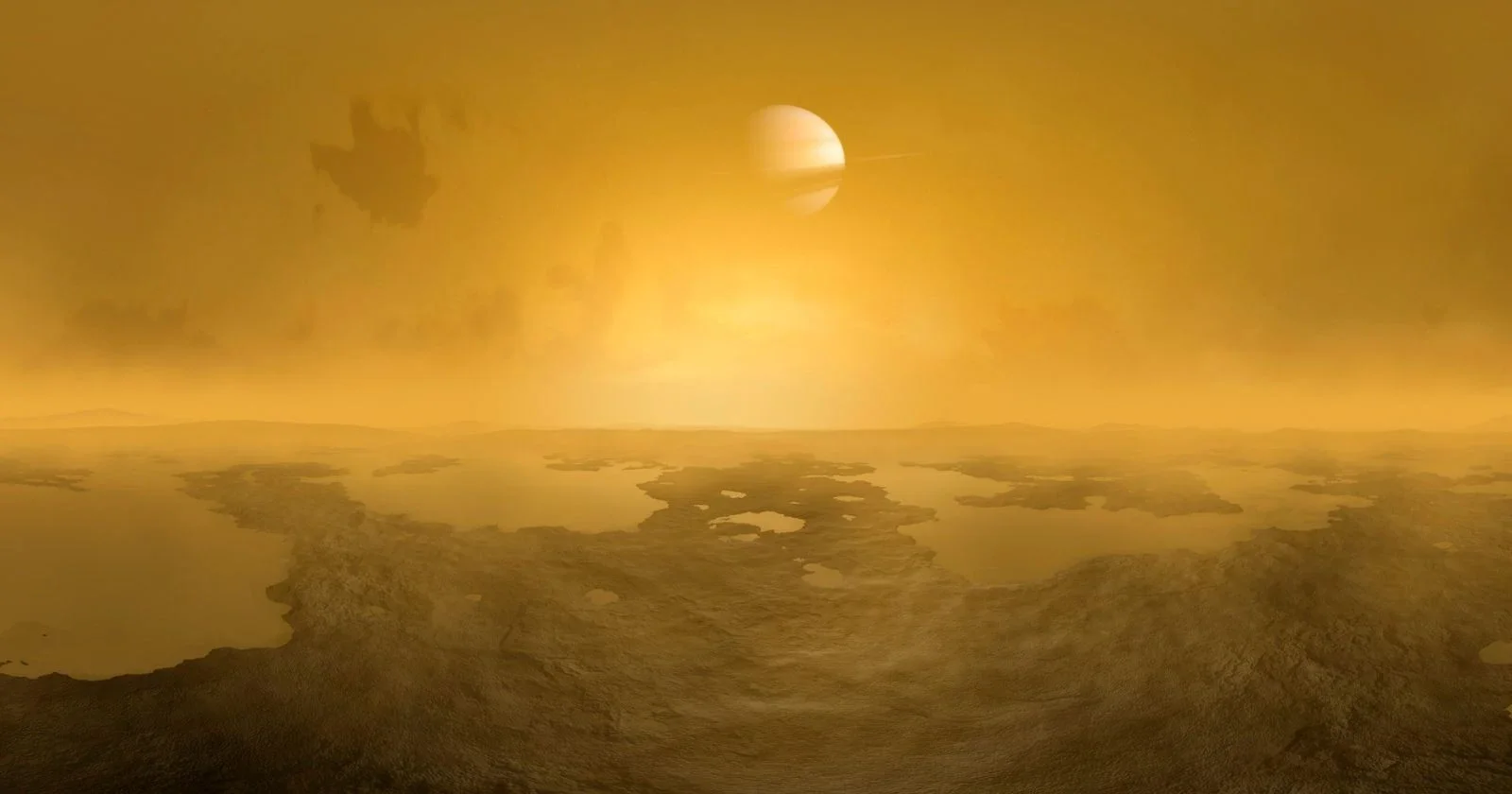
Titan, Saturn’s largest moon, hosts an Earthlike hydrological cycle driven by liquid methane: evaporation, cloud formation, rain, river channels, and methane/ethane seas; its bedrock is water ice, far colder and harder than Earth’s, with a possible methane‑clathrate lid beneath. Observations from Huygens and Cassini reveal vast lake systems like Kraken Mare and complex weather patterns, showing a familiar sequence of evaporation–condensation–precipitation–runoff in an alien environment.
- Saturn's moon Titan runs the same weather cycle as Earth — clouds, rain, rivers and seas — except the liquid doing all the work is methane, and the bedrock underfoot is water frozen at nearly minus 180 degrees, harder than most stone on Earth Space Daily
- Saturn’s Largest Moon May Hold the Resources for a Space Colony SciTechDaily
- Titan holds hundreds of times more liquid hydrocarbons than every known oil and gas reserve on Earth combined, yet you couldn't light a single drop — its air is nitrogen and methane, with almost no oxygen, so a campfire is physically impossible Space Daily
- Titan could be humanity’s next deep space destination A News
- Titan's resources could support future deep space missions, scientists say Mid-day
Reading Insights
Total Reads
1
Unique Readers
28
Time Saved
15 min
vs 16 min read
Condensed
98%
3,055 → 65 words
Want the full story? Read the original article
Read on Space Daily