
Webb Finds Ancient Hydrated Clay on Neptune’s Inner Moons, Hinting at a Lost Satellite System
TL;DR
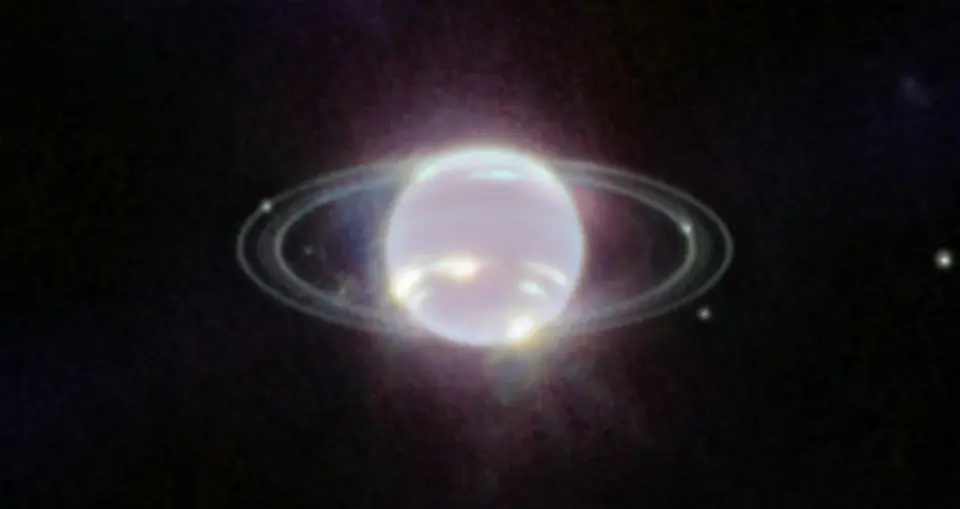
NASA’s JWST detected magnesium-rich phyllosilicates on Neptune’s tiny inner moons Larissa and Galatea and on its rings, a hydrated mineral signature formed by liquid water. The small, cold moons could not have heated enough to create these minerals, implying they inherited them from much larger, differentiated icy satellites that were shattered when Neptune captured Triton. Fragments from that primordial system likely remain as the current inner moons and rings, with Nereid possibly a surviving member; the researchers note alternate scenarios and call for more simulations and spectra to confirm the history.
- JWST found water-altered clay minerals on two of Neptune's tiny inner moons and its rings that probably formed deep inside much larger icy worlds — compelling evidence that today's moons may be rubble from Neptune's original satellite system, destroyed w Space Daily
- Neptune's tiny moons tell the story of Triton's destructive capture Phys.org
- James Webb Finds Clay on Neptune's Moons srpske.rs
- Neptune’s tiny moons may be the wreckage of shattered ancient worlds ԱՐՑԱԽ ԼՐԱՏՎԱԿԱՆ
- Traces of an ancient cosmic catastrophe discovered on Neptune's moons Baku.ws
Want the full story? Read the original reporting
Read on Space Daily