
Webb Reveals Atmosphere on a Jupiter-sized World Orbiting a White Dwarf
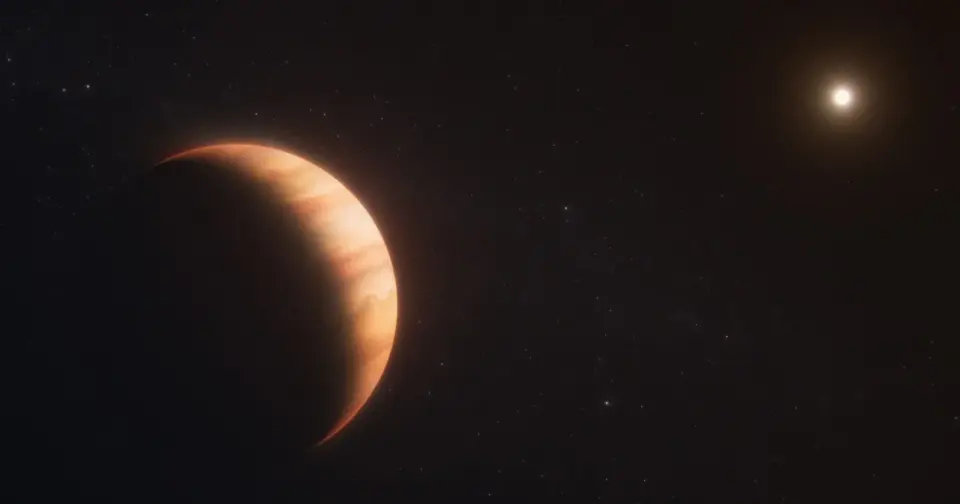
NASA’s James Webb Space Telescope detected an atmosphere around WD 1856 b, a Jupiter-sized planet that orbits the Earth-sized white dwarf WD 1856+534—marking the first atmospheric detection for a world around a dead star. Transmission spectroscopy during a transit revealed hydrocarbons, likely methane, plus a hazy cloud layer and a faint glow from the planet’s night side, indicating residual heat. The planet, about 80 light-years away, completes a close 34-hour orbit and is roughly seven times wider than its star, suggesting a past heating event and likely inward migration after the star’s transformation. The team plans additional Webb transits to better pin down its chemistry and formation history.
- A Jupiter-sized planet outlived its dying star, and NASA’s Webb has now read its atmosphere — the first ever detected on a world orbiting a white dwarf Space Daily
- Good News! Turns Out the Earth Will Never Be Swallowed by the Sun WIRED
- NASA’s Webb Studies How Planet Survived Death of its Star NASA Science (.gov)
- Aerosols and hydrocarbons in the atmosphere of a white dwarf planet Nature
- ‘Bizarre’ planet orbiting dead star may preview fate of our solar system CNN
Want the full story? Read the original reporting
Read on Space Daily