
Reflect Orbital’s Space Mirrors Face Regulatory and Scientific Scrutiny Before India Launch
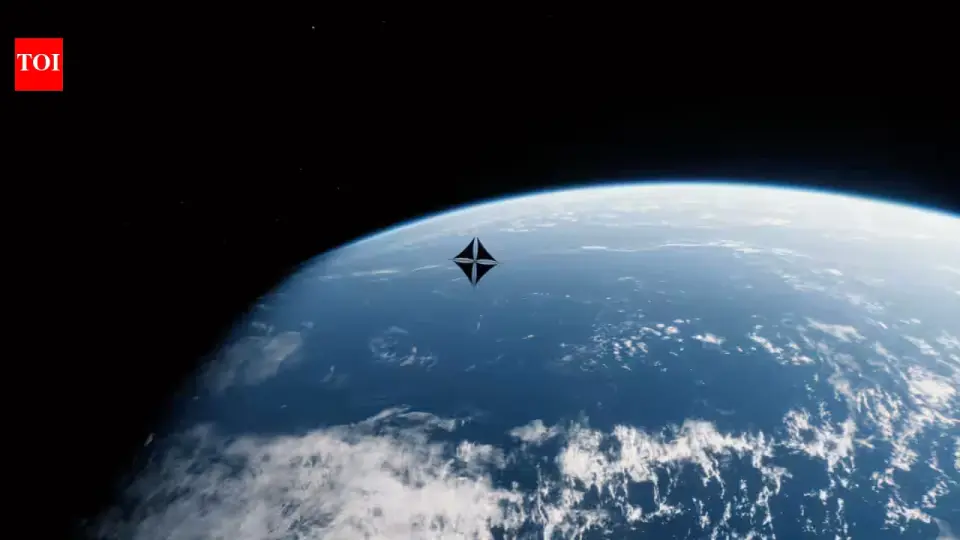
Reflect Orbital, a California-based startup, is developing a constellation of satellites to reflect sunlight onto Earth at night. The company has booked two launches with India’s Skyroot Aerospace, using the Vikram-1 and Vikram-1U rockets. While the service aims to provide light for solar farms, rescue teams, and defense sites, critics warn of severe light pollution. A peer-reviewed study predicts the glow could affect the night sky up to 30 kilometers from the target. The Federal Communications Commission licensed the first demonstrator, Eärendil-1, but excluded optical effects from its review, sparking opposition from astronomers and environmental groups.
Key points
- Reflect Orbital plans to deploy 50,000 satellites by 2035, each carrying mirrors to redirect sunlight.
- The first launch will use Skyroot’s Vikram-1 rocket, followed by the Vikram-1U, which has additional boosters.
- A study in The Astrophysical Journal Letters models that a 54-meter mirror could outshine a full moon at 14 kilometers away.
- The FCC licensed Eärendil-1 in July for radio communications only, declining to regulate optical light pollution.
- Rescue teams in California tested a ground-based simulation and found limited utility due to glare and cost.
- The service is priced at approximately $5,000 per hour, a cost many search-and-rescue groups cannot afford.
Background
This development follows earlier concerns about satellite brightness, such as the impact of Starlink on ground-based astronomy. Previous archive items on sunlight myths and circadian rhythms highlight broader public interest in how artificial light affects biological and environmental cycles. The current story extends these concerns to orbital infrastructure, where the scale of light pollution could be significantly larger than terrestrial sources.
How outlets are covering it
The Times of India and The Conversation emphasize the scientific risks, citing a study that predicts sky glow up to 30 kilometers from the beam. Popular Mechanics highlights the high cost ($5,000/hour) and the potential for military use, noting that rescue teams may not afford the service. Backpacker Magazine reports on a field test in California where rescue volunteers found the technology impractical due to glare and existing night-vision capabilities. Reflect Orbital’s CEO, Ben Nowack, dismisses concerns as fear of new technology, comparing it to the introduction of light bulbs. The American Astronomical Society and DarkSky International argue that the FCC’s failure to regulate optical effects is a critical oversight, while the company maintains that customers will require permits and local sign-off.
Why it matters
The deployment of space-based mirrors introduces a new category of light pollution that could disrupt astronomy, wildlife, and human circadian rhythms. The regulatory gap between the FCC’s radio-focused license and the physical effects of reflected sunlight creates uncertainty for global governance. If the technology scales to 50,000 satellites, it could permanently alter the night sky, raising questions about who controls and benefits from orbital illumination. The involvement of Indian launch providers also tests international regulatory frameworks for space activities with cross-border environmental impacts.
What to watch
Reflect Orbital plans to launch Eärendil-1, an 18-by-18-meter mirror satellite, to gather data on brightness and atmospheric scattering. The company intends to work with regulators and communities to justify scaling up to its full constellation. Indian authorities must decide whether to authorize the launch under their environmental and safety rules. Meanwhile, astronomers and environmental groups are likely to continue challenging the FCC’s decision, potentially leading to new legislative or regulatory actions to address optical light pollution from space.
- American start-up plans to sell sunlight at night with help from India’s Skyroot Aerospace; a scientific The Times of India
- A Startup Wants to Put 50,000 Mirrors in Space. The Goal: Make Sunlight Available at Night. Popular Mechanics
- A Startup Tested "Space Mirrors" for Search and Rescue. Here’s What Happened. Backpacker Magazine
- Sun-Redirecting Mirror Satellites Trend Hunter
- Startup targets new pain point: nighttime Science News
Want the full story? Read the original reporting
Read on The Times of India