
SpaceX Sets ISS Docking Record as Tesla Expands Home Backup to Mass-Market Cars
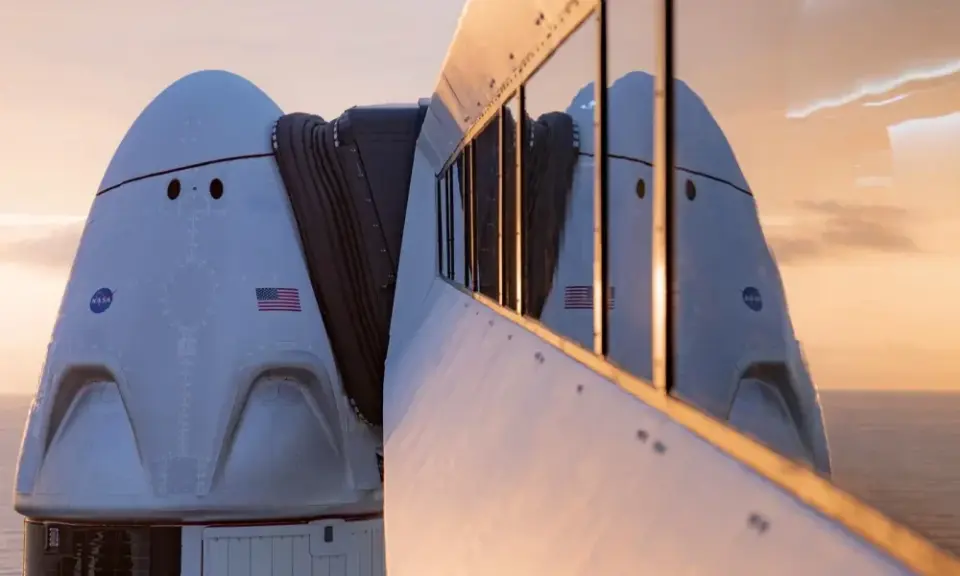
SpaceX achieved the fastest U.S. launch-to-docking time for the International Space Station with Crew-13, while Tesla enabled bidirectional power sharing for Model 3 and Model Y owners. The SpaceX record took 7 hours and 55 minutes, beating previous benchmarks. Tesla’s new feature allows these vehicles to act as backup batteries for homes equipped with Powerwall 3, extending outage resilience by over two days. Both developments highlight significant operational milestones for the companies in late 2026.
Key points
- SpaceX Crew-13 docked with the ISS in 7 hours and 55 minutes, setting a new record for U.S. spacecraft.
- The crew includes Jessica Watkins, Luke Delaney, Joshua Kutryk, and Sergey Teteryatnikov, joining Expedition 75.
- Tesla announced Powershare Home Backup for Model 3 and Model Y, requiring a Powerwall 3 and specific software updates.
- The feature provides up to 11.52 kW of continuous power, extending home backup by over two days for standard trims.
- This expansion follows the Cybertruck’s earlier adoption of the same technology, which had been delayed until mid-2026.
Background
SpaceX recently secured a $950 million contract extension with NASA for three additional ISS missions through 2030, despite plans to retire the Dragon spacecraft after that date. The Crew-13 launch followed a valve repair incident, demonstrating operational resilience. Tesla had previously promised bidirectional charging at its 2023 Investor Day, noting it would be useful primarily with Powerwall integration. The Cybertruck was the first model to receive this feature in late 2025, after delays in hardware compatibility.
How outlets are covering it
NASA and Space.com emphasized the historic nature of the Crew-13 docking speed, highlighting the efficiency of the Dragon spacecraft. Teslarati focused on the technical specifics of Tesla’s Powershare rollout, noting that Model S and X are excluded and that Grid Support remains limited to the Cybertruck. Electrek, cited by Teslarati, highlighted the hardware requirements, specifically the PCS2 Lite inverter. There is no direct disagreement, but the emphasis differs: NASA celebrates the speed record, while Tesla outlets focus on the expansion of utility features to mass-market vehicles.
Why it matters
The Crew-13 record underscores SpaceX’s continued dominance in crewed spaceflight, even as it transitions to Starship. Tesla’s move democratizes energy resilience, allowing millions of EV owners to use their vehicles as backup power sources without additional hardware. This reduces reliance on grid stability and enhances the value proposition of Tesla’s energy ecosystem, potentially influencing consumer adoption of Powerwall 3 and EVs.
What to watch
SpaceX will continue its ISS missions through 2030 before fully transitioning to Starship. Tesla is expected to expand Powershare to other models and regions, with Powerwall 2 support listed as 'coming soon.' The company may also integrate Grid Support for Model 3 and Model Y owners in the future, though no timeline has been announced.
- SpaceX just locked up a NASA record no other U.S. spacecraft can touch Teslarati
- SpaceX's Crew-13 astronaut launch in infrared | Space photo of the day for Oct. 5, 2026 Space
- SpaceX Successfully Nails Three Launches in a Row Yahoo Finance
- Dragon Docks Bringing SpaceX Crew-13 to Station nasa.gov
- Jessica Watkins, ’10, commands NASA’s SpaceX Crew-13 mission Stanford Report
Want the full story? Read the original reporting
Read on Teslarati