Tag

Iss

All articles tagged with #iss

Second ISS air leak renews decompression fears in the Russian module
space13 hours ago

Second ISS air leak renews decompression fears in the Russian module

A renewed air leak in the Russian segment of the International Space Station—specifically the tunnel linking the Zvezda module to the rest of the station—has raised decompression concerns after earlier efforts seemed to fix the issue in 2025. The leak’s return is treated as a high-risk, high-consequence problem by NASA and Roscosmos, but crews continue ongoing operations as maintenance budgets strain resources, with the long-term plan to keep the ISS viable until 2032 and hand over to commercial stations in the future.

How a single spacesuit torso decided the timing of the first all-female spacewalk
space1 day ago

How a single spacesuit torso decided the timing of the first all-female spacewalk

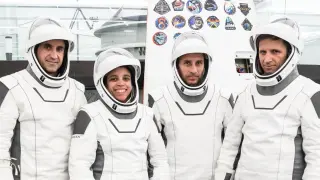
The first all-female spacewalk occurred on October 18, 2019 after an earlier March attempt was postponed because only one medium-size hard upper torso was ready on the ISS. March 2019 paired Koch with Hague using the available hardware, while a second torso wasn’t ready, delaying the milestone. The October EVA with Koch and Meir achieved the historic feat, illustrating how hardware readiness can shape mission outcomes. The piece also notes that future suits (AxEMU) are being designed to accommodate a wider range of body sizes from the start.

NASA expands SpaceX crew contract to add six post-certification missions
space2 days ago

NASA expands SpaceX crew contract to add six post-certification missions

NASA plans to add six post-certification missions to SpaceX’s Commercial Crew Contract on a sole-source basis, ordering up to three of the missions when added, to ensure continued crew transport to the ISS as Boeing’s Starliner remains uncertified and schedule delays persist. The extension follows a 2022 modification that added five missions for $1.4 billion and would extend ISS operations through late 2030 with a cadence of about one mission every six months.

Persistent ISS Leak in Russian Segment Resurfaces After Repairs
science3 days ago

Persistent ISS Leak in Russian Segment Resurfaces After Repairs

NASA and Roscosmos report that the air leak in the ISS’s Russian segment has returned, with a slow pressure drop in the Zvezda transfer tunnel at about one pound per day. Despite previous repair attempts and a 2025 signal suggesting a possible fix, the leak persists, prompting ongoing management of repressurizations as aging station hardware rings ahead of its 2030 retirement. The crew remains safe, and officials continue to pursue a definitive fix while monitoring the situation.

Orbiting Time: Sleep, Faith, and Birthdays on the ISS
space4 days ago

Orbiting Time: Sleep, Faith, and Birthdays on the ISS

Crew aboard the International Space Station experience about 16 sunrises and 16 sunsets each day and run their schedule on Coordinated Universal Time, aided by LED lighting that mimics day-night cues. Private sleep stations, strict light rules, and pharmacological aids aim to protect performance, while religious practices adapt to orbital life (e.g., praying toward launch-site time or Mecca when possible). Birthdays and other rituals help maintain a sense of meaning in microgravity. The piece emphasizes that, despite technology, humans rely on time-keeping structures—day, week, prayer, and cake—to stay oriented, and that chronic circadian disruption could pose health risks for long-duration missions.

ISS Faces Fresh Leak From Russian Module, Reigniting Talks on Its Future
space5 days ago

ISS Faces Fresh Leak From Russian Module, Reigniting Talks on Its Future

NASA confirmed renewed atmospheric leakage from the Russian PrK transfer tunnel of the International Space Station, at about one pound per day, after a period of stability. There are no crew impacts, but the reoccurrence complicates plans for maintaining ISS operations into the 2030s (or beyond) and intensifies debate over extending the station’s life versus transitioning to private commercial platforms, with NASA and Roscosmos coordinating on next steps.

Spaceflight bone loss reshapes osteoporosis treatment on Earth
science6 days ago

Spaceflight bone loss reshapes osteoporosis treatment on Earth

Astronauts on the ISS lose 1-2% of bone mineral density per month due to microgravity, so a six‑month mission can erase roughly a year’s worth of bone mass for a postmenopausal person. NASA’s countermeasures—ARED-based resistance exercise, cardio, and, in some cases, alendronate—partially slow the loss but do not prevent it, and recovery after return remains incomplete, effectively aging skeletal health by about a decade for longer missions. These findings are driving terrestrial osteoporosis research and potential treatments, though transfer to Earth is not direct and requires clinical adaptation.

Sixth-flight Cargo Dragon signals a new normal for ISS resupply
space8 days ago

Sixth-flight Cargo Dragon signals a new normal for ISS resupply

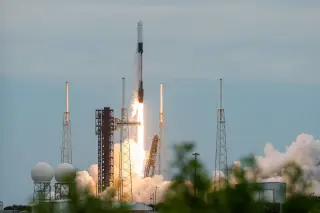
SpaceX launched CRS-34, sending a Cargo Dragon on its sixth trip to the ISS alongside a six-flight Falcon 9 booster. The milestone illustrates how reuse has become routine, quietly reshaping the economics of station resupply by enabling multiple flights, reduced waste, and a dependable downmass capability as NASA relies on commercial partners on the eve of the station’s retirement.

SpaceX’s 34th ISS Cargo Flight Carries Fresh Microgravity Experiments
space10 days ago

SpaceX’s 34th ISS Cargo Flight Carries Fresh Microgravity Experiments

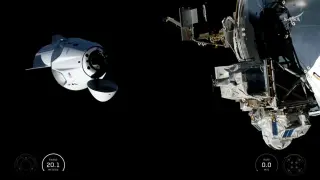
SpaceX launched the 34th NASA cargo mission to the International Space Station, delivering about 6,500 pounds of supplies and a suite of new experiments aboard the Dragon spacecraft. Liftoff was May 15 from Cape Canaveral, with autonomous docking scheduled for May 17 at the Harmony module. Dragon will stay through mid-June before returning to Earth with time-sensitive research. Experiments include a wood-based bone scaffold, microgravity simulators, studies of red blood cells and the spleen in space, a charged-particle instrument to study near-Earth radiation, and instruments for precise sunlight measurements of Earth and the Moon, among hundreds of ISS investigations.

SpaceX readies 6,500-pound cargo run to the ISS on CRS-34 mission
space-exploration13 days ago

SpaceX readies 6,500-pound cargo run to the ISS on CRS-34 mission

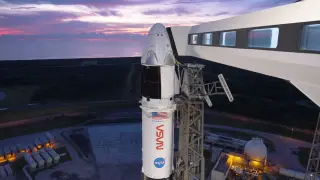
SpaceX will launch the Dragon cargo capsule atop a Falcon 9 from Cape Canaveral at 6:50 p.m. ET on May 13, delivering about 6,500 pounds of supplies and experiments to NASA’s ISS payload mission CRS-34. The Dragon is expected to dock autonomously with the Harmony module on May 14 around 7:35 a.m. EDT, marking the sixth flight for this Dragon capsule. The mission includes research such as Earth-based simulator validation, a wooden bone scaffold, and studies of red blood cells and spleen function in microgravity. After roughly a month attached to the ISS, the Dragon will return to Earth in mid-June; SpaceX’s booster should land at Cape Canaveral about eight minutes after liftoff. CRS-34 is SpaceX’s 34th Commercial Resupply Services mission to the ISS, and Dragon remains the only cargo vehicle capable of returning cargo to Earth.

space14 days ago

SpaceX and NASA Prepare CRS-34 Cargo Dragon Resupply Run to the ISS

NASA and SpaceX are set to launch the CRS-34 Cargo Dragon from Cape Canaveral’s SLC-40 on a Falcon 9 at 7:16:31 p.m. EDT, delivering about 6,500 pounds of science and supplies to the International Space Station; the Cargo Dragon C209 will make its sixth flight on booster B1096, with docking targeted for around 9:50 a.m. EDT on May 14 after a roughly 50-hour journey, though weather has only a 35% chance of acceptable conditions.

STORIE Mission Aims to Map Earth's Hidden Ring Current from the ISS
science15 days ago

STORIE Mission Aims to Map Earth's Hidden Ring Current from the ISS

NASA and the U.S. Space Force are launching the STORIE mission to image Earth's ring current from the International Space Station, using energetic neutral atom measurements to reveal how this doughnut-shaped particle belt forms and evolves during solar storms, with the goal of better space-weather forecasts and protecting satellites and power infrastructure.

NASA, SpaceX Set May 12 for 34th ISS Cargo Run
science19 days ago

NASA, SpaceX Set May 12 for 34th ISS Cargo Run

NASA and SpaceX are targeting May 12 for the 34th SpaceX Commercial Resupply Services mission to the ISS, sending a Dragon cargo spacecraft with about 6,500 pounds of cargo to dock at the Harmony module on May 14 around 9:50 a.m. Eastern; the payload includes experiments on microgravity simulation, a wood bone scaffold, red blood cell and spleen studies, a charged-particle instrument, a planet-formation investigation, and a solar-reflection instrument, with launch and arrival coverage on NASA platforms and public virtual attendance options.

Catch a Glimpse of the ISS: When and Where to Look Up
space20 days ago

Catch a Glimpse of the ISS: When and Where to Look Up

The International Space Station orbits Earth about every 90 minutes and is often visible at dawn or dusk when it reflects sunlight. It can be seen with the naked eye (binoculars help) as a bright, fast-moving point across the sky. For precise times and locations of passes, use NASA's Spot the Station app or the European Space Agency's online tracker. The ISS is a bright marker in the night sky and continues to host astronauts and international research.

Fireball from Space: ISS Captures Debris Reentry Over West Africa
space21 days ago

Fireball from Space: ISS Captures Debris Reentry Over West Africa

From the International Space Station's Cupola, NASA astronaut Chris Williams recorded a bright fireball streaking through the upper atmosphere—likely the reentry of debris from the Progress MS-34 mission. Observed at about 10:40 PM GMT on April 27 from roughly 250 miles up, the event provided a rare orbital view of how high-speed objects break up upon atmospheric entry; Williams shared photos and video on X, noting the pass over West Africa and emphasizing that such reentries typically occur over remote areas and pose no risk to people on the ground.