
Space AI is currently a tool for solving bandwidth and latency, not a path to autonomous judgment
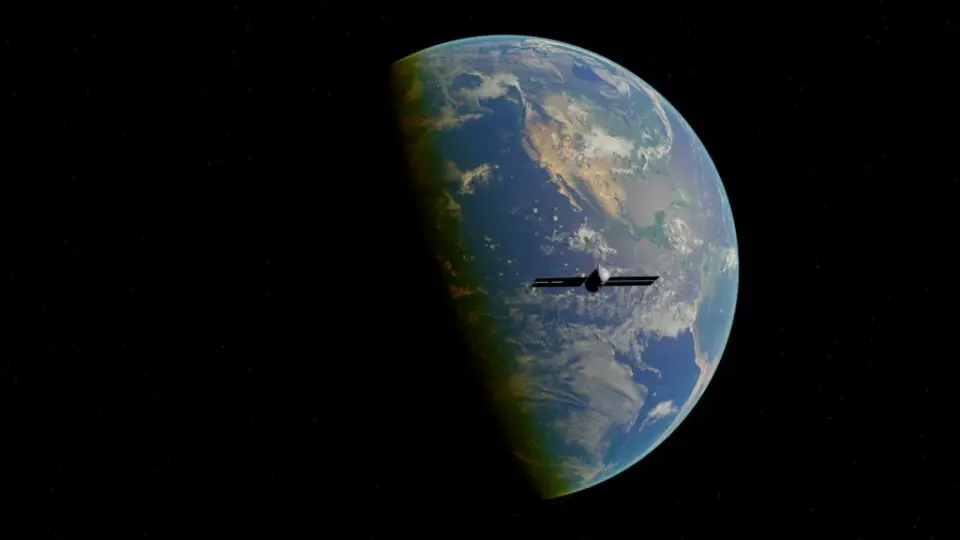
Current space AI applications are narrow solutions to physical constraints like signal delay and limited bandwidth, rather than general intelligence. NASA's Curiosity rover uses AEGIS software to select laser targets with 93% accuracy, bypassing the 24-minute communication lag with Earth. Similarly, ESA's OPS-Sat satellite uses a simple image classifier to discard unusable photos, a system built by one engineer in two weeks. While these tools address immediate bottlenecks, they do not represent the broader autonomous decision-making often implied by the term AI.
Key points
- NASA's AEGIS software on the Curiosity rover selects ChemCam laser targets with 93% accuracy, significantly outperforming the 24% success rate of pre-planned commands due to the 4-24 minute communication delay with Earth.
- ESA's OPS-Sat satellite utilizes a machine learning classifier to filter out blurry or overexposed images before downlink, a system developed by a single engineer in under two weeks to save bandwidth.
- Large satellite constellations employ automated collision avoidance software to manage the sheer volume of orbital objects, as human operators cannot review every potential conjunction individually.
- According to Futura, future AI applications will focus on predictive maintenance and in-situ resource utilization, such as processing Martian CO2 into fuel, to support long-term settlement.
- CyberWire notes that AI integration in space design introduces new cybersecurity risks, including model manipulation and intellectual property theft, prompting calls for stronger governance from the UN.
Background
Recent coverage of Mars missions, such as the Perseverance rover's observation of dust devils, highlights the ongoing focus on Martian weather and surface conditions. However, the current discussion shifts from observational science to the operational infrastructure required to manage data and hardware in deep space. While previous reports focused on scientific discoveries, this briefing addresses the engineering constraints that dictate how data is processed and transmitted.
How outlets are covering it
Space Daily emphasizes that current space AI is 'unglamorous' and strictly bounded, solving specific physical problems like light delay and bandwidth limits rather than demonstrating general intelligence. In contrast, Futura presents a more optimistic view, arguing that AI will provide 'structural, qualitative breakthroughs' for future settlements, including autonomous mining and life-support management. CyberWire offers a cautionary perspective, highlighting that while AI accelerates innovation, it also expands the cyber attack surface, requiring new security frameworks. The outlets agree on the utility of AI for data processing but differ on its scope: Space Daily sees it as a narrow fix, while Futura views it as a foundational backbone for future exploration.
Why it matters
Understanding the actual limitations of current space AI prevents unrealistic expectations about autonomous spacecraft. It highlights that progress in space exploration is driven by solving specific engineering bottlenecks, such as communication delays and bandwidth constraints, rather than achieving human-like decision-making. This distinction is crucial for evaluating the feasibility of future missions and the security risks associated with integrating AI into critical infrastructure.
What to watch
The next phase of space AI development will likely focus on predictive maintenance and in-situ resource utilization, as noted by Futura. Additionally, the industry will need to address cybersecurity concerns raised by CyberWire, potentially through new international standards for AI documentation and transparency. The expansion of satellite constellations will continue to drive the need for automated collision avoidance and data prioritization systems.
- AI actually flying on spacecraft today is a narrow fix for one physical problem, not machine judgment: a Mars rover picks its own laser targets with 93 percent accuracy, and one satellite's entire first AI experiment was built by a single engineer in under two week Space Daily
- AI breakthrough: Why life on the Moon and Mars could happen much sooner Futura, le média qui explore le monde
- Legacy Technologies Revive in Modern Industries 조선일보
- Can AI Command Earth-to-Orbit Operations? eetimes.com
- Building space in the AI era. CyberWire
Want the full story? Read the original reporting
Read on Space Daily