
SpaceX Details 1 Million Satellite AI Network and Starship Catch-Tower Strategy
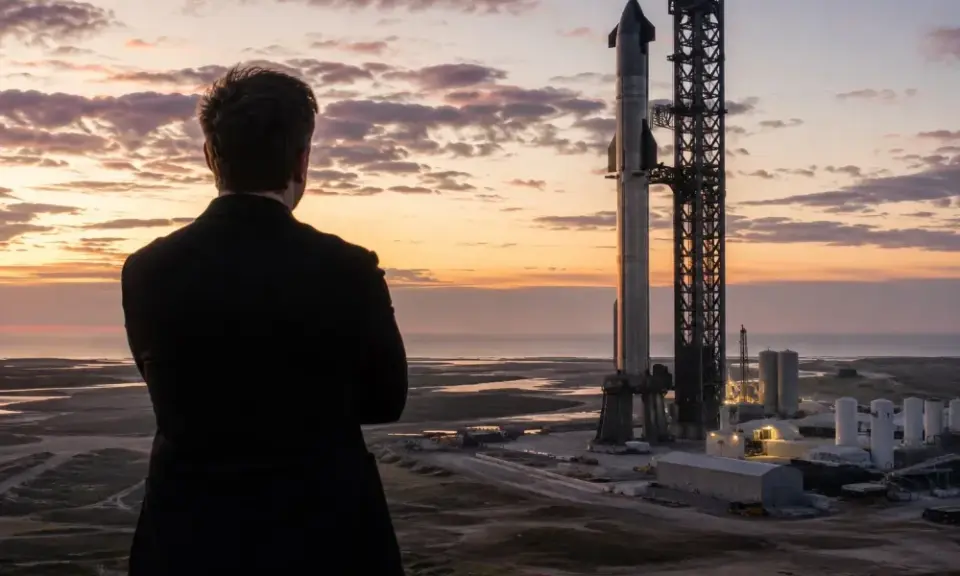
SpaceX has formalized plans for a massive orbital AI compute network called Starmind, targeting up to 1 million satellites, while simultaneously advancing its Starship catch-tower design to enable rapid reuse for Mars missions and suborbital travel.
Key points
- SpaceX filed with the FCC for up to 1 million Starmind AI satellites, aiming to operate them in clusters of 10 to provide coherent compute power for AI models.
- The company highlighted space safety concerns, noting that 650 third-party satellites in 2026 did not share maneuver data, leading to 164,000 potential collision risks.
- SpaceX is using mechanical arms on launch towers to catch the Super Heavy booster instead of landing legs, a design choice intended to reduce weight and allow for daily reuse.
- This catch-tower strategy supports Musk’s goals for frequent Mars cargo launches and suborbital passenger flights, though significant technical hurdles remain.
- SpaceX offers a free ephemeris sharing platform backed by its Stargaze optical sensor network to help other operators avoid collisions.
Background
Recent developments show SpaceX achieving its first orbital Starship flight in September 2026, deploying 26 Starlink V3 satellites. The company’s stock recently surged, restoring Elon Musk’s trillionaire status, driven by expectations of upcoming Starship tests and AI revenue. Earlier reports indicated SpaceX was working with Nvidia on compute payloads for its orbital constellation.
How outlets are covering it
Teslarati emphasizes the scale of the Starmind constellation and the company’s push for industry-wide space safety standards, citing specific collision data. BGR focuses on the engineering rationale behind the Starship catch-tower design, highlighting how it enables rapid reuse for Mars logistics and suborbital travel. While Teslarati notes opposition from astronomers regarding satellite crowding, BGR acknowledges the significant technical challenges remaining for both Mars colonization and suborbital passenger flights.
Why it matters
The expansion of orbital AI infrastructure and the evolution of reusable launch systems could fundamentally reshape space access, global connectivity, and the timeline for interplanetary travel, while raising critical questions about space traffic management and safety.
What to watch
SpaceX plans to begin deploying thousands of Starmind satellites as soon as late 2027, while continuing to test Starship for orbital and suborbital missions. The company will likely continue to push for broader adoption of its space safety protocols among other satellite operators.
Want the full story? Read the original reporting
Read on Teslarati