
SpaceX CRS-35 Launches Final ISS Solar Arrays and Medical Experiments
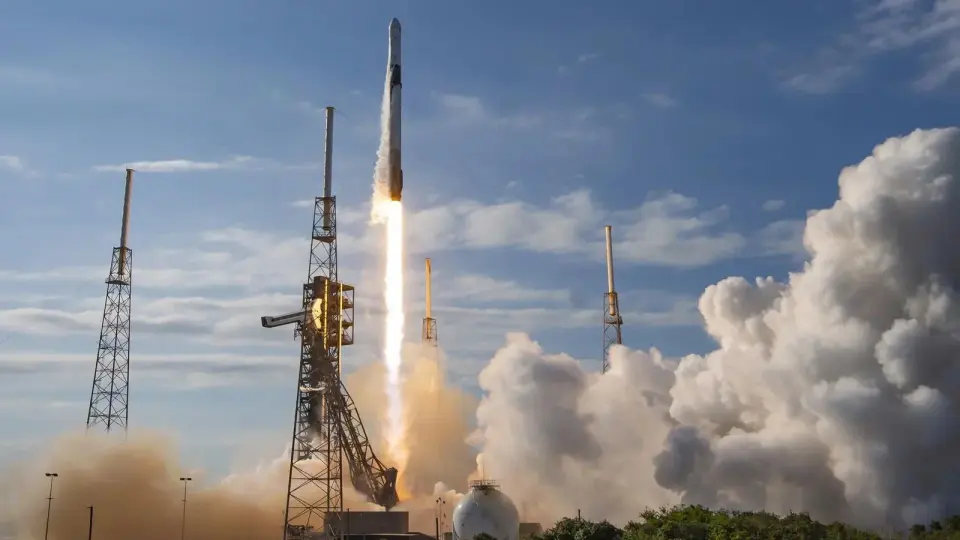
SpaceX is launching its 35th Commercial Resupply Services mission to the International Space Station on October 13, 2026. The Falcon 9 rocket will carry 6,300 pounds of cargo, including the final pair of Roll-Out Solar Arrays, to the orbiting lab. The Dragon capsule will dock autonomously on October 15 and remain for a month before returning to Earth with scientific samples.
Key points
- Launch scheduled for 6:33 a.m. EDT from Cape Canaveral Space Force Station on October 13, 2026.
- The mission delivers 6,300 pounds of supplies, including the final International Space Station Roll-Out Solar Arrays (iROSAs).
- Dragon capsule C211 will dock with the Harmony module on October 15 and remain for approximately one month.
- Scientific payloads include experiments on artificial retinas, 3D heart tissue models, unconventional glass, and brain organoids for neurodegenerative diseases.
- The mission also returns a failed Canadarm2 joint, a spacesuit, and other hardware for ground analysis.
Background
This is the 35th flight under NASA’s Commercial Resupply Services contract. Previous missions, such as CRS-34 in May 2026, have established a routine for SpaceX’s Dragon capsules to deliver cargo and return experiments. The ISS has supported over 4,000 experiments in microgravity over 25 years, with research aiding Artemis and Mars mission planning.
How outlets are covering it
Space.com and NASA emphasize the scientific significance of the cargo, highlighting experiments like Lambda-Vision-1 for artificial retinas and MINDS for neurodegenerative diseases. Spaceflight Now provides technical details, noting the use of Falcon 9 booster B1096 (its eighth flight) and Dragon C211 (its fourth cargo run). All sources agree on the launch time, cargo weight, and docking schedule, with no conflicting information reported.
Why it matters
The delivery of the final iROSAs is critical for boosting the ISS’s power budget and supporting its safe deorbit. The scientific experiments, particularly those on artificial retinas and heart tissue, could lead to medical breakthroughs on Earth and improve drug testing for future space missions. The return of the failed Canadarm2 joint allows for ground analysis to prevent future robotic arm failures.
What to watch
Dragon will remain docked to the ISS for about a month, then splash down in the Pacific Ocean off California in mid-November 2026. The returned hardware, including the Canadarm2 joint and a spacesuit, will be analyzed and refurbished on the ground.
- SpaceX launching 6,300 pounds of cargo to the ISS today: Watch it live Space
- CRS-35 Mission SpaceX
- Live coverage: NASA, SpaceX to launch new solar arrays, 6,300 pounds of cargo to the space station Spaceflight Now
- NASA’s SpaceX 35th Commercial Resupply Mission Overview NASA (.gov)
- SpaceX ‘jellyfish cloud’ expected to light up Maryland skies Tuesday morning The Baltimore Banner
Want the full story? Read the original reporting
Read on Space