
SpaceX Falcon 9 Delivers Globalstar SOS Satellites, Returns Booster to Cape Canaveral
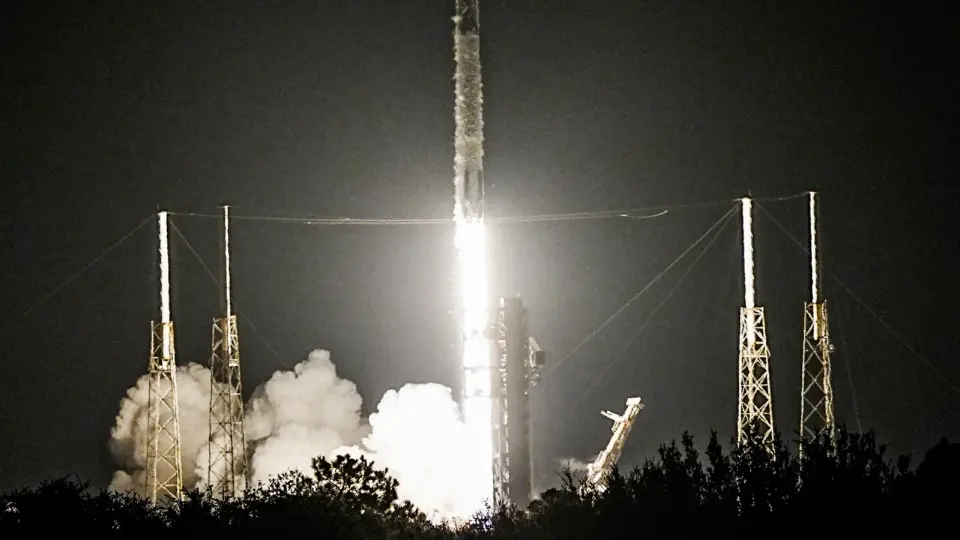
SpaceX successfully launched eight Globalstar HIBLEO-4 satellites from Cape Canaveral on August 15, 2026, using a Falcon 9 booster on its 14th flight. The mission, designated Globalstar 2-R Launch 1, deployed satellites supporting emergency SOS alerts for mobile devices. The first stage landed back at Landing Zone 40, generating sonic booms across Central Florida. This was the first of two planned replenishment missions for Globalstar’s constellation, which is pending acquisition by Amazon.
Key points
- Liftoff occurred at 9:12 p.m. EDT from Space Launch Complex 40 at Cape Canaveral Space Force Station.
- The Falcon 9 first stage, tail number B1090, completed its 14th flight and landed at Landing Zone 40, marking its fifth landing at that site.
- The payload consisted of eight HIBLEO-4 satellites, the first batch of 17 planned to replenish Globalstar’s low Earth orbit constellation.
- Sonic booms were reported across Brevard, Orange, Osceola, and other Florida counties due to the booster’s return trajectory.
- A second Falcon 9 launch for the U.S. Space Force (USSF-366) was scheduled shortly after from Vandenberg Space Force Base in California.
Background
This launch follows a series of recent Falcon 9 missions from the Space Coast, including the NROL-95 launch in July 2026 and a Starlink deployment in July that produced a 'dawn jellyfish' visual effect. The Globalstar mission had been delayed from May 2026 to allow additional preparation time. The launch occurs amid broader industry shifts, including Amazon’s pending acquisition of Globalstar, which aims to integrate direct-to-device capabilities into its Amazon Leo constellation. Additionally, Europe’s launch sector faces pressure from SpaceX’s cost advantages and high reuse rates, as noted in recent analyses of global launch market dynamics.
How outlets are covering it
Florida Today provided live minute-by-minute updates, emphasizing the booster’s landing and sonic booms for local residents. Spaceflight Now focused on the technical details, including the 90% weather probability and the booster’s flight history, noting the mission’s delay from May. The Orlando Sentinel highlighted the community impact of the sonic booms and the broader context of 52 Space Coast launches in 2026, while also mentioning the pending Amazon acquisition of Globalstar. SpaceX’s official data confirmed the mission’s success and the booster’s landing, but did not provide additional commentary on the commercial implications. All sources agreed on the successful launch and landing, but differed in emphasis: local media focused on the sonic booms, while industry-focused outlets highlighted the satellite’s role in emergency communications and the corporate acquisition context.
Why it matters
The successful launch and booster landing reinforce SpaceX’s dominance in the commercial launch market and its ability to execute high-cadence, reusable missions. The deployment of Globalstar’s HIBLEO-4 satellites is critical for maintaining emergency communication services, particularly for Apple devices, and positions Globalstar for integration into Amazon’s broader satellite network. The sonic booms underscore the growing public impact of frequent rocket launches on local communities. Additionally, the mission highlights the competitive pressure on other launch providers, such as ULA and Blue Origin, which are facing delays due to engine issues and pad repairs, as noted in the Orlando Sentinel’s coverage of the 2026 launch schedule.
What to watch
SpaceX is expected to conduct a second Globalstar launch to complete the replenishment of its 17-satellite constellation, though the date has not been announced. The U.S. Space Force’s USSF-366 mission from Vandenberg was scheduled for the same night, indicating a busy launch period. Amazon’s acquisition of Globalstar is expected to close in 2027, which will likely lead to further integration of Globalstar’s technology into Amazon’s Leo constellation. Meanwhile, ULA and Blue Origin are working to resolve engine and pad issues to resume their launch schedules before the end of 2026. NASA is also preparing for the Artemis III mission, targeting mid-2027, with initial testing of the SLS rocket planned for November 2026.
- SpaceX rocket launch from Cape Canaveral to bring Saturday night sonic booms. What to know. Florida Today
- USSF-366 Mission SpaceX
- Live coverage: SpaceX to launch satellite replenishment mission for Globalstar from Cape Canaveral Spaceflight Now
- SpaceX Florida rocket launch this weekend. Best places to see liftoff Florida Today
- SpaceX launch of SOS satellites Saturday night could bring sonic boom to Central Florida orlandosentinel.com
Want the full story? Read the original reporting
Read on Florida Today