
Excavator operator unearths 50-ton boulder during O'Hare terminal modernization
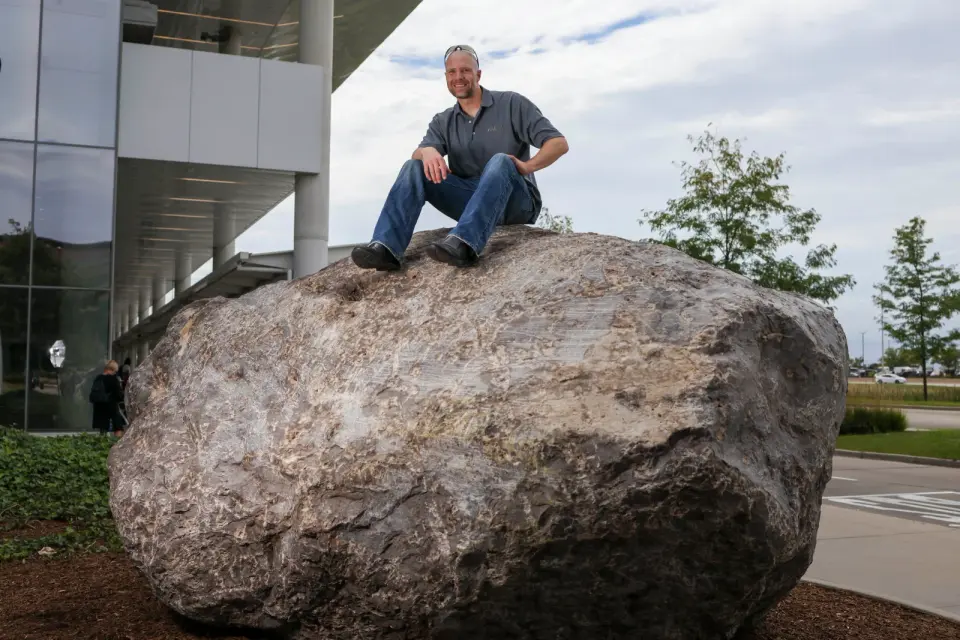
A 50-ton dolostone boulder was discovered 30 feet underground at O'Hare International Airport during excavation work for an $8.8 billion terminal modernization project. The rock, identified by geologists as potentially 400 million years old, is now on public display at the airport's Multi-Modal Facility. The Chicago Department of Aviation has launched a public naming contest, receiving over 2,300 submissions, including humorous and political suggestions, with the final name to be decided by public vote.
Key points
- Ron Pitelka, a Local 150 excavator operator for Walsh Construction, and bulldozer operator Matt Tracy unearthed the 50-ton boulder in June 2026 while working on stormwater detention basin excavation for O'Hare's terminal modernization.
- The boulder was found 30 feet underground and identified by a professional geologist as dolostone, a sedimentary carbonate rock closely related to limestone and designated as Illinois' official state rock.
- The Chicago Department of Aviation has placed the boulder on public display at the O'Hare Multi-Modal Facility at 10255 W. Zemke Boulevard.
- A public naming contest has been launched, with over 2,300 submissions received, including 'Da Layover,' 'Jean Baptiste Point du Pébble,' and 'The BaRock Obama Presidential Memorial Airport Boulder.'
- Geologists estimate the boulder's material is over 400 million years old, formed in a shallow tropical sea, and its current shape and location were likely determined by glaciers 12,000 to 15,000 years ago.
Background
Ron Pitelka, a 45-year-old excavator operator, has a long history with boulders, having collected several hundred rocks over two decades, including a 10,000-pound limestone rock he took home from a construction site in Chicago's southwest suburbs when he was 23. He has expressed frustration with contractors burying or breaking up boulders to save costs, as seen with blue granite boulders in Plainfield. The discovery of the O'Hare boulder occurred during early-stage work for the airport's multibillion-dollar terminal modernization project, which includes moving stormwater detention basins.
Why it matters
The discovery highlights the intersection of large-scale infrastructure projects and geological heritage in Chicago. The public naming contest demonstrates community engagement with local history and geology, while the boulder's age and origin provide insight into the region's prehistoric environment. The event also underscores the importance of preserving natural features during construction, as opposed to burying or destroying them.
What to watch
The Chicago Department of Aviation will select finalists from the over 2,300 name submissions, and the final name will be determined by public vote. The deadline for submissions is less than a week away. The boulder will remain on public display at the O'Hare Multi-Modal Facility.
Want the full story? Read the original reporting
Read on Chicago Tribune