
IGF Jurors Boycott AI Games, Sparking Controversy Over Big Walk's Minimal LLM Use
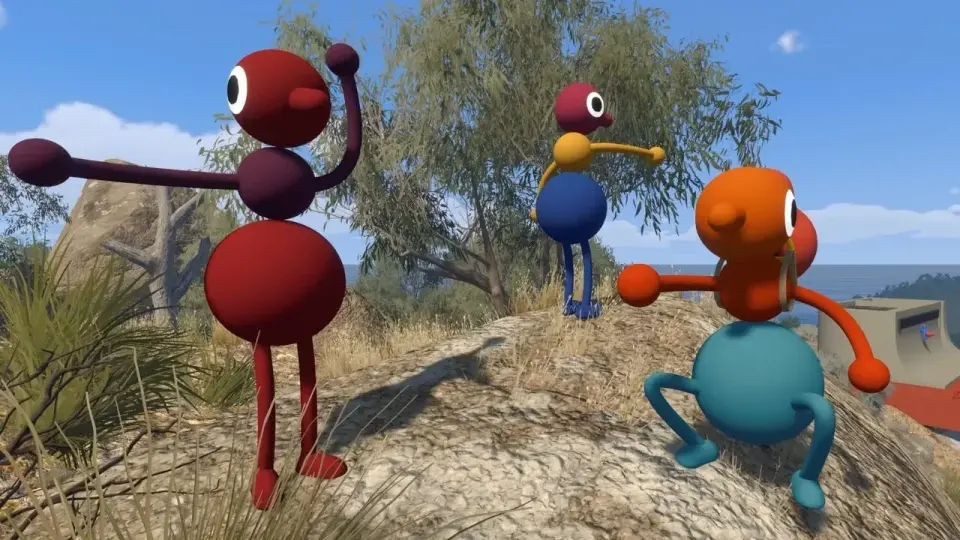
The acclaimed co-op game Big Walk has faced backlash after developer House House disclosed minimal use of large language models (LLMs) during its final development phase. This revelation occurred shortly after 19 Independent Games Festival (IGF) jurors announced a boycott of any game using generative AI. House House stated that LLMs were used sparingly to solve a specific technical bug, affecting less than 0.1% of the codebase, but the lack of prior public disclosure has intensified debate within the indie gaming community.
Key points
- House House confirmed that LLMs were used 'sparingly' near the end of Big Walk's development to address difficult technical challenges and bugs.
- The studio estimates that well under 0.1% of the game's code involved AI-generated snippets, specifically to fix a shadow-casting issue in Unity's Universal Render Pipeline.
- 19 IGF jurors issued a statement declaring they will not vote for any game using generative AI in any capacity, citing concerns about the normalization of the technology.
- House House apologized for not disclosing AI usage on Steam, noting the platform does not require such disclosures, and admitted the lack of an internal AI policy was a failure.
- The controversy has sparked polarized reactions, with some viewing the minimal use as harmless debugging assistance and others criticizing the normalization of AI in creative work.
Background
Big Walk, developed by Australian studio House House (creators of Untitled Goose Game), was one of the highest-rated games of 2026, selling over one million copies in its first week. The game was submitted for the 2027 Independent Games Festival (IGF) awards. Prior to this controversy, the indie community had been debating the ethics of AI in game development, with some developers and players opposing the use of generative AI for creative assets, while others accepted its use for technical tasks like debugging.
How outlets are covering it
Push Square and GamesIndustry.biz reported the facts neutrally, focusing on House House's statement and the specific technical example provided. Aftermath highlighted the polarized community reaction, noting that while some viewed the AI use as a 'tricky edge case,' others saw it as a violation of the IGF jurors' stance. Gizmodo emphasized the broader implications, arguing that even minimal AI use contributes to the normalization of the technology and that the jurors' boycott reflects a deeper concern about the labor and creativity involved in game development. House House itself expressed concern that voluntary disclosures might normalize AI usage, apologizing for the lack of an internal policy and pledging to implement stricter guidelines in the future.
Why it matters
This incident highlights the growing tension in the gaming industry over the use of generative AI, even for minor technical tasks. It underscores the difficulty of defining boundaries for AI usage in creative fields and the potential consequences for developers who do not proactively disclose such usage. The controversy may influence future policies at award ceremonies and platforms like Steam, as well as shape public perception of AI in game development.
What to watch
House House has pledged to implement a more comprehensive internal AI usage policy for future projects. The IGF is expected to announce finalists in January 2027, with the possibility that the jurors' boycott could impact the outcome for Big Walk and other AI-assisted games. The broader debate over AI in game development is likely to continue, with increased scrutiny on disclosure practices and the definition of 'generative AI' in technical contexts.
- Beloved Co-Op Adventure Big Walk in Hot Water After Failing to Disclose AI Usage Push Square
- Big Walk Used AI In 'The Final Stretch' Of Development, Kicking Off Intense Awards Debate Aftermath
- Indie Game Awards AI Boycott Sparks Big Walk Controversy Gizmodo
- House House clarifies use of AI tools in Big Walk's "final stage of development" GamesIndustry.biz
- Big Walk used AI to fix a bug. Now the indie gaming world is having a reckoning. Ars Technica
Want the full story? Read the original reporting
Read on Push Square