
AMD Delays 10% GPU Price Hike to August, Following Nvidia's Lead
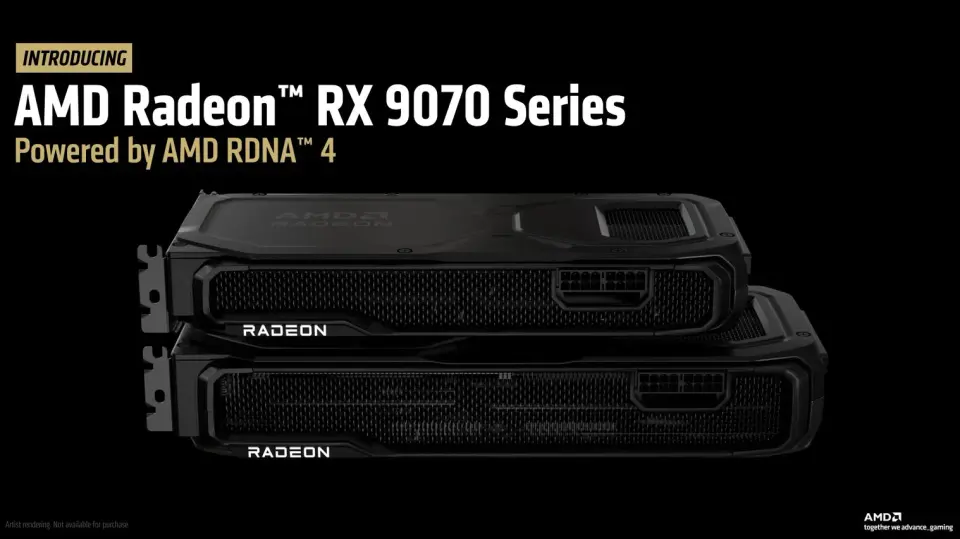
AMD has postponed its planned 10% increase in graphics card prices from July to August, according to TechPowerUp. The move follows similar pricing adjustments by Nvidia, as both companies pass on rising costs for GDDR6 and GDDR7 memory. While entry-level cards may see the minimum 10% hike, models with higher VRAM, such as the Radeon RX 9070 XT, are expected to face steeper increases. This development reflects broader market pressures driven by AI demand and memory shortages.
Key points
- AMD delayed its 10% GPU price hike from July to August, aligning with Nvidia's pricing strategy.
- The price increase is driven by rising costs for GDDR6 and GDDR7 memory, exacerbated by AI demand.
- Higher-VRAM models like the Radeon RX 9070 XT may see increases exceeding 10%, while entry-level cards like the RX 9050 may see the minimum 10% hike.
- Nvidia's RTX 50-series cards have already seen significant price increases, with some models now costing more than their launch MSRP.
- The memory shortage is expected to continue, potentially delaying mid-gen GPU refreshes and keeping prices elevated through 2027.
Background
In early 2026, both AMD and Nvidia signaled potential price hikes due to rising memory costs. Nvidia reportedly planned a 20-30% increase across its lineup, while AMD initially targeted a 10% hike in July. The memory shortage, driven by AI demand, has already pushed prices for RTX 50-series and RX 90-series cards higher, with some models now costing significantly more than their launch MSRP. This trend is expected to continue, with mid-gen GPU refreshes potentially delayed until 2027.
How outlets are covering it
TechPowerUp reports that AMD delayed its 10% price hike from July to August, following Nvidia's lead. Gizmodo emphasizes that both Nvidia and AMD are passing on rising memory costs to consumers, with Nvidia's RTX 50-series cards already seeing significant price increases. Tom's Hardware highlights that premium Nvidia cards, such as the RTX 5080 and 5090, are now selling well above their launch MSRP, with some models costing more than $4,300. While TechPowerUp focuses on AMD's delayed hike, Gizmodo and Tom's Hardware highlight the broader impact of memory shortages on both companies' pricing strategies.
Why it matters
The delayed price hike by AMD, following Nvidia's lead, signals a broader trend of rising GPU prices driven by memory shortages and AI demand. This could make high-end graphics cards less accessible to consumers, potentially delaying mid-gen GPU refreshes and keeping prices elevated through 2027. The situation underscores the growing impact of AI demand on the PC hardware market, with both AMD and Nvidia passing on rising costs to consumers.
What to watch
AMD is expected to implement its 10% price hike in August, with higher-VRAM models potentially seeing steeper increases. Nvidia's RTX 50-series cards may continue to see price increases, with some models now costing more than their launch MSRP. The memory shortage is expected to continue, potentially delaying mid-gen GPU refreshes and keeping prices elevated through 2027. Consumers may need to consider alternative options, such as pre-built PCs or laptops, to avoid the rising costs of high-end graphics cards.
- AMD Reportedly Plans 10% GPU Price Hike in August techpowerup.com
- Graphics Cards Could Get Even More Expensive, and It’s Not Just Nvidia Gizmodo
- Best Buy is selling an RTX 5080 for more than the RTX 5090’s MSRP The Verge
- Brace yourselves, PC gamers: GPU pricing is about to get even worse, report says Polygon.com
- Nvidia's fastest graphics cards get US price increase at Best Buy, Amazon — Astral RTX 5080 now costs more than 5090's MSRP, flagship card now commands more than $4,300 Tom's Hardware
Want the full story? Read the original reporting
Read on techpowerup.com