
Microsoft's AI Diagnostic System Achieves 83% Accuracy in Complex Cases, but Real-World Validation Remains Pending
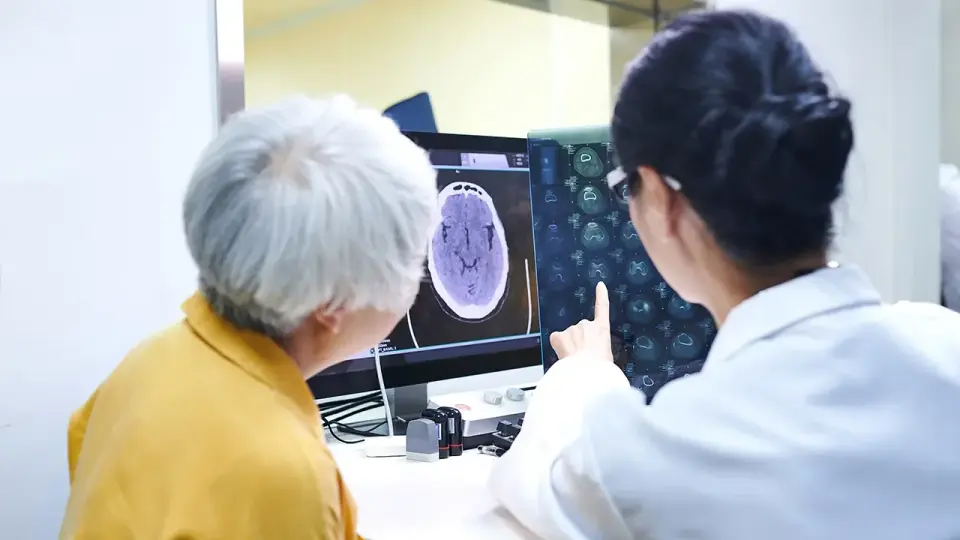
Microsoft's MAI-DxO system correctly diagnosed 83% of complex medical cases in a simulation, outperforming generalist physicians. The system uses multiple AI agents to sequentially gather information and order tests, potentially reducing costs. However, the study relied on simulated cases and generalist doctors, not specialist teams. Microsoft is now partnering with Beth Israel Deaconess Medical Center for real-world clinical trials.
Key points
- Microsoft's MAI-DxO achieved 83.2% accuracy on 304 complex cases from The New England Journal of Medicine, compared to 36.1% for generalist physicians with reference materials.
- The system uses multiple AI agents to ask follow-up questions, recommend tests, and challenge conclusions, mimicking a panel of doctors.
- In a cost-conscious configuration, MAI-DxO achieved 81% accuracy with estimated diagnostic costs of $2,241 per case, compared to $4,725 for physicians.
- Microsoft is partnering with Beth Israel Deaconess Medical Center in Boston to test MAI-DxO in clinical environments with consenting patients.
- The study's authors work for Microsoft, and the comparison group consisted of generalist physicians, not specialist teams, limiting the directness of the comparison.
Background
This development follows a decade-long misdiagnosis case highlighted in October 2026, illustrating the challenges patients face with non-specific symptoms. Microsoft's MAI-DxO was previously reported in October 2026 as outperforming generalist physicians in a peer-reviewed study, with clinical trials planned for Boston. The current report expands on the system's architecture and cost-effectiveness, while noting the need for real-world validation.
How outlets are covering it
Fox News emphasizes the potential of AI to solve complex diagnostic puzzles and reduce costs, while cautioning that the study used simulated cases and generalist physicians. Digital Health Wire mentions Microsoft's ambition for 'medical superintelligence' but does not detail the study's specifics. Healthcare.digital provides a detailed analysis of the system's architecture, highlighting the six dimensions of medical intelligence and the empirical benchmarking, but notes the need for human-AI complementarity. The outlets agree on the system's high accuracy in simulation but differ in their emphasis on the limitations of the study and the potential for real-world deployment.
Why it matters
The study suggests that AI could help doctors diagnose difficult medical conditions more accurately and reduce unnecessary testing, potentially lowering costs. However, the need for real-world validation and the limitations of the study's design mean that AI cannot yet replace human doctors. The development highlights the potential for AI to enhance, not replace, human doctors, and the importance of careful use in patient care.
What to watch
Microsoft will evaluate MAI-DxO in clinical environments at Beth Israel Deaconess Medical Center, comparing its recommendations with physicians' independent assessments. The study will help determine how well the AI performs with actual patients and in the unpredictable circumstances of a busy hospital. Independent testing will be crucial before hospitals consider relying on the technology for patient care.
- Microsoft AI beats doctors in simulated diagnosis test Fox News
- Medical Superintelligence, Anthropic IPO, and 2027 Predictions Digital Health Wire
- Nelson Advisors: Microsoft and Medical Superintelligence - Architectural Foundations, Dimensional Framework and Empirical Horizons healthcare.digital
- Microsoft MAI-DxO study: GPT-5 benchmark results NeoTeo
- Microsoft Maps the Road to Medical Superintelligence Digital Health Wire
Want the full story? Read the original reporting
Read on Fox News