Tag

Health And Technology

All articles tagged with #health and technology

Global Studies Link Excessive Screen Time to Child Development Risks, Sparking Calls for Tech Regulation
health-and-technology8 days ago

Global Studies Link Excessive Screen Time to Child Development Risks, Sparking Calls for Tech Regulation

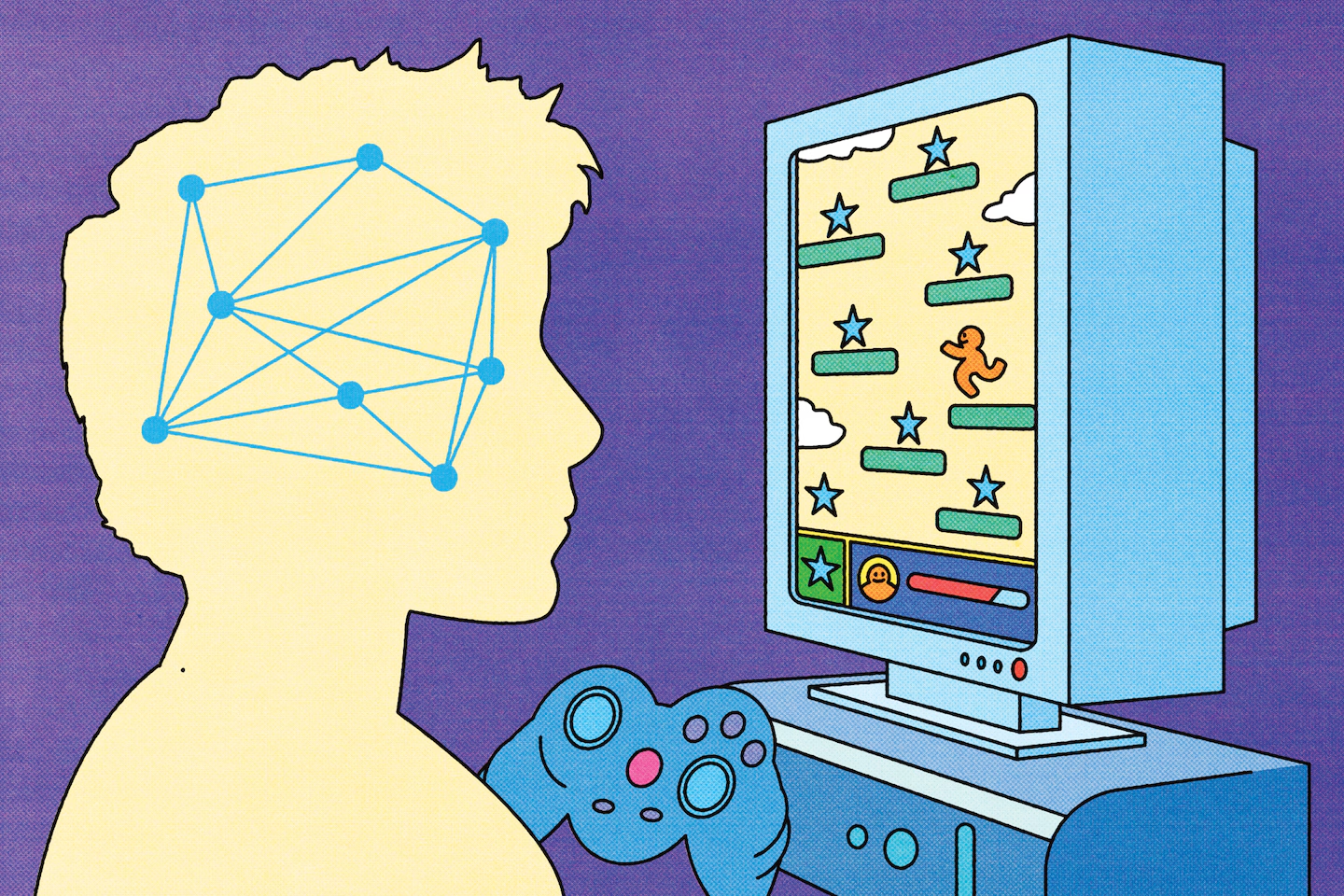
New research published in The Lancet and JAMA Pediatrics indicates that excessive screen time is linked to significant negative outcomes for children, including poor sleep, mental health issues, and lower academic achievement. While experts agree on the harms, there is debate over the severity and the role of parental responsibility versus corporate accountability. Governments and tech companies are facing pressure to implement stricter regulations and data transparency measures to protect young users.


AI 'Speech Clock' Links Vocal Patterns to Biological Aging and Dementia Risk
health-and-technology11 days ago

AI 'Speech Clock' Links Vocal Patterns to Biological Aging and Dementia Risk

A new AI tool called a 'speech clock' can estimate a person's biological age and dementia risk by analyzing voice recordings. Published in Science Advances, the study found that discrepancies between chronological age and 'speech age' correlate with brain atrophy, DNA methylation, and Alzheimer's biomarkers. Researchers suggest this low-cost method could eventually replace expensive medical tests for monitoring cognitive decline.

Simple AI models on wearables predict prolonged sitting in women with chronic pelvic pain
health-and-technology11 days ago

Simple AI models on wearables predict prolonged sitting in women with chronic pelvic pain

Researchers at Mount Sinai developed a lightweight AI model using wearable data to forecast prolonged sitting in women with chronic pelvic pain. The study, published in npj Women's Health, found that simple models performed as well as complex deep-learning approaches, enabling on-device predictions that protect privacy. This could lead to personalized digital interventions that prompt movement at optimal times, potentially improving symptom management for conditions like endometriosis.

Urine Therapy Advocates Exploit AI Loopholes to Validate Pseudo-Scientific Health Claims
health-and-technology12 days ago

Urine Therapy Advocates Exploit AI Loopholes to Validate Pseudo-Scientific Health Claims

A significant segment of the urine therapy community is leveraging artificial intelligence to bypass safety filters and generate supportive content for their practices. By using specific keywords like 'esoteric,' users successfully coax chatbots into endorsing urine as a cure for various ailments, including cancer and viral infections. This trend highlights how AI tools can be manipulated to reinforce existing biases, creating a feedback loop that validates dangerous medical misinformation. The phenomenon is particularly prevalent in large Facebook groups where members share AI-generated posters and personalized medical interpretations that contradict established scientific consensus.

Global Review Links High Screen Time to Child Development Risks Comparable to Premature Birth
health-and-technology13 days ago

Global Review Links High Screen Time to Child Development Risks Comparable to Premature Birth

A massive umbrella review involving over 2.8 million children across 64 countries finds that high screen time is associated with lower academic achievement, poorer language development, and increased mental health issues. Published in JAMA Pediatrics, the study led by the University of Calgary notes these effects are comparable to or larger than those of parental behavior and premature birth. However, experts caution that the study cannot distinguish between different types of screen use or prove causation, and some argue the findings do not support the idea that screens are the primary cause of adolescent distress.

Study Links Early Smartphone Access to Higher Eating Disorder Rates in Teens
health-and-technology14 days ago

Study Links Early Smartphone Access to Higher Eating Disorder Rates in Teens

A new study published in JAMA Network Open finds that US children who own smartphones by age 12 are significantly more likely to develop eating disorder symptoms by age 14. The research, led by Dr. Jason Nagata of the University of California, San Francisco, analyzed data from the Adolescent Brain Cognitive Development Study. It highlights that early device access exposes preteens to appearance-focused content, which correlates with increased body dissatisfaction and disordered eating behaviors. Experts suggest delaying smartphone ownership by six months to a year may mitigate these risks.

AI in Oncology: From Hype to Curated Clinical Tools Amid a Data Tsunami
health-and-technology19 days ago

AI in Oncology: From Hype to Curated Clinical Tools Amid a Data Tsunami

Artificial intelligence is increasingly used in cancer care, but its impact varies from promising detection tools to curated clinical decision support. While big tech promises cures, practical applications focus on managing information overload, with tools like Onqo Health's Easy Oncology gaining traction among oncologists. AI excels in pattern recognition but faces risks of bias and overreliance, necessitating human oversight.

Kate Tolo’s Extreme Biohacking Regimen Aims to Revolutionize Endometriosis Diagnosis
health-and-technology20 days ago

Kate Tolo’s Extreme Biohacking Regimen Aims to Revolutionize Endometriosis Diagnosis

Kate Tolo, girlfriend of tech billionaire Bryan Johnson, is undergoing an intense, $2.6 million-funded health protocol to develop non-invasive diagnostic methods for endometriosis. While Johnson frames the effort as a labor of love, medical experts remain skeptical of the single-subject data, and Tolo has faced physical strain and public scrutiny for her extreme testing methods.

Study Finds Smartwatch Calorie Tracking Accuracy Drops Significantly as Body Fat Increases
health-and-technology21 days ago

Study Finds Smartwatch Calorie Tracking Accuracy Drops Significantly as Body Fat Increases

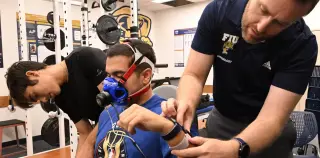
A new study from Florida International University reveals that smartwatch calorie estimates become increasingly inaccurate as the wearer's body fat percentage rises. Testing four major devices on 58 participants, researchers found median errors of 15-25%, with errors reaching 50-100% for those with higher body fat. While heart rate tracking remained reliable, the study suggests users should treat calorie counts as rough estimates rather than precise metrics for weight management.

Novo Nordisk Partners with Anthropic to Accelerate Drug Development
health-and-technology27 days ago

Novo Nordisk Partners with Anthropic to Accelerate Drug Development

Novo Nordisk, the maker of Ozempic, has partnered with AI firm Anthropic to accelerate drug research and development. The collaboration aims to leverage Anthropic’s frontier models and 'Claude Science' to shorten timelines for new medicines, with Novo Nordisk CEO Mike Doustdar stating the move will help the company become the world’s most AI-driven healthcare provider. The announcement follows European Commission President Ursula von der Leyen’s recent speech advocating for AI in healthcare, though it coincides with broader concerns about AI safety and bioweapon risks.

Impact of Short-Form Videos and Social Media on Teens' Memory and Mental Health
health-and-technology9 months ago

Impact of Short-Form Videos and Social Media on Teens' Memory and Mental Health

Research from Munich shows that short-form videos like TikTok impair users' ability to remember and execute planned tasks, with TikTok significantly degrading prospective memory performance compared to other platforms like Twitter and YouTube, despite not being more engaging. This effect highlights the cognitive costs of highly engaging, fast-paced video content.