
health-and-technology220.485 min read
Global Studies Link Excessive Screen Time to Child Development Risks, Sparking Calls for Tech Regulation
4 days ago•Source: CNN

The latest health and technology stories, each synthesized from multiple sources with added background and context.

A new AI tool called a 'speech clock' can estimate a person's biological age and dementia risk by analyzing voice recordings. Published in Science Advances, the study found that discrepancies between chronological age and 'speech age' correlate with brain atrophy, DNA methylation, and Alzheimer's biomarkers. Researchers suggest this low-cost method could eventually replace expensive medical tests for monitoring cognitive decline.


A new study published in JAMA Network Open finds that US children who own smartphones by age 12 are significantly more likely to develop eating disorder symptoms by age 14. The research, led by Dr. Jason Nagata of the University of California, San Francisco, analyzed data from the Adolescent Brain Cognitive Development Study. It highlights that early device access exposes preteens to appearance-focused content, which correlates with increased body dissatisfaction and disordered eating behaviors. Experts suggest delaying smartphone ownership by six months to a year may mitigate these risks.

Artificial intelligence is increasingly used in cancer care, but its impact varies from promising detection tools to curated clinical decision support. While big tech promises cures, practical applications focus on managing information overload, with tools like Onqo Health's Easy Oncology gaining traction among oncologists. AI excels in pattern recognition but faces risks of bias and overreliance, necessitating human oversight.

Kate Tolo, girlfriend of tech billionaire Bryan Johnson, is undergoing an intense, $2.6 million-funded health protocol to develop non-invasive diagnostic methods for endometriosis. While Johnson frames the effort as a labor of love, medical experts remain skeptical of the single-subject data, and Tolo has faced physical strain and public scrutiny for her extreme testing methods.

Neuralink, led by Elon Musk, is at a crossroads between developing technology to help people with disabilities and pursuing broader ambitions like AI integration and potential future AI conflicts, with recent leadership moves fueling questions about its true priorities.

Recent research indicates that moderate, structured gaming can enhance cognitive functions such as attention, multitasking, and learning, with benefits most notable during short, varied sessions. Excessive gaming, however, may diminish these benefits, emphasizing the importance of moderation and diversity in gaming habits.

Research from Munich shows that short-form videos like TikTok impair users' ability to remember and execute planned tasks, with TikTok significantly degrading prospective memory performance compared to other platforms like Twitter and YouTube, despite not being more engaging. This effect highlights the cognitive costs of highly engaging, fast-paced video content.
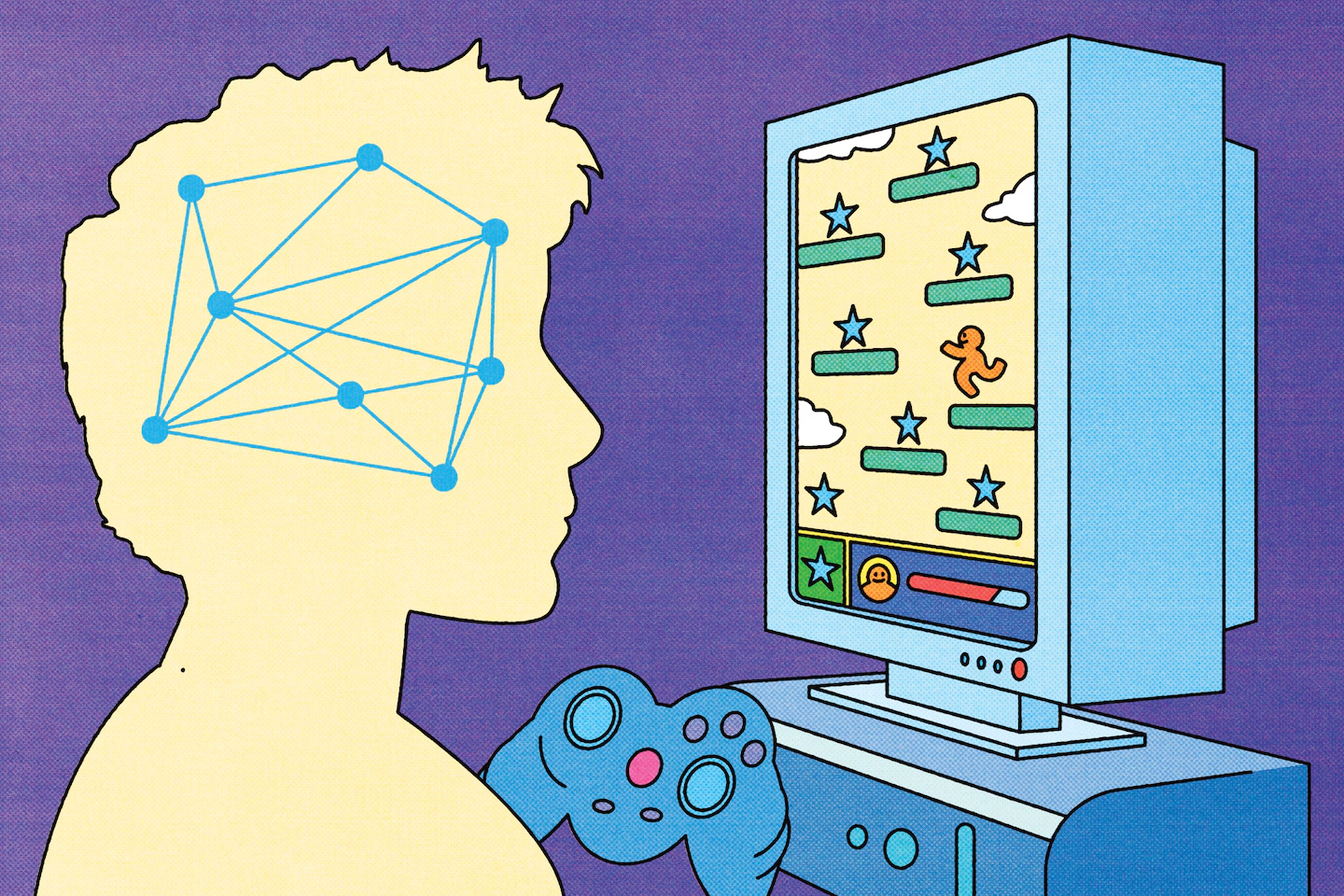
Playing video games can enhance cognitive skills by practicing complex tasks in simulated environments, offering benefits beyond traditional simple brain games.

Advanced AI-powered fall detection systems in senior homes monitor residents' movements to predict and prevent falls, significantly improving safety and reducing injuries, as exemplified by Kathy Doyle's experience at The Bristal assisted-living facility.
The article discusses the growing concern of screen addiction across all ages, especially among the elderly, comparing it to past media concerns like TV, and highlighting how modern devices and algorithms are designed to be highly addictive, impacting mental health, socialization, and lifestyle. It emphasizes the need for balance, conscious usage, and leading by example to mitigate these effects.

The article discusses the risks of bias, hallucinations, and opacity in AI systems used in health research, highlighting how these issues threaten the reliability and trustworthiness of medical data and findings, and proposing solutions like transparency and better oversight to mitigate these risks.